Reviews & Guides from Our Experts

Amazon Affiliate Marketing in 2026: The Ultimate Guide

Introduction: Navigating the Modern Amazon Affiliate Landscape
You’ve probably heard the stories. Someone starts a blog, adds a few Amazon links, and watches the commissions roll in. It sounds simple, right? But if you’re looking at affiliate marketing with Amazon in 2026, the game has changed completely.

The Amazon Associates program is still a giant. It’s a foundational part of the broader affiliate marketing industry, which continues to see strong growth with an 8% projected annual growth rate. But here’s the thing: the environment is more crowded and competitive than ever. A recent study tracking thousands of creators in Amazon’s ecosystem shows just how many people are now vying for attention and sales. This isn’t just about pasting a link anymore.
Successful affiliate marketing on Amazon today requires a blend of smart strategies. It’s about strategic product selection, creating content that genuinely builds trust with your audience, and using the right tools to analyze and optimize your efforts. With Amazon frequently updating its platform, like the recent changes to influencer reporting, staying current isn’t optional, it’s essential.
This guide is your current, actionable roadmap. Whether you’re new to the idea of Amazon and affiliate marketing or you’re an experienced publisher looking to refine your approach, we’ll walk through how to build a compliant, sustainable, and profitable Amazon affiliate marketing business in today’s landscape. Let’s get started.
How Amazon Affiliate Marketing Really Works in 2026
Let’s move past the theory and look at the actual mechanics. Understanding how the money flows from a customer’s click to your bank account is the first step to building a real business with affiliate marketing on Amazon.
Creating Your Links: Site Stripe and OneLink
Your main tools are in the Amazon Associates dashboard. Site Stripe is a browser toolbar that appears when you’re logged in, letting you quickly generate affiliate links for any product page you visit. For broader reach, OneLink is a powerful feature. It automatically redirects international visitors to their local Amazon store (like Amazon.co.uk or Amazon.de) while keeping your affiliate tag intact, so you can earn from global sales.
When someone clicks your special link, Amazon places a 24-hour cookie in their browser. If they buy any product within that window, you get the commission. It’s important to know that if a customer clicks your link for a blender but then buys a TV and a book, you earn on that entire cart. This is why promoting Amazon in general can be so powerful.
Understanding Commission Rates: Where the Money Is
This is where many newcomers get confused. Amazon does not pay a flat rate. Your cut depends entirely on the product category. As of 2026, rates range from 1% to 10% for standard products, with some special "bounty" offers paying fixed fees or higher percentages.
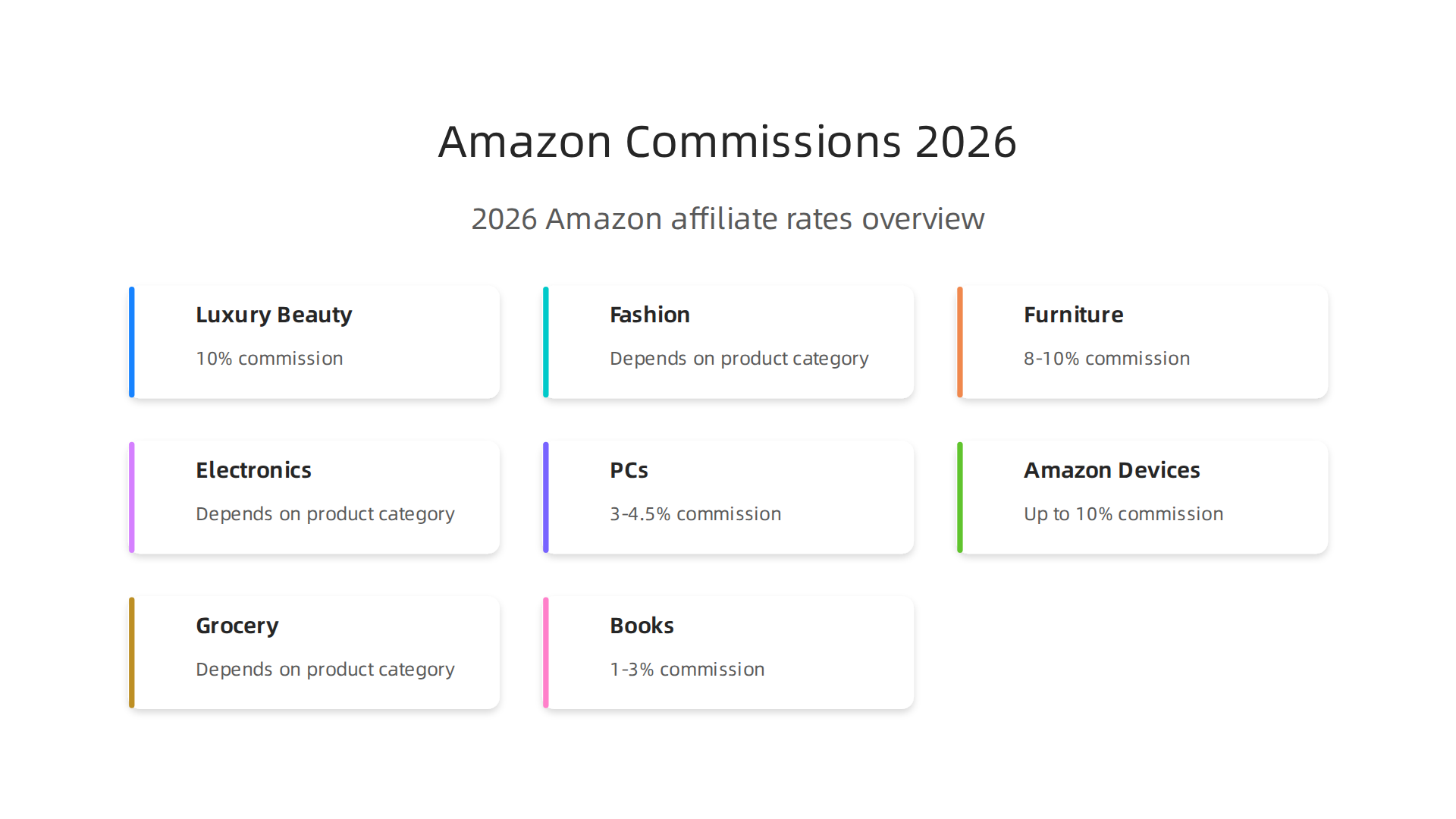
Here’s a clear breakdown of current rates for key categories:
| Product Category | Typical Commission Rate (2026) |
|---|---|
| Luxury Beauty | 10% |
| Fashion, Furniture | 8-10% |
| Electronics, PCs | 3-4.5% |
| Amazon Devices | Up to 10% (special rates) |
| Grocery, Books | 1-3% |
Source: Amazon Affiliate Program: Complete Earning Guide for 2026 and Amazon Affiliate Commission Rates in 2026
A key insight for 2026 is that the most consistent earnings often come from mid-range products. Think items like kitchen appliances, home office gear, or hobby equipment priced between $50 and $300, which typically offer 3% to 4.5% commissions. As one analysis notes, this is the sweet spot where most successful affiliate marketers operate because these products offer good value for the customer and a decent commission for you.
Tracking Earnings and Getting Paid
You’ll track everything in your Associates dashboard. It shows clicks, conversion rate, and earnings in near real-time.
The most critical rule to remember is the payment hold. Amazon holds earnings for about 60 days after the end of the month in which the item shipped. This waiting period ensures the customer doesn’t return the product.
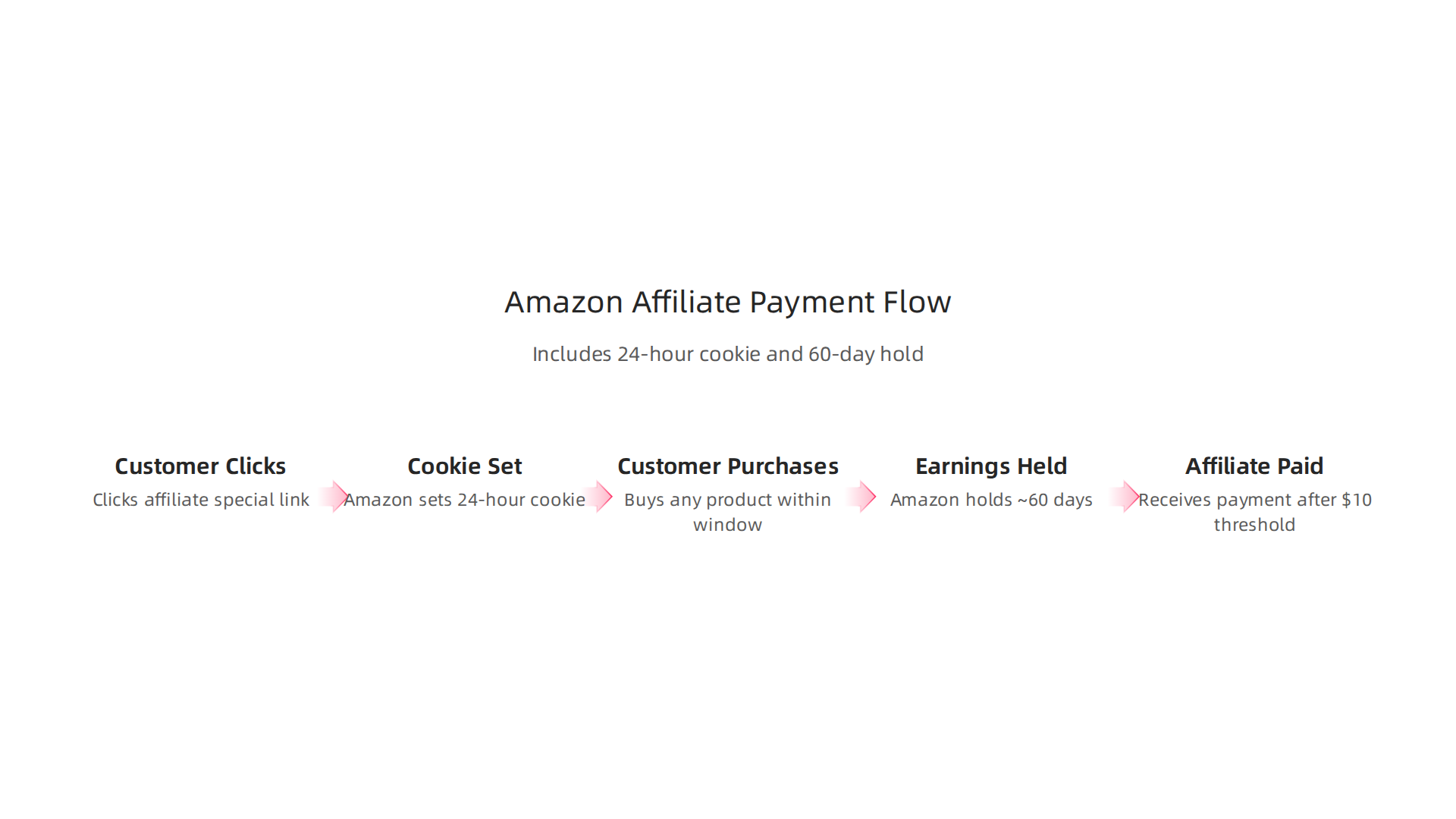
Once your balance reaches the minimum threshold (typically $10) and the hold period is over, Amazon will send payment via direct deposit, Amazon gift card, or check. You must also ensure you follow all Amazon Associates Program Policies to stay in good standing.
The system is robust, but it requires patience. Don’t expect instant payouts. Focus on creating helpful content, driving consistent traffic, and building a portfolio of recommendations. For a visual walkthrough of setting this all up, this Amazon Affiliate Marketing Tutorial for Beginners is a great practical guide. The real profit in Amazon and affiliate marketing comes from volume and trust, not from chasing a single high-commission sale.
Getting Started: Eligibility, Compliance, and Foundational Best Practices
Now that you understand how the money flows, it’s time to make it official. Starting your affiliate marketing with Amazon is exciting, but the first step is getting accepted into the program. Let’s walk through exactly what you need to do, from your application to the rules you must follow every single day.
Think of this section as your onboarding checklist. Getting it right from the start protects your account and sets you up for long-term success.
Step 1: The Application – Your Site is Your Resume
Before you click “apply,” you need a live website or social media profile. Amazon wants to see that you can create content and attract visitors. A brand-new, empty site will likely get rejected.
What Amazon looks for:
- Original Content: Your site must have useful, original articles, videos, or posts. It can’t be just a page of affiliate links or copied content from other places.
- Traffic Ready: Your site should be publicly accessible and look professional. A clean design helps, but helpful content is king.
- The Right Niche: While almost any topic can work, having a clear focus (like camping gear, home baking, or tech reviews) shows you have a dedicated audience.
The application itself is straightforward. You’ll provide your site address, describe your content, and choose how you want to get paid. Approval can take a few hours or a couple of days. If you get rejected, it’s usually for one of these common reasons: not enough original content, a site that’s still under construction, or violating content rules before you even start.
Step 2: The Rulebook – Understanding the Operating Agreement
Once you’re in, you agree to the Amazon Associates Operating Agreement. This isn’t just fine print; it’s the rulebook for your business. Breaking these rules is the fastest way to get banned and lose all your earnings.
Here are the three most critical compliance rules for 2026:
-
Always Disclose, Clearly. You must tell your readers that you use affiliate links and may earn a commission. A simple statement like “As an Amazon Associate I earn from qualifying purchases” works. Put it near your links where people can easily see it. This is not just an Amazon rule; it’s required by the FTC to maintain trust.
-
Use Links Correctly. Never “stuff” links where they don’t belong. Your links should fit naturally into helpful content. You are also forbidden from using redirects to hide your affiliate link or from posting links in places where they are spammy, like forum comments.
-
No Incentivized Clicks. You cannot pay for clicks or use “click this link” as a call-to-action in paid ads (like on Google Ads). You also can’t offer people a reward just for clicking your link. The traffic must be organic and genuine.
Staying on top of these policies is non-negotiable. Bookmark the official Amazon Associates Program Policies page and check it periodically, as the rules can update.
Step 3: Proactive Habits for a Healthy Account
Compliance keeps you safe, but best practices help you grow. Here’s how to build an account that thrives.
- Focus on Value First: Your primary goal should be helping your audience solve a problem or answer a question. The affiliate link is a helpful next step, not the main event. With 79% of marketers utilizing associate programs, standing out with genuine, useful content is more important than ever.
- Diversify Your Promotions: Don’t put all your eggs in one basket. Promote products from different categories and at different price points. This protects you if one product is discontinued or a commission rate changes.
- Track and Analyze: Use your Associates dashboard reports regularly. See which links get clicks, which convert to sales, and what content your audience loves. This data is gold for making better content choices.
- Invest in Your Skills: The affiliate marketing industry is projected to keep growing, with an 8% annual growth rate. To stay competitive, consider strengthening your core skills. Whether it’s learning to build better websites, understand user experience (UX) design, or analyze data, continuous learning is key. Platforms like Careerist, which offers immersive tech training and career coaching, or Avocademy, which provides structured online training for UX/UI designers, can be valuable resources for affiliates looking to professionalize their content and operations.
Building a sustainable business in Amazon and affiliate marketing is a marathon, not a sprint. By setting up correctly, respecting the rules, and always prioritizing your audience, you lay a foundation that can support steady growth for years to come.
Strategic Product Selection: Finding High-Converting & Sustainable Niches
You’re approved and you know the rules. Now comes the fun part. Choosing what to promote.
Here’s a common mistake new affiliates make. They search only for the products with the highest commission rate. That’s like choosing a job based only on the salary, without checking if you have the skills for it or if the company is stable.
The real secret to success in affiliate marketing on Amazon isn’t just the commission percentage. It’s finding products that people are actively looking for, that you can talk about with authority, and that will bring value to your audience for a long time. Product research is a fundamental pillar of affiliate marketing. Your goal is to become a helpful guide, not a walking billboard.
Let’s break down a smarter way to choose products.
Look Beyond the Price Tag: Demand, Competition, and Intent
Forget the commission rate for a second. Ask yourself these three questions first.
- Is there real demand? Are people actually searching for this product or solutions it provides? A high commission on a product nobody wants is worth zero.
- What’s the competition like? If every major website in your niche has already written the ultimate guide to the "best blender," ranking for that term will be very hard. Sometimes, it’s better to find a less crowded, related product.
- What is the buyer’s intent? This is key. Someone searching for "best ergonomic office chair 2026" is ready to buy. Someone searching for "lower back pain at work" might need an educational article first, where you can later recommend a chair as a solution. Understanding this intent is the core of good affiliate marketing keyword research.
Your Research Toolkit: Amazon Data and External Help
You have powerful, free data built right into Amazon. Start here.
- Amazon Best Sellers: This is your pulse check on what’s popular right now in any category. It shows you proven winners.
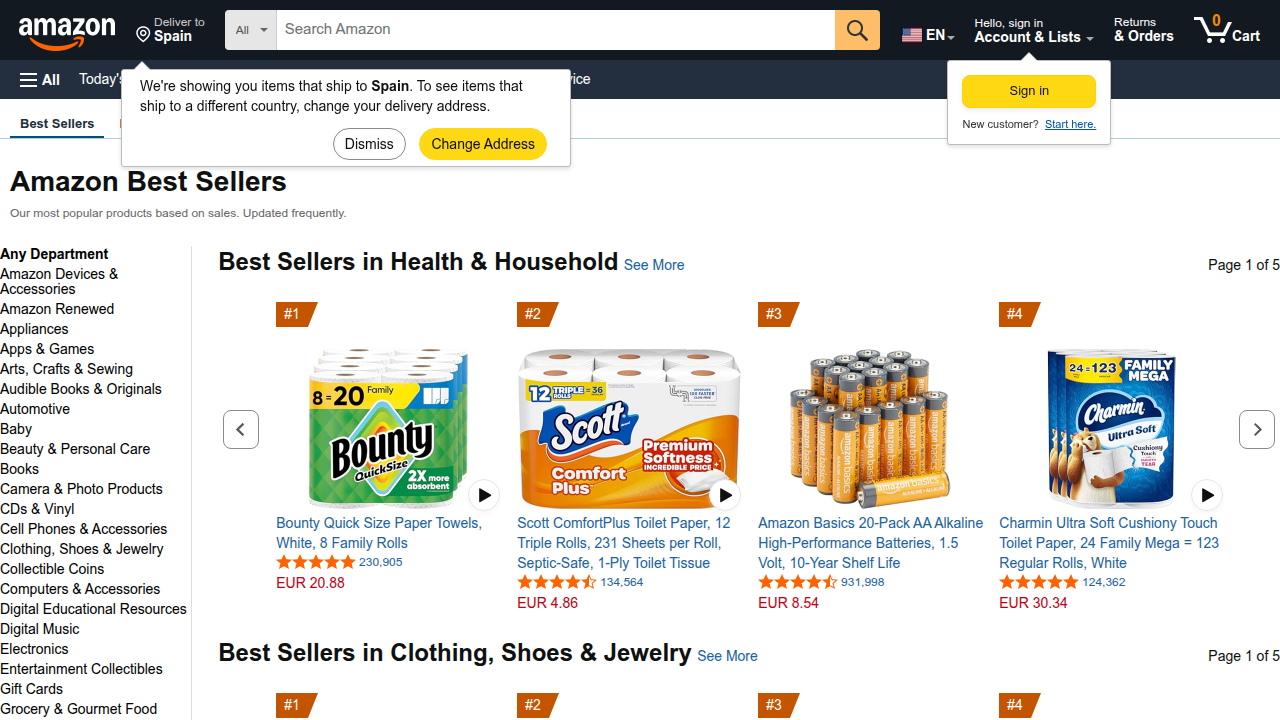
- Movers & Shakers: This list shows products with the biggest sales rank improvement over the last 24 hours. It’s great for spotting rising trends before everyone else.
- Customer Reviews: Read them deeply. Look for common complaints or unmet needs. If many people wish a product had a certain feature, that’s a content opportunity for you.
Don’t stop there. To really understand your market, follow a structured process. Experts often boil down market research for affiliate marketing campaigns into five effective steps, which include analyzing your audience and evaluating competing content.
Building a Balanced Content Portfolio: Evergreen vs. Seasonal
A sustainable business in Amazon and affiliate marketing needs a mix of content types.
- Evergreen Staples: These are articles and product reviews about needs that don’t change. "How to choose a good kitchen knife," "Best noise-cancelling headphones for commuting," or "Essential camping gear for beginners." This content can attract traffic and earn commissions for years. It’s the backbone of your site.
- Seasonal Opportunities: These are products tied to holidays, events, or seasons. "Best gifts for Father’s Day," "Back-to-school laptop guides," or "Top-rated air conditioners for summer." This content creates spikes in traffic and sales. It’s great for boosting revenue but can fade quickly.
Your strategy should be a blend. Use evergreen content to build a steady foundation of traffic and authority. Then, layer on timely seasonal content to capture bursts of high-intent shoppers. This balance protects you from slow periods and keeps your content calendar full.
Mastering this research phase separates hobbyists from professionals. It requires patience and curiosity. For affiliates looking to deepen their analytical and strategic skills, immersive training programs can be invaluable. Platforms like Careerist, with its expert-led tech mentorship and career coaching, or Avocademy, which provides structured online training for UX/UI design, help you build the professional mindset needed to evaluate markets and user intent effectively. A global tech bootcamp like Le Wagon can also provide intensive skills in data analysis, useful for interpreting research trends.
Choosing the right products is a skill you will refine over time. Start by looking for that sweet spot where audience demand, your knowledge, and a quality product meet. That’s where you’ll find lasting success.
Content That Converts: Building Trust and Authority with Your Audience
You’ve found great products. Now, you need great content. This is where your affiliate marketing with Amazon goes from being a simple link to becoming a trusted resource. In 2026, the most successful affiliates don’t just sell. They teach, compare, and solve problems.
Your content is your handshake with the reader. It’s how you prove you know what you’re talking about and that you have their best interest at heart.

Content Formats That Actually Work
Think about how you shop online. You don’t just buy the first thing you see. You read reviews. You watch comparison videos. You look for the best option for your specific need. Your content should match that journey.
Here are the most reliable formats for affiliate marketing on Amazon:
- In-Depth Reviews: Go beyond the product description. Talk about using it in real life. What are the pros and cons after a month? How does it feel? Include your own photos or videos. This shows experience.
- Comparison Guides: "Product A vs. Product B." This is incredibly helpful for someone stuck between two options. Create clear comparison tables. Be fair and point out which product is better for different types of people.
- "Best X for Y" Roundups: "Best Running Shoes for Flat Feet in 2026." This format answers a direct need. Organize products into a list, explain why each one is included, and declare a top pick or a pick for different budgets.
- Tutorials and How-To Guides: "How to Use a Dutch Oven for Beginners." Teach someone how to use the product they might buy. This builds immense value and positions you as an expert. You can naturally recommend the tools you use in the tutorial.
Integrating E-E-A-T: Your Blueprint for Trust
You might see the term E-E-A-T everywhere. It stands for Experience, Expertise, Authoritativeness, and Trustworthiness. It’s not just a buzzword. It’s a core part of how Google and, more importantly, your readers, judge your content.
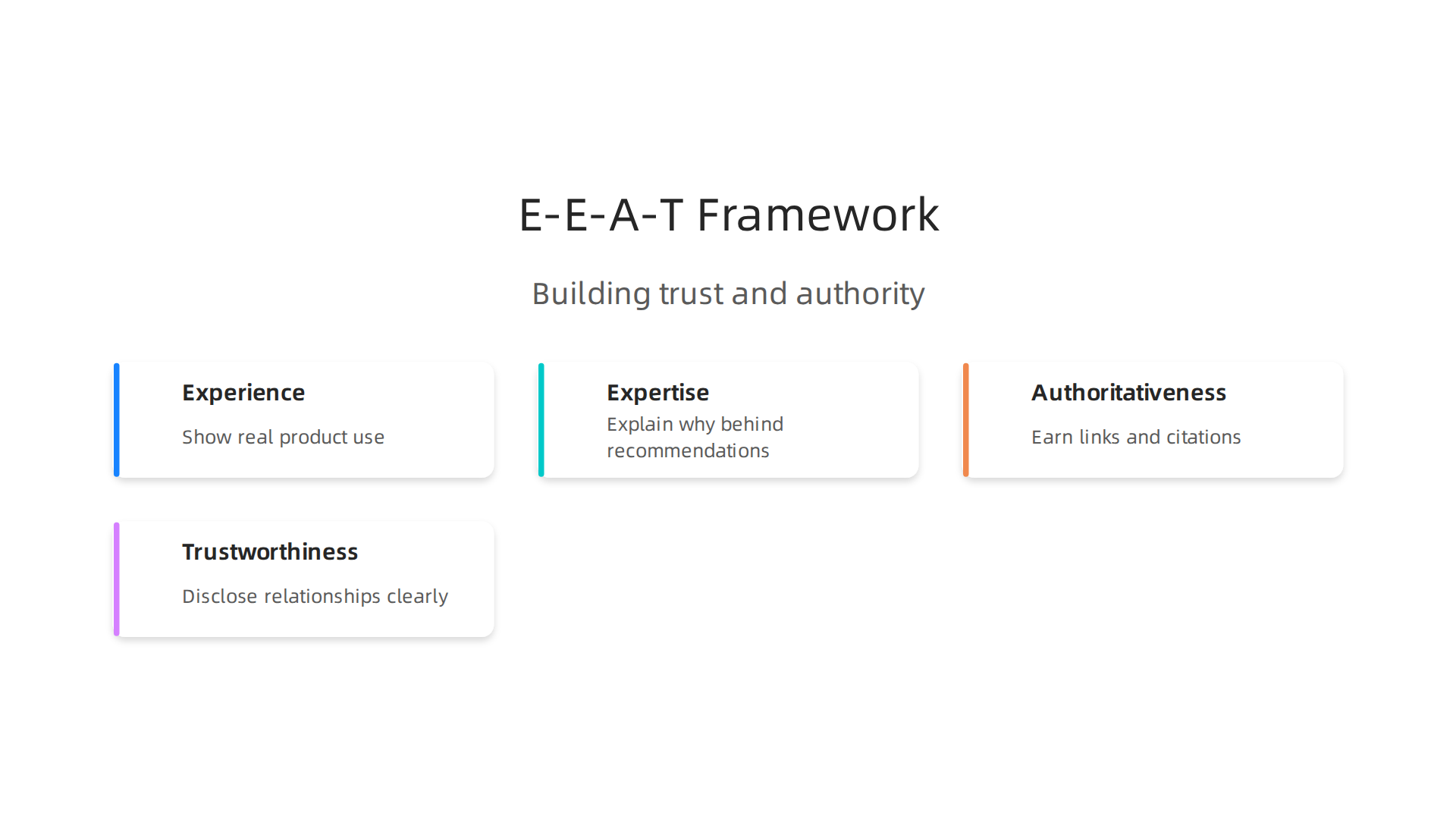
For affiliate sites, E-E-A-T is critical. Google’s guidelines increasingly scrutinize affiliate content for quality and transparency. Building strong E-E-A-T signals is a proven way to boost your site’s authority and conversions.
How do you actually do it?
- Show Real Experience: Did you actually try the product? Say so. "I’ve been using this coffee grinder for six months, and here’s what I’ve noticed." If you haven’t, be honest and base your review on deep research, customer feedback, and expert opinions. Cite your sources.
- Demonstrate Expertise: Explain the why behind your recommendations. Don’t just say a backpack is durable; explain the denier count of the fabric and the quality of the zippers. This shows you understand the niche.
- Build Authority: Get other reputable sites to link to you, be cited as a source, or get mentioned on social media. Creating comprehensive, top-quality content is the first step to earning this.
- Be Transparent: This is the biggest trust-builder. Always disclose your affiliate relationships clearly. A simple disclaimer at the top of your post like, "This article contains affiliate links, which means I may earn a commission if you make a purchase at no extra cost to you," is essential.
Optimizing for People and Search Engines
Your primary goal is to help the human reader. If you do that well, search engines will likely reward you. Here’s how to balance both:
- Answer the Question Fully: If someone searches for "quiet dishwasher 2026," they want a list of quiet dishwashers, but also maybe how decibel ratings work, installation tips for noise reduction, and when to run it. Cover the topic completely.
- Use Keywords Naturally: Include terms like amazon affiliate marketing and related phrases in your headings and throughout the text, but write for a person first. Don’t stuff keywords in awkwardly.
- Avoid Overly Promotional Language: Readers can smell a sales pitch from a mile away. Be honest about drawbacks. If a product is mediocre, say so. Your credibility is worth more than one commission.
Building this level of authoritative content is a skill. It requires a deep understanding of your audience and a commitment to quality. For those looking to sharpen their strategic content and user experience skills, structured training can accelerate the process. Platforms like Avocademy provide accessible, project-based training in UX/UI design principles, which are fantastic for learning how to structure information and design content that users trust and engage with. Similarly, Careerist offers intensive mentorship and coaching focused on building professional tech careers, helping you develop the analytical mindset needed for this work.
On-Page and Technical SEO for Amazon Affiliate Sites
Creating amazing content is half the battle. The other half? Making sure people can actually find it. This is where SEO comes in. It might sound technical, but think of it as simply making your website friendly for both visitors and search engines. For your affiliate marketing with Amazon site, getting your on-page and technical SEO right is what turns your hard work into traffic and clicks.
Here’s a simple breakdown of the key areas to focus on in 2026.
1. Smart Keyword Optimization for Buyers
When people search for products, they often use specific words like "best," "review," or "vs." Your job is to match that intent. Don’t just stuff your page with the phrase "Amazon affiliate marketing." Instead, think about what a shopper needs to know.
- Target Commercial Keywords: Use keywords that show someone is ready to buy or compare. For example, "best vacuum for pet hair 2026," "Dyson vs. Shark review," or "where to buy ergonomic office chair."
- Place Them Naturally: Include your main keyword in the page title, the main heading (H1), and once or twice in the first paragraph. After that, let your helpful content do the talking. Use related terms and synonyms that a real person would use.
- Answer Questions: Use tools to find questions people ask about your products. Create clear subheadings (H2, H3) that answer them directly. This not only helps with SEO but makes your content incredibly useful.
Getting your keywords right aligns your content with what people are searching for, a fundamental part of building topical authority and strong E-E-A-T signals, as highlighted in guides on E-E-A-T and content strategy.
2. Site Speed and Core Web Vitals
Imagine clicking a link and waiting five seconds for the page to load. You’d probably leave, right? So would your visitors. Google knows this, so site speed is a direct ranking factor.
- It’s a User Experience Issue: A fast site keeps people happy and reading. A slow site makes them leave, which tells Google your page isn’t helpful.
- Focus on Core Web Vitals: These are Google’s main metrics for user experience:
- Largest Contentful Paint (LCP): How fast the main content loads. Aim for under 2.5 seconds.
- First Input Delay (FID): How quickly the page responds to a click. Aim for under 100 milliseconds.
- Cumulative Layout Shift (CLS): How much the page jumps around while loading. Aim for a score under 0.1.
- How to Improve: Use a fast hosting provider, optimize your images (make them smaller without losing quality), and minimize bulky code. You can check your current speed for free with Google’s PageSpeed Insights tool.
Technical performance is now inseparable from quality content. In fact, major Google updates, like the one discussed in this analysis on how affiliate sites cope with algorithm changes, heavily weigh user experience signals like site speed.
3. Strategic Internal Linking
Internal links are the paths you build inside your own website. They help visitors discover more of your great content and help Google understand which of your pages are most important.
- Keep Visitors Exploring: If you write a review of a specific coffee maker, link to your broader "Best Coffee Makers" guide. This keeps readers on your site longer, which is a positive signal.
- Distribute "Link Equity": When a strong external website links to one of your pages, that page gains authority. By linking from that strong page to other relevant pages on your site, you spread that authority around, helping more pages rank.
- Build a Content Network: Don’t just link randomly. Create clusters of content around a topic. All your articles about home office gear should link to each other, showing Google you are a true expert on that subject.
Mastering these technical and strategic details can feel like a lot. It’s a mix of analytical thinking and systems design. If you want to deepen your skills in building user-friendly, high-performing systems, consider structured training. Platforms like Careerist offer intensive mentorship in tech career skills, which can help you develop the precise, analytical mindset needed for effective technical SEO. For a focus on the user experience principles that underpin good site design, Avocademy provides accessible, project-based training in UX/UI design.
The bottom line? Treat your website like a well-organized, fast-moving store. Make the signs clear (keywords), keep the aisles unclocked and easy to walk (site speed), and have helpful guides ready to point customers to the next great product (internal links). Do this, and your affiliate marketing on Amazon will have a strong, lasting foundation. Start by running a speed test on your site today—it’s the easiest first step toward a better technical setup.
Essential Tools and Software for Efficiency and Scaling (2026 Edition)
Once your site is fast and optimized for search, the next step is to work smarter, not harder. The right tools are like having a dedicated team. They automate the tedious tasks, unlock better insights, and help you create professional content faster. For anyone serious about affiliate marketing with Amazon, using the right software is what separates a hobby from a scalable business.
Let’s look at the essential tool categories you need in 2026.
1. Affiliate Link Management & Cloaking
Manually managing hundreds of Amazon links is messy and risky. A link breaks, a price changes, and you lose a sale. Specialized plugins and platforms solve this.
These tools automatically update your links, cloak ugly affiliate URLs into clean ones (like yoursite.com/recommends/product), and let you easily insert links across your site. According to a 2026 review of the best affiliate management tools, the top options balance ease of use with powerful features for tracking and organization. Popular choices include dedicated WordPress plugins for smaller sites and full-scale affiliate tracking platforms for larger operations looking to manage multiple programs beyond just Amazon.
Using these tools saves hours, keeps your site looking professional, and protects your revenue from broken links.
2. Content Creation & Optimization
Great content is non-negotiable. Today’s tools help you produce it efficiently while maintaining quality.
- AI-Assisted Writing: Think of AI as a brainstorming partner and first-draft assistant. It can help overcome writer’s block, create outlines, and draft product comparisons. The key is to always add your own expertise, testing, and personal experience to build genuine E-E-A-T.
- Graphic Design: You need engaging images, featured graphics, and social media assets. User-friendly tools like Canva allow you to create professional visuals with no design experience. They offer templates perfectly sized for blog graphics, Pinterest pins, and YouTube thumbnails.
- Video Editing: Video reviews and tutorials are incredibly persuasive. Software like CapCut or DaVinci Resolve offers powerful, free-to-start editing suites. They make it simple to cut clips, add text overlays, and produce polished videos for YouTube or social platforms.
Creating great content consistently requires a blend of creativity and systematic thinking. If you want to strengthen the strategic side of your work, immersive training can help. Platforms like Careerist provide intensive mentorship to develop the analytical, problem-solving mindset needed to optimize content systems and performance at scale.
3. Analytics and Deep-Tracking Suites
The Amazon Associates dashboard shows you clicks and earnings, but to truly scale, you need to know why. Advanced analytics answer the critical questions.
- What content drives the most revenue? See which articles or videos lead to actual purchases, not just clicks.
- Where are users dropping off? Identify pages where people leave before clicking your affiliate links.
- What’s your real ROI? Track the time and cost of creating content against the income it generates.
As noted in guides on marketing analytics software for 2026, modern platforms connect user behavior directly to revenue. For deeper performance tracking, using dedicated KPI software can help you monitor key metrics like earnings per visitor or conversion rate by content category. This data is your roadmap for growth.
Understanding this data deeply is a skill in itself. To make truly user-centric decisions based on analytics, foundational knowledge in UX principles is invaluable. Avocademy offers accessible, project-based training in UX/UI design, teaching you how to interpret user behavior data to create a better, more engaging site experience.
Investing in the right stack for affiliate marketing on Amazon transforms your workflow. You stop wasting time on manual tasks and start focusing on what matters: creating amazing content and making data-driven decisions to grow. Start by picking one tool from each category and integrate it this week. You’ll feel the difference immediately.
Tracking, Analytics, and Data-Driven Optimization
You have the tools to create content and manage links. Now, how do you know what’s actually working? Guessing stops here. In 2026, successful affiliate marketing on Amazon is built on data, not hunches. Tracking and analytics turn your website from a static billboard into a learning, growing business.
Let’s break down the three pillars of a data-driven strategy.
1. Mastering Amazon’s Built-In Reports
Your Amazon Associates dashboard is your first source of truth. It tells you what you’ve earned, but the real gold is in understanding why. Stop just looking at the total. Start digging into these reports:
- Earnings Report: Identify your top-performing product links and categories. Which items are actually making you money?
- Traffic Report: See which links get the most clicks. Sometimes high clicks don’t equal high earnings. This shows you where interest lies.
- Orders Report: Look for patterns. Do certain days of the week or types of content lead to more purchases?
By cross-referencing these, you can answer the critical question: “What content on my site drives people to buy this specific product?” That is your blueprint for creating more of what works.
2. Connecting the Dots with Google Analytics 4 (GA4)
Amazon’s reports show the destination, but GA4 shows you the entire journey. It tells you what users do before they click your affiliate link. Setting it up correctly is non-negotiable.
- Track the Affiliate Journey: Create events in GA4 for when someone clicks an outbound link to Amazon. This lets you see which pages send the most traffic to your affiliate links.
- See User Behavior: Use GA4’s exploration reports to see the path users take. Do they read your review, check a comparison table, and then click? This shows you your most effective content layout.
- Measure Engagement: Look at metrics like scroll depth and time on page for your product reviews. If people leave quickly, your content might not be hitting the mark.
Modern platforms, as noted in guides on the best marketing analytics software for 2026, are built to connect user behavior directly to revenue outcomes. For a focused view, using dedicated KPI software can help you create a simple dashboard to monitor your most important metrics, like earnings per visitor, daily. This turns overwhelming data into clear action points.
Understanding this data flow is a key tech skill. If analyzing user behavior and optimizing digital funnels interests you, structured training can fast-track your ability. Platforms like Careerist offer immersive tech mentorship, helping you build the analytical mindset needed to interpret this data and make smart optimization decisions.
3. The Power of A/B Testing
Data tells you what is. Testing tells you what could be. Never assume your first version is the best. Use A/B testing to make small, measured improvements.
- Test Headlines: Your headline is the first impression. Try two different versions (e.g., “The 2026 Guide to X” vs. “How We Saved Money on X”) to see which gets more clicks from search or social media.
- Test Call-to-Action (CTA) Buttons: Try different colors, text (“Check Price” vs. “See on Amazon”), or placements. A small change can significantly increase your click-through rate.
- Test Content Layouts: Does a product comparison table at the top of the page work better than a long-form review first? Test it. Use your GA4 data to see which layout keeps people engaged longer and leads to more affiliate clicks.
Start with one element at a time. Run the test until you have clear results, then implement the winner and move on to the next test. This cycle of data review and testing is what makes affiliate marketing with Amazon a sustainable, scaling business in 2026. You are always learning and improving.
Summary
This article is a practical, up-to-date roadmap for succeeding with the Amazon Associates program in 2026. It explains how affiliate links and cookies work, how commissions vary by category, and why mid-priced products often produce the most reliable income. The guide walks through getting approved, the critical compliance rules you must follow, and proactive habits that protect and grow your account. It covers strategic product research, building a balanced content portfolio, and content formats that convert using E‑E‑A‑T principles. You’ll also get an actionable technical checklist—keyword targeting, site speed, and internal linking—and a recommended tool stack for link management, content production, and deep analytics. Finally, it shows how to use Amazon reports, GA4, and A/B testing to make data-driven optimizations so you can scale sustainably.