Reviews & Guides from Our Experts

Affiliate Marketing Programs The 2026 Playbook for Publishers and Merchants

Why affiliate marketing programs matter in 2026
Affiliate marketing programs are a simple yet powerful way for businesses to sell more products and for people to earn money online. Imagine you tell a friend about a great new toy. If your friend buys the toy because of your suggestion, and the toy company gives you a small thank you payment for that sale, that’s like affiliate marketing. In 2026, this way of doing business is bigger and smarter than ever before.

At its core, affiliate marketing involves a company (called a merchant) paying another person or business (called an affiliate) to help sell its products or services.

The affiliate shares special links, and when customers click those links and make a purchase, the affiliate gets a piece of the sale. It’s a win-win situation. Merchants get more sales without paying for ads upfront, and affiliates earn commissions by recommending things they truly believe in. You can learn more about the affiliate marketing meaning and how it works in our detailed guide.
This guide will help you understand all about affiliate marketing programs. If you’re an affiliate, we’ll show you how to pick the best affiliate programs and promote them so you can earn more. We’ll also help you find the right affiliate marketing platforms to manage your efforts. If you’re a merchant, we’ll guide you on how to set up your own program to attract good partners who will help you grow.
You will find clear ways to understand how different programs work. We’ll share smart tips and a helpful comparison table of program types. Plus, we’ll cover important rules and how to keep track of your success. By the end, you’ll know exactly why affiliate marketing programs are a goldmine for publishers and merchants in today’s digital world.
How affiliate marketing programs work: roles, models, and flows
Affiliate marketing programs might seem tricky at first, but they actually follow a clear path. Think of it like a team effort. Several key players work together to make sales happen and share the rewards.
The Team Behind Affiliate Marketing
There are four main parts to how affiliate marketing programs work:
- The Merchant: This is the company or person who sells a product or service. They want to sell more things and are willing to pay others to help them do it. They start the affiliate program.
- The Affiliate (or Publisher): This is the person or business that promotes the merchant’s products. They could be a blogger, a social media influencer, or someone who runs a review website. Affiliates share special links to the merchant’s products. Their goal is to get people to click their links and buy something or complete an action.
- The Customer: These are the people who see the affiliate’s promotion, click the special link, and then buy the product or service from the merchant.
- The Affiliate Network (Sometimes): Often, there’s a middleman called an affiliate network. This is a platform that connects merchants with many affiliates. It helps manage the links, track sales, and handle payments. It makes it easier for both sides to work together.
Different Ways Affiliates Earn Money
Affiliates get paid in different ways, depending on the rules of the affiliate marketing programs they join. Here are the most common ways:
- Pay Per Sale (CPS): This is the most common model. The merchant pays the affiliate a percentage of the sale price when a customer buys something through their link. For example, if an affiliate promotes a $100 product and gets a 10% commission, they earn $10 for each sale.
- Pay Per Lead (CPL): In this model, the affiliate earns money when they get a customer to provide their information. This could be filling out a form, signing up for a newsletter, or getting a free quote. The customer does not have to buy anything for the affiliate to get paid.
- Pay Per Action (CPA): This is similar to CPL, but the "action" can be almost anything specific. It might be downloading an app, starting a free trial, or watching a video. It’s about getting the customer to do a specific task, not necessarily a purchase or a sign-up form.
- Revenue Share: This is often used for services that customers pay for regularly, like monthly subscriptions. The affiliate gets a percentage of the money the customer pays over time, sometimes for as long as the customer keeps paying for the service.
How Payments Happen: From Click to Cash
The process of tracking and paying affiliates needs to be very accurate. Here’s how it usually works:
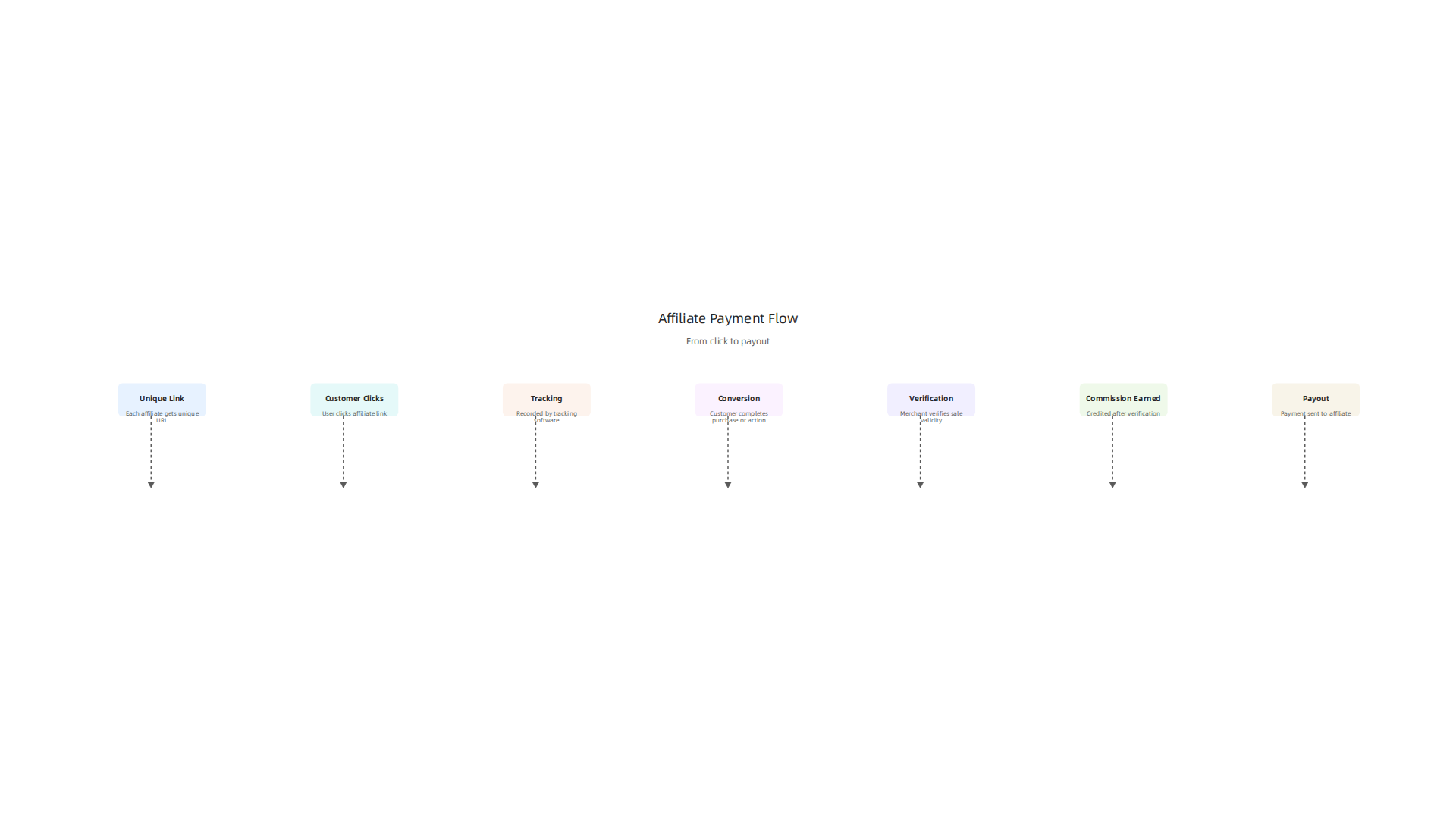
- Unique Link: Each affiliate gets a special, unique link from the merchant or affiliate network. This link has a tracker built into it, so the system knows exactly which affiliate sent the customer.
- Customer Clicks: A customer clicks on an affiliate’s unique link.
- Tracking: When the customer clicks, special software notes this down. This software often uses tiny files called "cookies" that remember the affiliate’s link for a certain amount of time. This helps make sure the right affiliate gets credit for the sale or action, even if the customer buys later. Modern affiliate tracking software is designed to be very accurate, even with new privacy rules and ad blockers, often using server-to-server tracking to ensure every valid action is recorded correctly
Top 10 Best Affiliate Marketing Trackers in 2026.
4. Conversion: The customer completes the desired action, like buying a product or signing up for a service.
5. Verification: The merchant or affiliate network checks if the sale or action is real and follows the program’s rules.
6. Commission Earned: Once verified, the affiliate earns their commission.
7. Payout: The merchant (or the affiliate network) sends the earned money to the affiliate. Payments are usually made on a set schedule, like once a month.
Good affiliate marketing link tracking is super important. It makes sure that affiliates get paid fairly for all the sales and leads they bring in, which keeps everyone happy and the affiliate marketing programs running smoothly.
After understanding how affiliate marketing programs track sales and pay out, the next big step is figuring out what kind of content actually gets people to buy. It’s not just about having a link; it’s about sharing information in a way that helps customers and makes them want to click. This is where smart content strategies come in, turning your efforts into real earnings.
Content strategies that consistently convert: reviews, comparisons, and funnels
To make money with affiliate marketing programs, you need content that truly helps your audience make a choice.

In 2026, certain types of content work better than others at moving people from just looking to actually buying. These are often called "high-converting" content formats because they consistently lead to sales.
Top Content Formats for Affiliate Marketing
When people are ready to buy, they often look for specific kinds of information. Here are the content types that work best:
- Detailed Product Reviews: These are like having a trusted friend tell you all about a product they’ve used. Good reviews share personal experiences, show the pros and cons, and help the reader decide if it’s right for them. Experts say product reviews are often the highest-converting content because they speak directly to buyers who are close to making a purchase Best Content Types for Affiliate Marketing.
- Product Comparisons: Sometimes, people can’t decide between two similar items. Comparison posts, like "Product A vs. Product B," help them see the differences clearly. This helps them choose the best option for their needs. Many top affiliates use detailed comparisons and reviews as their main way to get sales Affiliate Content Formats That Convert.
- How-to Guides and Tutorials: These pieces of content show people how to use a product or solve a problem with it. For example, a "How to set up your new smart home device" guide can naturally include links to the device itself or accessories.
- Round-up Posts: These are lists like "Top 10 Best Laptops for Students in 2026." They offer many options and help readers explore different products in one place.
- Long-form Content: Longer articles, sometimes over 2,000 words, tend to get more clicks and sales. This is because they can go into much more detail, answering all the customer’s questions The Complete Guide to Affiliate SEO Content Systems.
No matter the format, the best affiliate programs rely on content that is helpful, honest, and easy to understand How to Create High-Converting Affiliate Content in 2026. To make your content look professional and easy to use, learning a bit about design can help. If you want to improve your content’s look and feel, you might explore training like Avocademy — UX/UI online training.
Finding the Right Products to Promote
Before you even start writing, you need to pick the right products for your audience. It’s like finding the perfect puzzle piece. You should ask yourself:
- Does it fit my audience? The product should solve a problem or meet a need for the people who follow you. If you talk about pet care, a new dog toy makes sense, but a car part probably doesn’t. You should always check for audience match when looking for the best affiliate programs.
- Are the commissions good? Make sure the money you can earn for each sale is worth your effort.
- How long does the cookie last? Remember those tracking cookies? A longer cookie duration means you have more time to earn a commission if a customer takes a while to buy.
Taking the time to research product suitability and audience fit will save you time and lead to better results in your affiliate marketing programs.
Making Your Content Convert Better
Once you have great content, you want to make sure it actually leads to sales. Here are a few ways to boost your success:
- Call to Action (CTA) Placement: A "call to action" is simply telling your reader what to do next, like "Click here to buy now" or "Learn more." Place these buttons or links where they are easy to see and make sense.
- Be Clear About Affiliate Links: Always tell your readers that you might earn a commission if they buy through your links. This builds trust. For example, you can add a short sentence like, "I may earn a small commission if you buy through my links, at no extra cost to you." Knowing how to write a compliant disclaimer for affiliate links is very important.
- Test and Learn: Don’t just set it and forget it. Try different headlines, different ways of writing, and different places for your links. See what works best, and then do more of that. This is called A/B testing, and it helps you get more from your content over time.
By focusing on creating valuable content, picking the right products, and making smart changes, you can build a strong income through various affiliate marketing programs. It’s all about helping your audience while also helping yourself. And if you’re thinking about creating your own online hub for this, consider building an affiliate marketing website.
Building a great website and helpful content is key, but you also need to pick the right place to find and manage your affiliate marketing programs. It’s like choosing the best store to find the products you want to sell. In 2026, there are three main ways to connect with companies that offer affiliate programs: dealing directly with merchants, joining big affiliate networks, or using special software platforms. Each type has its own benefits and drawbacks for both the person promoting the products (the affiliate) and the company selling them (the merchant).
Merchant-Run (Direct) Programs
When a company runs its own affiliate program, it means you work directly with them. They handle everything themselves, from giving you tracking links to paying your commissions. This is often called a "direct program" because there’s no middleman.
- Pros: Often, these programs offer higher commission rates because the merchant doesn’t have to pay fees to a third-party platform. You might also build a closer relationship with the company, which can lead to special offers or early access to new products. Merchants usually want to set clear goals for these programs, like specific revenue targets or how many new customers they want to get The Future of Affiliate Marketing: Trends To Watch in 2026.
- Cons: Finding these programs can be harder since they aren’t listed in one big place. Also, you might get less support, and their tracking or reporting tools might not be as fancy as those offered by bigger platforms. If you promote many products, managing several direct programs can take a lot of time.
Affiliate Networks
Affiliate networks are like big marketplaces where many different companies list their affiliate marketing programs. Think of them as a central hub where affiliates can find products from various brands all in one place. Popular examples include ShareASale or CJ Affiliate.
- Pros: For affiliates, networks offer a huge variety of products and services, making it easy to find things that fit your audience. They also provide reliable tracking, regular payments, and often good support teams. The tools for reporting on your sales and clicks are usually strong. The average conversion rate for affiliate programs across industries is around 1-5% in 2026, but this can vary a lot by what you’re promoting and who you’re promoting to
Affiliate Program Benchmarks (2026).
- Cons: Because the network acts as a middleman, they take a small cut of the commission. This means the commission rates might be a little lower than what you’d get from a direct program. Also, you have less direct contact with the merchant.
SaaS-Managed Affiliate Platforms
These are software platforms (SaaS stands for Software as a Service) that companies use to run their own affiliate programs. It’s a bit of a mix: the merchant still manages their program directly, but they use professional software to handle tracking, payments, and communications. For you, the affiliate, it might feel similar to a direct program, but with better technology behind it.
- Pros: Merchants can customize their programs more easily, offering different commission structures or bonuses. This means you might find good, unique offers. The technology for tracking and reporting is usually very good, almost like an affiliate network. For example, some tools make it simple to track your Earnings Per Click (EPC), which is how much money you make on average for each click. An EPC above $0.50 is often seen as a good sign in 2026 EPC in Affiliate Marketing: Calculate and Increase It.
- Cons: You’re still dealing with one company at a time, so it doesn’t offer the wide variety you’d find on a big affiliate network. The success of your experience depends heavily on how well the merchant uses their software.
Choosing the Right Model for You
Deciding which type of program to join depends on your goals.
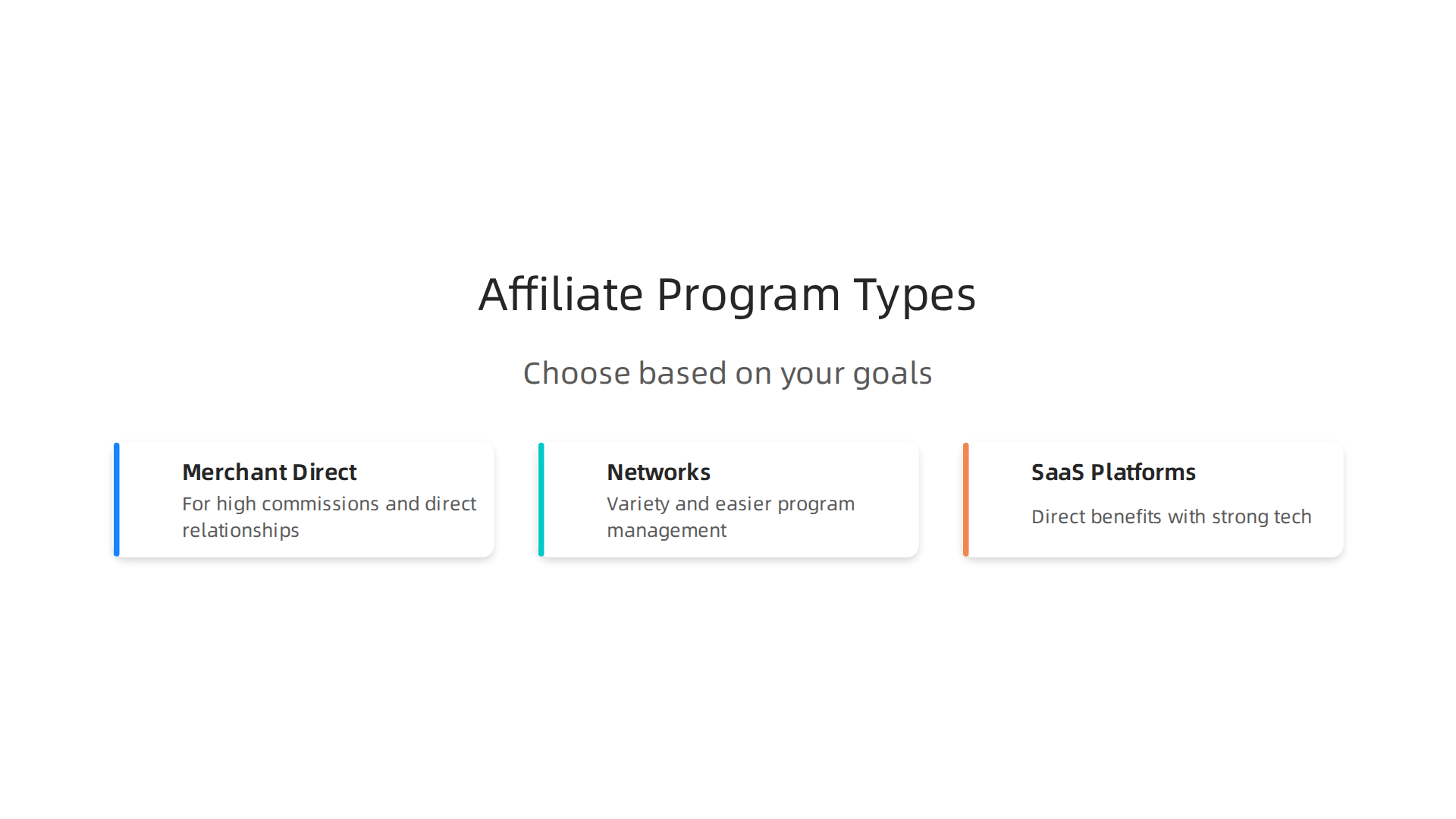
- For high commissions and direct relationships: Look for merchant-run programs.
- For variety and ease of management across many products: Affiliate networks are usually the best affiliate marketing platforms to explore.
- For a blend of direct relationship benefits with strong tech: SaaS-managed programs can be a great choice.
No matter which type you choose, always check the commission rates, how long the tracking cookie lasts, and if the products truly fit your audience. Understanding these different models helps you pick the best path for your affiliate marketing journey.
After you decide which kind of program is best for you, the next step is to pick the actual affiliate marketing programs to join.

This means looking closely at each program to make sure it’s a good fit and will actually help you earn money. It’s like checking a new toy before you buy it to make sure it works well.
Key Things to Look For
When you’re trying to find high-converting affiliate programs, you need to check a few important things.
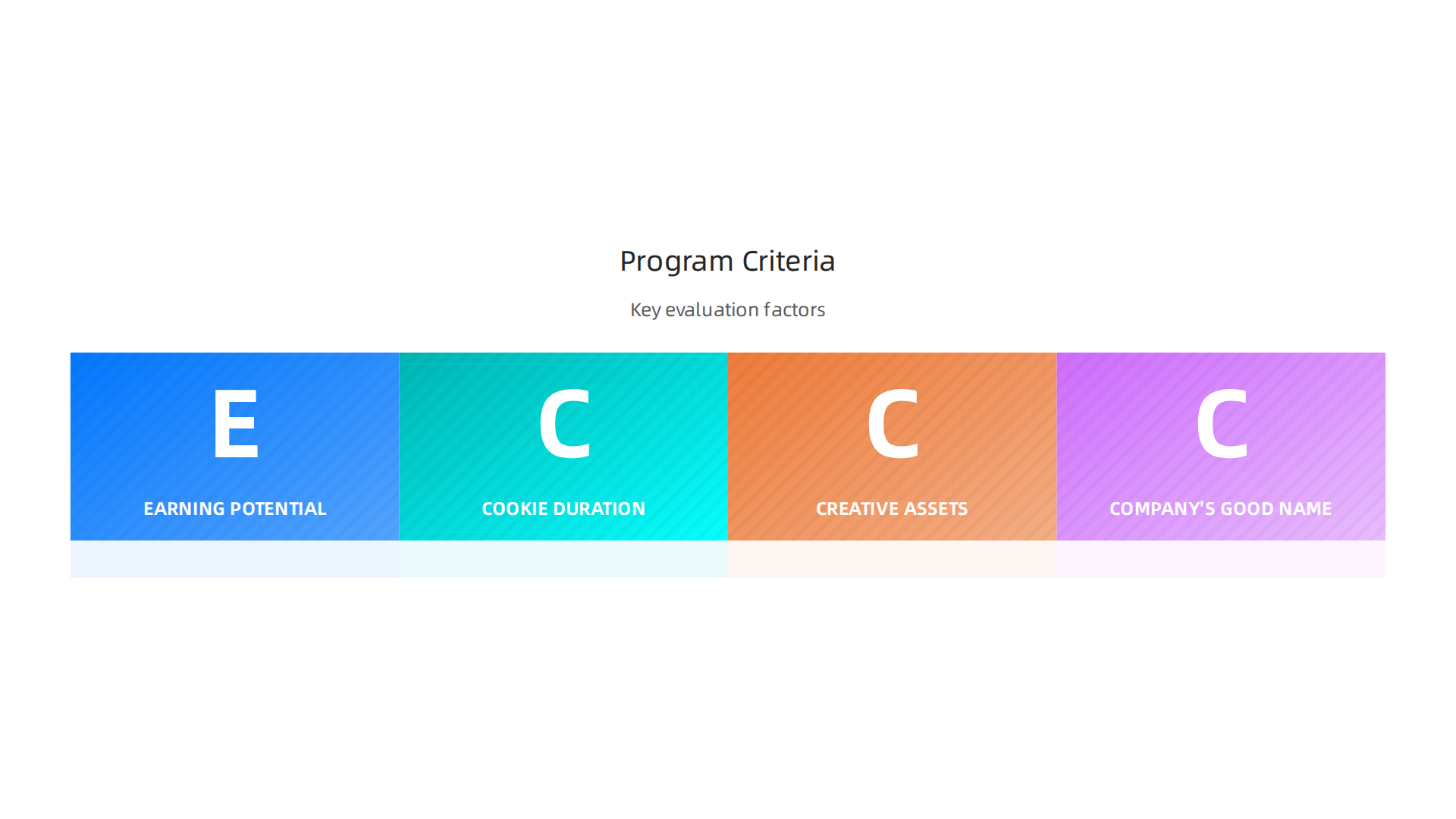
These help you know if a program is worth your time and effort.
- How Much You Can Earn (EPC and Average Order Value):
- EPC means "Earnings Per Click." It tells you how much money you make for every click you send to the merchant’s website. A good EPC means people are buying the products after clicking your link.
- Average Order Value (AOV) is how much money people usually spend when they buy from that company. If the AOV is high, you can earn more with each sale, even if the commission rate is the same. Look for programs where the products fit your audience and have a good earning potential. To earn more from these, it’s smart to pick programs with high-paying commissions.
- Cookie Duration: This is how long the company "remembers" that you sent a customer to them. For example, if a program has a 30-day cookie, and someone clicks your link but buys the product 20 days later, you still get credit for the sale. A longer cookie duration is usually better for you.
- Creative Assets: These are the tools the company gives you to promote their products, like ready-made pictures, videos, or banners. Good quality and many different choices of creative assets make your job easier and help you make better content.
- Company’s Good Name: Just like you trust certain stores, you want to work with companies that have a good reputation. Check if the company is well-known and if customers are happy with their products. This helps you build trust with your own audience.
Watch Out for Red Flags
Sometimes, an affiliate program might look good on the surface but has hidden problems. These are like warning signs that tell you to be careful.
- Tracking Problems: The most important part of affiliate marketing is making sure your sales are counted correctly. If a program has inconsistent tracking, it means you might not get paid for all the sales you help make. This is a big problem. You want clear and reliable affiliate marketing link tracking.
- Slow Payments: If a company takes a very long time to pay out your earnings, that’s a red flag. You want to work with programs that pay on time and as promised.
- Rules That Are Too Strict: Some programs have many rules that make it hard to promote their products. For example, they might tell you exactly what you can or cannot say, or they might make it hard to use your own ideas for promotion. Too many strict rules can make it difficult to be creative and effective.
Try It Out First
Before you put a lot of effort into promoting a new program, it’s a good idea to test it out.
- Small Test Campaign: Run a small campaign to see how the program works. You can write one review or make a short post about the product.
- Check the Tracking: Make sure that every click and sale you send is correctly recorded by the program’s system.
- Watch for a Little While: See how the products sell and if people respond well to your promotions. This helps you know if the program is a good choice for your long-term plans.
By carefully checking these things, you can choose the best affiliate marketing programs that fit your goals and help you earn consistent income in 2026. If you’re looking for more overall guidance, consider exploring a 2026 blueprint for successful affiliate marketing programs. If you are looking to sharpen your skills for a career in tech or affiliate marketing, improving your knowledge is always a good step. For those who want immersive training, expert-led classes, Tech Mentorship, 1:1 Career Coaching and exclusive job search tools, check out Careerist — Tech career training & job placement.
Once you’ve found and tested some promising affiliate marketing programs, your next challenge will be keeping track of them all, especially if you join many. It’s like having several favorite games at once; you need a good system to play them all well. Managing multiple affiliate programs needs smart tools, clear ways of working, and easy-to-read reports.
Tools for Managing Your Affiliate Programs
To handle many programs smoothly, you’ll need some helpful tools. These tools make your daily tasks simpler and help you see how well you’re doing.
- Link Management: This is about keeping all your special affiliate links in one place. Imagine having a big list of all your links so you never lose them. This helps you quickly find the right link for your content.
- Tracking Dashboards: These are like control centers that show you how your links are performing. They tell you how many people clicked, how many bought something, and how much money you made. Good tracking software is super important. There are many great options out there for Best Affiliate Tracking Software in 2026. Some even offer cookieless tracking to ensure accuracy in 2026.
- Creative Asset Storage: Companies give you pictures, videos, and ads (called "creative assets") to help you promote their products. A good tool helps you store all these so you can find them easily when you need to make new content.
- Commission Reconciliations: This means checking that the money you’re supposed to get from sales actually matches what the company pays you. It’s like checking your bank statement to make sure everything is correct.
If you’re looking for an overall solution to handle different programs, exploring various best affiliate marketing platforms can be very beneficial.
Smart Workflows for Publishers
Working smart helps you get more done with less effort. Here are some good ways to manage your affiliate work:
- Content Tagging: When you write about products, give your content "tags" like keywords that describe the product or the affiliate program. This helps you find old content easily and see which topics work best.
- Attribution Checks: Regularly check that your sales are being credited to you correctly. If you send a lot of traffic to an affiliate network, you want to be sure every sale linked to your efforts is counted.
- Monthly Audits: Once a month, take some time to look at all your programs. See which ones are making money and which ones aren’t. This helps you decide where to put your energy next.
How Merchants Can Simplify Partner Onboarding and Performance Tracking
It’s not just about you. Companies running affiliate marketing programs also need good systems. For merchants, making it easy for affiliates to join (onboarding) and track their sales helps everyone. Merchants should offer clear dashboards and tools that let affiliates see their performance, get their links, and download creative assets easily. This way, the affiliate network runs smoothly for everyone involved. If you want to dive deeper into the technical skills needed to build and manage these advanced systems, you might consider training from a global tech bootcamp brand like Le Wagon for software development or data analytics.
After setting up smart ways to manage your different affiliate marketing programs, the next important step is to know how well they are truly working. This means looking at special numbers, called Key Performance Indicators or KPIs, to see what’s going well and what needs improvement. Both affiliates and the companies they work with (merchants) need to track these numbers to grow their success in 2026.
Essential Numbers to Watch: KPIs for Affiliates and Merchants
Think of these KPIs as a report card for your affiliate marketing efforts. They show you exactly what’s happening.
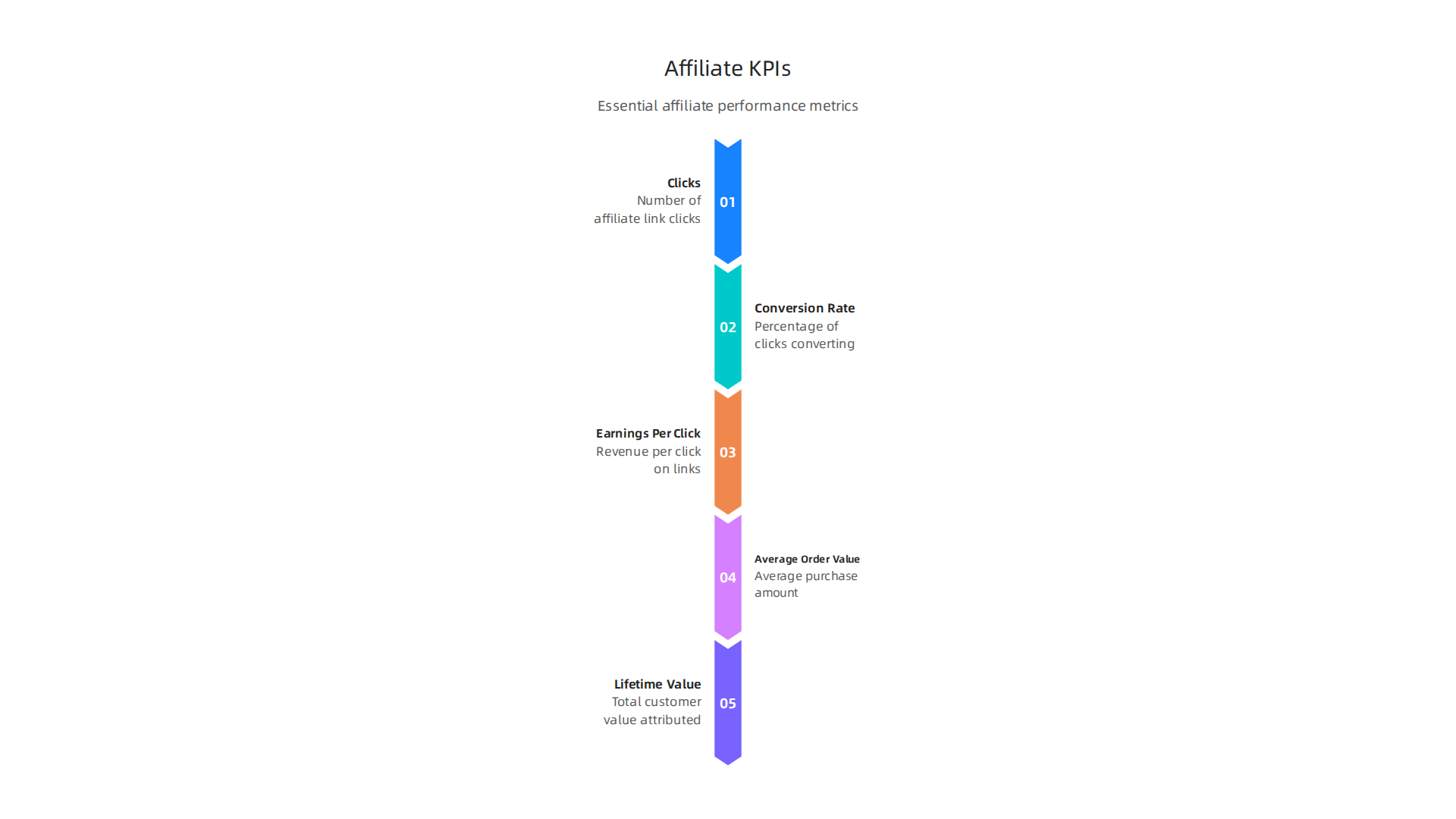
- Clicks: This is a simple count of how many times people clicked on your special affiliate links. More clicks usually mean more people are interested.
- Conversion Rate (CR): This number tells you what percentage of those clicks actually turned into a sale or a sign-up. For example, if 100 people click and 2 buy, your conversion rate is 2%. In 2026, the average affiliate conversion rate is often between 1% and 3%, but it can reach 5% or even 10% for very focused audiences or high-paying affiliate programs in certain niches, according to industry benchmarks Affiliate Marketing Conversion Rates: 2026 Benchmarks by Category.
- Earnings Per Click (EPC): This shows you how much money you earn on average for every single click on your affiliate link. It helps you see how valuable your traffic is. A good EPC for many niches in 2026 is often around $0.50 or higher, with some top programs seeing over $1.00 per click EPC in Affiliate Marketing: Earnings Per Click Guide.
- Average Order Value (AOV): This is the average amount of money a customer spends when they buy something through your link. A higher AOV means more commission for you from each sale. Many programs aim for an AOV that is 10-25% higher than the general average to show strong performance Affiliate Marketing Benchmarks 2026: Measure Your Program.
- Lifetime Value (LTV) Attribution: This looks at how much money a customer brings in over all their purchases, not just the first one, and gives credit back to the affiliate link that first brought them in. This is super important for understanding the long-term value of your work.
Setting Goals and Understanding Your Numbers
It’s good to know what typical numbers look like, but remember that benchmarks can change a lot depending on the kind of products you promote and your audience. For example, some industries like iGaming might have conversion rates between 1.8% and 4.2% and EPCs from $0.42 to $1.85, while other fields will be different Key Metrics in Affiliate Marketing: Benchmarks 2026.
To set realistic goals, you should compare your numbers to others in your specific niche or industry. You can also look at "cohort-based performance data," which just means looking at groups of customers who came from your links at a certain time to see how they perform over weeks or months. This helps you understand long-term trends, not just quick sales. For more insights on how to track sales and commissions, check out our guide on affiliate marketing link tracking that stops guessing and boosts earnings.
Clear Reports Help Everyone Succeed
For both affiliates and merchants, having clear and honest reports is key. Merchants should provide simple dashboards where affiliates can easily see their clicks, conversions, and earnings. This helps build trust and shows that the merchant values their partners. When reports are clear, affiliates know what’s working best and can make smart choices about where to put their time and effort. This open way of working helps everyone earn more money from their affiliate marketing programs.
After understanding how well your affiliate marketing programs are doing by looking at key numbers, the next vital step is to make sure you are following all the rules. This includes legal requirements for disclosures and building strong trust with your audience over time. This helps keep your affiliate business safe and growing in 2026.
Compliance, Disclosures, and Long-Term Trust-Building
Building trust is super important in affiliate marketing. People want to know they can count on your recommendations.

A big part of this is being open and honest about how you make money.
Why Disclosures Matter
When you recommend products or services as an affiliate, you usually get a commission if someone buys through your link. Because you get paid, this creates a "material connection" between you and the company you’re promoting. Laws, like those from the Federal Trade Commission (FTC) in the U.S., say you must clearly tell your audience about this connection. If you don’t, you could face big problems, like fines or legal action, as noted in the Affiliate Marketing Disclosure Requirements (2026).
Disclosures aren’t just about avoiding trouble; they’re about being fair to your audience. When people know you get paid for a recommendation, they can make their own choices more wisely. This honesty makes them trust you more.
What and How to Disclose
The rules are simple: you must clearly and obviously state that you might earn money from your recommendations. This means:
- Be Clear: Use easy-to-understand language. Phrases like "As an affiliate, I may earn a commission from qualifying purchases" or "Paid promotion" work well.
- Be Obvious: Your disclosure should be easy to see and read. It shouldn’t be hidden in tiny text, at the very bottom of a long page, or buried in terms and conditions.
- On Blogs/Websites: Place the disclosure at the top of your blog post or article, or right next to the first affiliate link you use. It should be on the same screen as the recommendation, so people see it without having to scroll far, according to Playing by the Rules: 6 affiliate link dos and don’ts in 2026. Some experts even suggest having a site-wide disclosure page linked from your footer, along with inline disclosures near each recommendation FTC Affiliate Disclosure for Solo Operators: The 2026 Compliance ….
- On Social Media: Disclosures must be right in the post itself, like using "#ad" or "#affiliatelink" at the very beginning. Built-in social media tools for "paid partnerships" can also help.
- AI-Generated Content: In 2026, if you use AI tools to create or improve product reviews, you also need to mention this along with your affiliate relationship What Is an Affiliate Disclosure? Why You Need One – wecantrack.
Remember, these rules aren’t just for the U.S. Many countries, including the UK and those in the EU, have similar strict guidelines for affiliate marketing programs to protect consumers Affiliate Compliance 2026: Global Laws & Best Practices. To learn more about crafting clear and compliant disclosures, explore our guide on how to write a compliant disclaimer for affiliate links.
Building Trust Beyond Disclosures
While disclosures are a must, real, long-term trust comes from consistent quality and an audience-first approach.
- Consistent Quality: Only promote products and services you genuinely believe in. Test them if you can, and give honest reviews. Your audience relies on your experience. This is key, whether you’re working with specific affiliate marketing platforms or larger affiliate networks.
- Transparent Testing: If you test a product, share your process. What did you like? What could be better? This shows you’re not just recommending for money, but because you truly evaluated it.
- Audience-First Recommendations: Always think about what’s best for your audience, not just what will earn you the highest commission. The best affiliate programs are those that offer products genuinely valuable to your followers. This approach builds a loyal audience who trusts your judgment and will keep coming back for more, strengthening your overall standing in the affiliate network.
Summary
Affiliate marketing programs let merchants pay publishers for driving sales, leads or actions, and this article explains how those programs work in 2026 and how both publishers and merchants can profit. It covers the main players (merchant, affiliate, customer, networks), the core payment models (pay-per-sale, pay-per-lead, CPA, revenue share), and the technical flow from click to payout. The guide outlines the content formats that convert most—detailed reviews, comparisons, long-form guides and funnels—plus how to pick products and programs using metrics like EPC, AOV and cookie duration. You’ll also learn the pros and cons of direct programs, affiliate networks and SaaS-managed platforms, and which tools and workflows help scale multiple partnerships. The article explains which KPIs to watch (clicks, conversion rate, EPC, AOV, LTV), how to run small tests, and common pitfalls such as tracking problems or slow payments. Finally, it covers compliance and disclosure best practices so you build long-term trust and avoid penalties. After reading, you’ll have a clear checklist to choose, test, manage and measure affiliate programs effectively in 2026.