Reviews & Guides from Our Experts

How Affiliate Link Programs Work and Which Ones Pay Best in 2026

Introduction
Affiliate link programs power a massive online industry. In fact, affiliate marketing generates billions of dollars each year. Brands love it because they only pay for results. Creators love it because they can earn money by sharing products they already like.
But here is the problem. With so many programs out there, picking the right one feels overwhelming. You might wonder how affiliate link tracking really works. You might worry about choosing a program that looks good but never pays. These are real concerns. And they stop many people from ever getting started.
This guide was made to fix that. We will explain exactly how different affiliate link programs work. We will break down what to look for as a beginner. And we will share proven strategies to help you earn more money. If you want a complete start to finish plan, read this guide on how to start affiliate marketing in 2026. It covers the very first steps you need to take.
Our goal is to help you build a business based on trust. The best affiliate links come from honest, helpful content. We will compare some of the top programs available this year. You will learn how to drive conversions without feeling salesy. We will also show you how to track your results so you know what is working. By the end, you will have a clear path forward and the confidence to start earning.

Let us jump in and find the perfect program for you.
What Are Affiliate Link Programs?
Affiliate link programs are simple on the surface. A company (the merchant) wants more customers. You (the affiliate) help send those customers. When a customer buys something through your unique link, you earn a commission. That is the whole idea.
These programs are called performance-based marketing. You only get paid when you deliver a result. That result might be a sale, a sign-up, or even just a click. And because merchants only pay for results, they are happy to share a cut with you. According to a detailed guide from Coursera, affiliate marketing is a revenue-sharing model where publishers earn money by promoting products. That is exactly what affiliate link programs do.
Every program has four basic parts you need to understand:
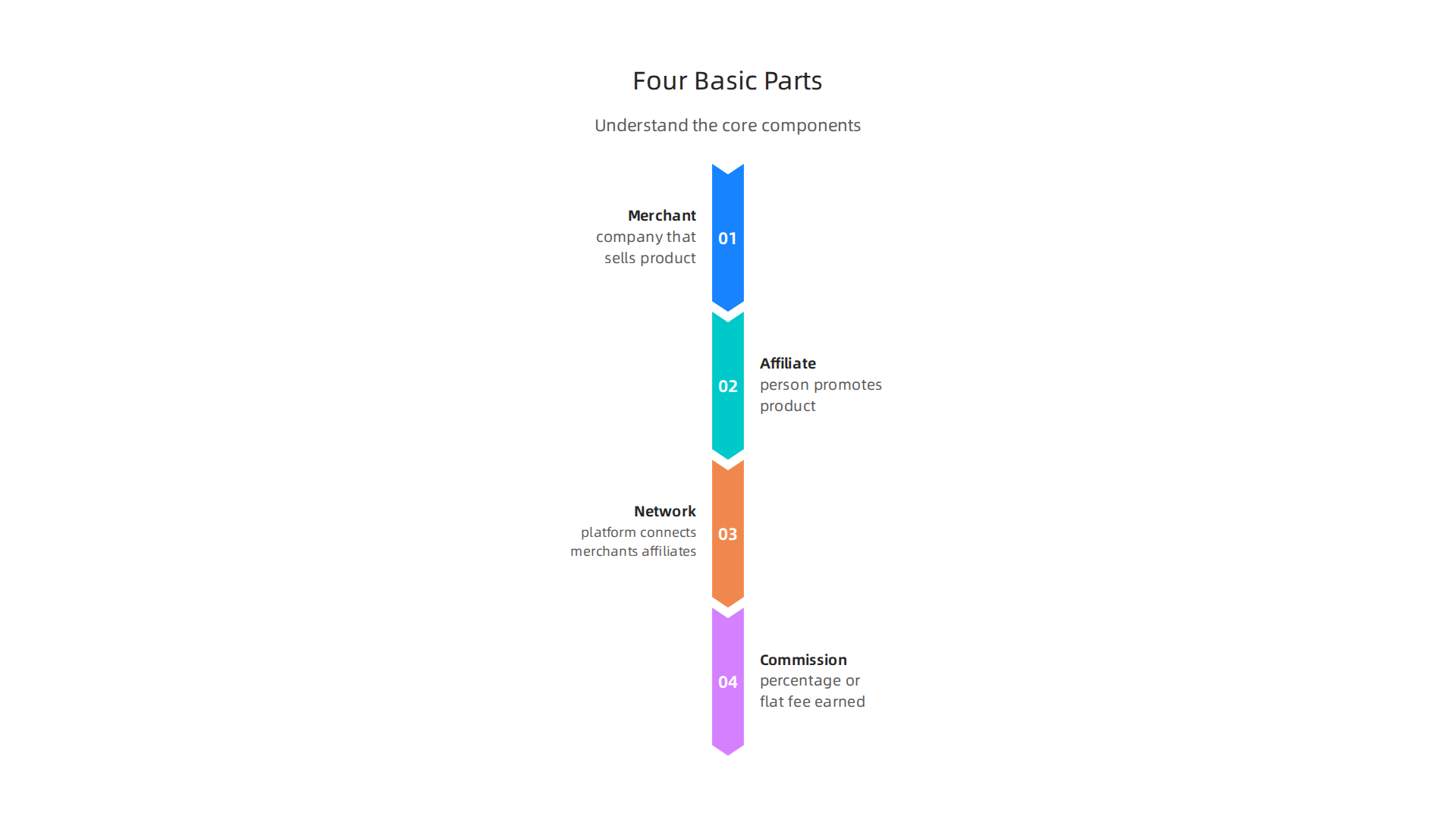
- The merchant – the brand or company that makes or sells the product.
- The affiliate – that is you, the person who promotes the product.
- The network – a platform that connects merchants and affiliates. Many programs use networks to handle tracking and payments.
- The commission – the percentage or flat fee you earn per action.
The magic happens through an affiliate tracking link. That link has a special code in it. When someone clicks, the code tells the merchant who sent them. This is how the system knows to pay you. If you want a deeper look at how all these pieces fit together, check out this guide on what affiliate marketing really means with real examples. It explains the whole process in plain language.
Once you know these building blocks, everything else starts to make sense. The next step is figuring out which program is right for you.
How Affiliate Link Programs Work
So how does the money actually start flowing? It all begins with a simple action. You place a unique affiliate link somewhere in your content. That might be a blog post, a YouTube video description, or a social media bio. Each link has a special code baked into it. As Indeed explains, affiliate links use cookies to track clicks and purchases back to the person who shared them.
When a reader clicks your link, a small file called a cookie drops into their browser. That cookie remembers you sent them. If they buy something within the cookie window (usually 30 to 90 days), the system credits you for the sale. No extra work needed on your part.
Here is where things get interesting. Not every program pays the same way. You will see four main commission types:
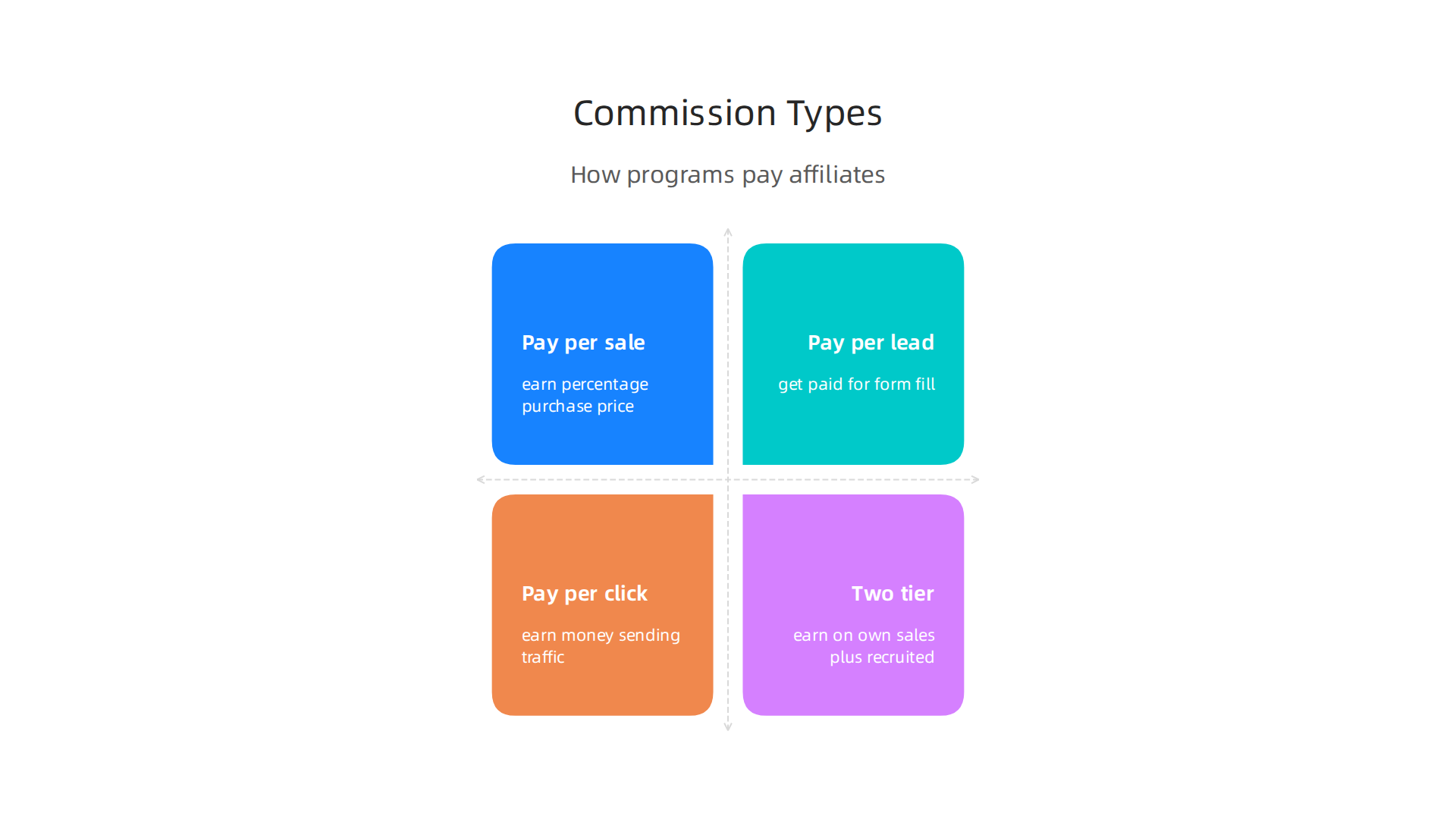
- Pay-per-sale – You earn a percentage of the purchase price. This is the most common model.
- Pay-per-lead – You get paid when someone fills out a form or signs up for a free trial.
- Pay-per-click – You earn money just for sending traffic, even if nobody buys.
- Two-tier – You earn commissions on your own sales plus a small cut of what your recruited affiliates sell.
Understanding these models helps you pick the right program for your goals. Want to learn more about how tracking codes work behind the scenes? Check out this breakdown on how affiliate link tracking captures commissions. It walks through the technical side in plain English.
Once you know how the system tracks and pays you, picking a program becomes much easier.
The Role of Affiliate Networks
But where do you actually find these programs? That is where affiliate networks come in. An affiliate network is a middleman that connects merchants with publishers like you.

As one business resource explains, affiliate networks act as intermediaries between merchants and affiliates. They handle all the heavy lifting: tracking clicks, managing payments, and catching fraud.
Popular networks include ShareASale, CJ Affiliate, and Rakuten. Each one offers a marketplace with thousands of programs. Instead of applying to dozens of merchants one by one, you sign up for one network and browse their whole catalog. Everything lives in a single dashboard. That saves time and keeps your affiliate link tracking organized.
For merchants, networks simplify program management too. They do not need to build their own tracking system or recruit affiliates manually. The network takes care of it. If you are just starting out, joining a network like ShareASale is a smart first move.
Check out this step-by-step guide on how to join ShareASale and start earning commissions in 2026 to get set up quickly.
Tracking and Cookies
Once you join a network and start sharing affiliate links, you need to know how those links get credit for sales. That is where tracking and cookies come in.
A cookie is a small file placed on a user’s browser when they click your affiliate link. It records that you referred them. If they buy something within the cookie’s lifetime, you earn a commission. Cookie duration varies by program. Some last only 24 hours. Others last up to 90 days. That is why checking cookie windows matters when you choose affiliate link programs.
Other tracking methods include pixel tracking, promo codes, and unique landing pages. These help when cookies are blocked.
But here is a challenge. Third-party cookie restrictions are changing the landscape. Many browsers now block them by default. That is pushing merchants toward server-side tracking or first-party cookies. To stay ahead, learn about affiliate window strategies that protect your commissions.
And always stay compliant. The FTC Affiliate Disclosure Requirements 2026 make it clear you must tell your audience about your affiliate relationships. That builds trust and keeps you out of trouble.
Benefits for Affiliates and Merchants
Now that you know how tracking and compliance work, let’s talk about why affiliate link programs are such a smart move for everyone involved. The beauty of this model is that it creates real wins on both sides.
For affiliates, the biggest draw is passive income. You create content once — a blog post, a video, a social post — and your affiliate links keep earning long after you hit publish. The upfront cost is low. You do not need to build a product, handle inventory, or deal with customer support. You just share what you love and get paid when people buy. And the numbers prove it is worth it. According to Affiliate Marketing Commission Rates in 2026, SaaS programs often pay 20 to 30 percent recurring commissions, while ecommerce averages 10 to 15 percent per sale. That kind of recurring income adds up fast.
For merchants, the benefit is just as strong. Instead of spending money on ads that may or may not work, you only pay when a sale happens. That is called pay-for-performance pricing, and it cuts down wasted ad spend a lot. You get a scalable sales channel without the risk of hiring a big sales team first. Plus, you tap into an audience you could never reach on your own.
Both sides also enjoy diversified revenue and shared risk. Affiliates are not putting all their eggs in one basket, and merchants are not relying on a single ad platform. It is a partnership that grows together.
If you are ready to find programs that actually deliver, check out these high pay affiliate programs to see what is possible.
For Affiliates
As an affiliate, you do not need to hold inventory or handle customer service. You just share content your audience trusts and earn commissions through your affiliate link tracking. That is one of the biggest perks: you focus on creating, not on logistics.
Access to advanced tracking and reporting is another game changer. You can see exactly which affiliate links drive the most sales and tweak your strategy accordingly. Good tracking also keeps you compliant with rules like the FTC Affiliate Disclosure Requirements 2026, helping you avoid costly penalties.
Many programs also throw in training resources and dedicated support to help you succeed. If you want a deeper look at how tracking mechanics work, check out this guide on how a KP affiliate link tracks sales and boosts commissions. It is a practical read that shows you what happens behind the scenes.
For Merchants
For merchants, affiliate link programs flip the script. Instead of paying upfront for ads, you only pay when a sale or lead is generated. That is a low-risk way to scale your reach. Your brand enters niche markets without spending extra on ads.
You also get access to real-time performance data through affiliate dashboards. You can see which affiliates drive the most revenue and adjust your strategy on the fly. This kind of transparency helps you build stronger partnerships.
Commission rates vary by industry, but knowing the benchmarks helps you set fair offers. For example, SaaS affiliate commission rates typically run 20% to 30% recurring, while ecommerce averages around 10% to 15% per sale. Setting competitive rates attracts top affiliates.
If you want to learn how to structure a program that attracts quality partners, check out this guide on B2B affiliate marketing strategies. It covers what matters most to merchants.
Key Factors to Consider When Choosing an Affiliate Link Program
Picking the right affiliate link programs is not just about who pays the biggest commission. A high rate means nothing if the cookie expires in one day or if the program has a bad reputation for delayed payments.
Here are the key factors to weigh before you commit:

- Cookie duration. This is the window of time after someone clicks your affiliate link that you still get credit for a sale. A 30-day cookie is common, but some programs offer 60 or even 90 days. Longer cookies give you more chances to earn.
- Payment terms and thresholds. Check how often you get paid and the minimum payout amount. Some programs pay monthly, others weekly. If the threshold is high, it might take months to see your first check.
- Program reputation. Read reviews from other affiliates. A program that is known for not paying or for changing terms without notice is not worth your time, no matter the commission rate.
- Niche and audience fit. The best affiliate link programs match your content and what your audience wants. If you run a blog about budgeting, a luxury travel program probably won’t convert. Instead, look for programs that solve your readers’ real problems.
One smart way to explore options is to join an affiliate network. Networks like ShareASale and CJ Affiliate let you browse and test multiple programs in one place. Many affiliates use networks to compare offers before committing to a single program. For a full list of platforms to start with, check out this guide on the best affiliate networks for marketers in 2026.
Finally, take time to evaluate the tracking and support behind each program. A reliable affiliate tracking link ensures you get credit for every sale. If you want a deeper look at what separates good programs from bad ones, this guide on how to evaluate a high paying affiliate program walks through the process step by step.
Commission Structures
Not all affiliate link programs pay the same way. Knowing the different models helps you choose the income style that fits your goals.
The most common commission structures include:
- Percentage of sale. This is the standard model. You earn a cut of each sale. Rates vary a lot by industry. Physical products pay around 5% to 15%, while digital products earn 20% to 50%. SaaS programs offer 20% to 30% recurring commissions based on current data on affiliate commission rates in 2026.
- Flat fee per sale. A fixed dollar amount per sale, no matter the cart total. This is common for high-ticket items like furniture or electronics.
- Recurring commissions. You get paid every month as long as the customer stays subscribed. Many SaaS programs use this model. For predictable monthly income, explore these best recurring affiliate programs for reliable monthly income.
- Multi-tier structures. You earn from affiliates you recruit, not just your own sales. This works well if you have a network of other marketers.
High-ticket items often have lower percentages but bigger absolute payouts. A 5% commission on a $2,000 product earns you $100 per sale. Digital products can reach 70% because delivery costs are low.
Always check the payout threshold and payment schedule too. Weekly payments with a low minimum help your cash flow much more than a quarterly payout with a high floor.
Cookie Duration
Another important detail in any affiliate link program is the cookie duration. This number tells you how long after someone clicks your affiliate tracking link you can still earn a commission if they buy.
Here is how it works. A potential customer clicks your link. A small file called a cookie drops into their browser. If they buy something within that cookie window, you get credit. If they buy one minute after the cookie expires, you earn nothing.
Standard cookie durations usually range from 1 to 30 days. But some programs offer much longer windows. Many SaaS products give you 60 to 90 days. That matters a lot because software buying decisions often take weeks of research. A longer window means your affiliate link tracking actually captures those delayed purchases.
This is one reason the best affiliate link programs in 2026 tend to come from digital products and subscription services. They understand the buyer journey takes time.
When you evaluate different affiliate link programs, always check the cookie duration before signing up. A 7-day cookie on a $500 product is far less valuable than a 90-day cookie on a $50 monthly subscription. For a deeper look at how this affects your income, check out these affiliate window strategies.
And remember, longer cookies almost always lead to happier affiliates. You work hard to earn that click. You deserve to get paid when the sale finally happens. For a broader view of how networks handle this, read this Best Affiliate Networks: Comparison Guide.
Program Reputation and Support
Cookie duration matters, but it means little if the program itself has a bad reputation. You need affiliate link programs with transparent terms, timely payments, and responsive affiliate managers. A program that pays late or ignores your questions will cost you time and money.
How do you check reputation? Head to affiliate marketing forums, review sites, and network ratings. Look for patterns in feedback. One or two bad reviews are normal. Dozens of complaints about missed payments are a red flag.
Programs with strong support help you troubleshoot problems and optimize your affiliate link tracking. That kind of help is gold when you are just starting out.
Programs that follow the latest FTC affiliate disclosure requirements for 2026 tend to have cleaner reputations. They prove they value transparency and compliance. For more on evaluating options, check out this guide on how to evaluate and join a high-paying affiliate program in 2026.
Top Affiliate Link Programs to Consider in 2026
You have a lot of choices when it comes to affiliate link programs. The best ones give you a big selection of products, strong tracking tools, and good commission rates. Let us look at a few that stand out in 2026.
Amazon Associates is the biggest name out there. It covers almost every product category you can think of. That makes it easy to find items to promote. But the cookie window is short, and rates can be low for some categories.
If you run a niche site, ShareASale and CJ Affiliate often give better terms. ShareASale is friendly for small and medium businesses. It has fast onboarding and a large base of independent publishers. CJ Affiliate offers high commission rates and a focus on advanced tracking. According to a recent comparison, these networks are strong options for brands at different growth stages. You can read more in the Affiliate Networks: 11 Best Options for Marketers (2026) guide.
Newer platforms like PartnerStack focus on software and recurring commissions. That means you earn money every month as long as your referral stays a customer. This is a great model if you promote tools or subscription services.
For more help choosing the right fit, check out this list of top affiliate marketing platforms for beginners in 2026. It breaks down the pros and cons of each network.
Amazon Associates
Amazon Associates is the biggest name in affiliate link programs.
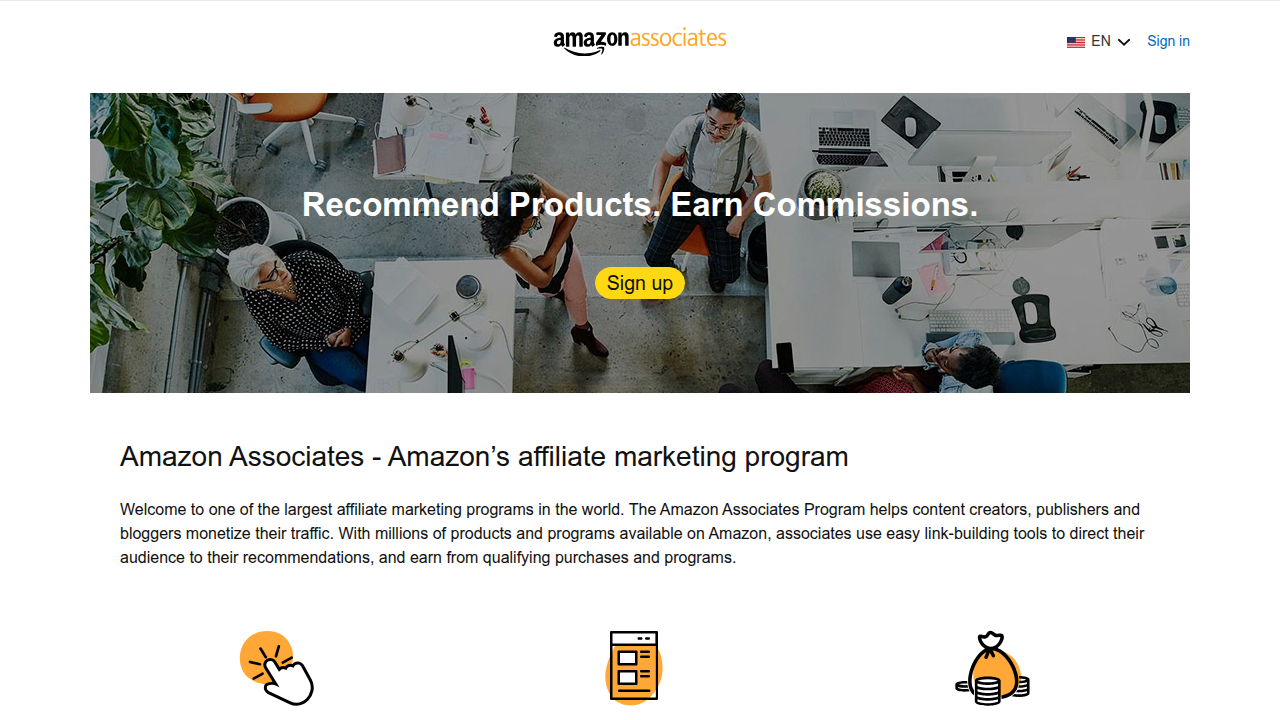
It gives you access to millions of products across almost every category. That makes it a great fit for general product recommendations or review sites.
One thing to keep in mind: commission rates vary from 1% to 10% depending on the product category. The cookie window is short too, only 24 hours. So you need a good volume of traffic to make it work well.
For a deeper look at how it compares to other top choices, check out this list of the 8 best affiliate programs in 2026. And if you want to get the most out of the program, this guide on how to maximize earnings with Amazon Associates shares practical tips.
ShareASale
If you want more control over your affiliate link programs, ShareASale is a strong choice. It has over 4,000 merchants and is known for its user-friendly dashboard and detailed reporting. This network also offers longer cookie windows than Amazon Associates, which means you have a better chance of earning commissions on delayed purchases.
You will find a wide range of commission models here too. Some programs pay a flat fee per sale, while others offer a percentage. This variety makes ShareASale a great fit if you want to promote different types of products.
For a deeper look at how this network compares to others, check out this 2026 affiliate network comparison guide. And if you decide to join, this ShareASale affiliate guide for 2026 walks you through signing up and getting started.
CJ Affiliate (formerly Commission Junction)
Another top option among affiliate link programs is CJ Affiliate. It is one of the oldest and largest networks around. CJ focuses on big brand partnerships and offers advanced affiliate link tracking tools.
Here is what sets it apart. Many advertisers on CJ offer cookie durations up to 90 days. That gives you more time to earn a commission after someone clicks your link. CJ is especially strong in health, finance, and retail niches.
If you want to learn more about its advanced tracking and real-time analytics features, check out this comparison guide. And for a complete walkthrough, this guide on succeeding on the CJ Affiliate network covers everything from sign-up to maximizing your results.
Rakuten Advertising
Now let’s talk about a network that focuses on quality over quantity. Rakuten Advertising is a global powerhouse, especially strong in the US, UK, and Japan. It is known for working with premium merchants.
This network rewards serious affiliates. If you bring in strong results, Rakuten offers data-driven insights and a dedicated account manager to help you optimize. Cookie durations average around 30 days, which is standard for high-end networks.
Curious which network fits your stage best? This detailed comparison of affiliate networks breaks down where Rakuten excels. If you are just starting out, building a solid foundation first is smart. Our step-by-step affiliate marketing roadmap for 2026 will help you get ready for premium programs like this one.
PartnerStack
Not all affiliate link programs fit every niche. If you promote software, subscriptions, or digital tools, PartnerStack is worth a close look.

This platform specializes in B2B SaaS partnerships. It handles automated payouts and flexible commission structures. The real draw is the focus on recurring revenue. You get paid every month as long as your referral stays subscribed.
PartnerStack is newer than networks like Rakuten. But it is built specifically for the modern software economy. For more context on how this network compares to others, check out this list of the best affiliate marketing websites in 2026. If recurring income appeals to you, our guide to SaaS affiliate programs that generate recurring commissions in 2026 will help you pick the right fit.
Strategies for Maximizing Your Affiliate Link Program Success
Picking the right network is just the start. How you handle your affiliate links day to day really decides your income.

Lead with value, not hard sells. Readers sense a pitch instantly. Content that answers a real question or solves a genuine problem builds trust. When you weave your affiliate tracking link into something helpful, the click feels natural. The wecantrack guide to affiliate marketing best practices for higher conversions confirms that link placement within useful content beats aggressive promotion every time.
Test and learn. Try different positions for your affiliate links. Does a link early in the article outperform one near the end? Run small A/B tests. Analytics tools can show you which products your audience actually clicks and buys. Keep what converts and drop what does not.
Invest in your own growth. Copywriting skills help you make recommendations that feel natural. SEO skills help more people discover your content. Data analysis skills help you spot winners fast. These compound over time. A solid affiliate links SEO strategy can boost both your rankings and your revenue.
Master these three areas and your affiliate link programs will start earning more consistently.

Content Creation Best Practices
The content you build around your affiliate link programs is what actually earns clicks and sales. Here is how to make it work.
Write honest reviews that help people. Share what you truly liked and did not like. Talk about real problems the product solved for you. Readers can tell when you are being genuine. A detailed review beats a generic sales pitch every time. The guide on effective affiliate marketing content types shows that comparison articles and personal reviews drive the highest conversions.
Use visuals to build trust. Include your own photos, short videos, or simple comparison tables. Seeing a product in real use makes your recommendation more believable. If you struggle with design, consider picking up UX skills. Programs like Avocademy — UX/UI Online Training can help you create cleaner, more professional-looking content that stands out.
Keep everything fresh. Products change. Prices shift. New versions launch. Revisit your old posts every few months and update the information. Dead links and outdated prices hurt your credibility fast. Regular updates also help your SEO rankings. If you need a structured approach, this guide on how to build an affiliate marketing blog walks you through the whole process step by step.
Stick with these habits and your content will keep earning long after you hit publish.
SEO and Link Placement
Great content is only half the battle. If people cannot find your posts, your affiliate link programs will not earn anything. That is where SEO comes in.
Start by optimizing every page for relevant keywords your audience actually searches for. Think about what they type into Google when looking for a solution. Then place your affiliate links naturally inside the body of your content rather than shoving them at the top or bottom. Links that feel like part of the helpful information get clicked far more often.
Your anchor text matters a lot too. Use descriptive phrases that include the product name and tell readers what they will find. For example, instead of "click here," use something like "check out the latest running shoes reviews." But do not go overboard. Over-optimizing every single link can look spammy to search engines. The article on affiliate marketing SEO tips explains this balance well.
Some marketers use tools like Skimlinks or VigLink to automatically turn existing links into affiliate links. These tools save time, but manually placing your affiliate tracking link inside relevant sentences usually leads to better conversions. Your readers can tell when a link belongs there.
If you want to go deeper on this topic, check out this guide on affiliate links SEO strategy. It covers how to structure your affiliate link tracking setup for better search rankings and higher revenue.
Building Trust with Your Audience
All the SEO work in the world means nothing if your audience does not trust you. When you use affiliate link programs, your readers need to know you have their best interests at heart.
Start by being upfront. The FTC requires you to clearly disclose your affiliate relationships. Penalties for missing or unclear disclosures are real, so always include a visible disclaimer near your affiliate links. A simple line like "I may earn a commission if you buy through this link" builds honesty from the start. The guide on FTC affiliate disclosure requirements 2026 explains exactly what you need.
Next, only recommend products you have tried or truly believe in. Your readers can spot a fake recommendation from a mile away. If you promote something just for the commission, they will stop clicking your links altogether.
Finally, engage with your audience. Reply to comments, answer questions on social media, and send honest emails. When people feel heard, they trust your advice more. For a step-by-step guide on setting up proper disclaimers, check out this resource on writing a compliant disclaimer for affiliate links.
Summary
This article is a practical guide to affiliate link programs, explaining how they work, who the players are, and how commissions get tracked and paid. It covers the main commission models (pay-per-sale, lead, click, two-tier), the role of affiliate networks, and the technical side of tracking like cookies, pixels, and server-side methods. The guide shows what matters when choosing a program—cookie duration, payment terms, reputation, niche fit—and compares popular options such as Amazon Associates, ShareASale, CJ Affiliate, Rakuten, and PartnerStack. You’ll also find actionable strategies for creating trustworthy content, optimizing SEO and link placement, testing links, and protecting your commissions as cookie policies evolve. The article emphasizes long-term, value-first tactics—honest reviews, updates, and audience engagement—plus compliance with FTC disclosure rules. After reading, you’ll be able to evaluate programs, pick networks that match your goals, and apply content and tracking practices that increase conversions and recurring income.