
Reviews & Guides from Our Experts

Affiliate Marketing PPC in 2026 How to Build Profitable Campaigns Without Wasting Money

Introduction
The affiliate marketing industry is massive in 2026. Global affiliate spend is projected to hit $19.4 billion this year according to Forrester’s latest forecast, and the market keeps growing fast. For affiliates and merchants alike, paid traffic through pay per click campaigns has become one of the fastest ways to drive targeted visitors to your offers.
But here is the thing. Many people confuse PPC with other affiliate marketing models. They think running a few ads is the same as building a content site or relying on organic social traffic. That confusion leads to wasted ad spend and poor results. You need a clear strategy to make affiliate marketing pay per click work for you.

That is where this guide comes in. Whether you are an affiliate looking to scale your commissions or a merchant trying to get the best return from your program, you need specific tactics that make PPC profitable in 2026. We will cover how to set up your campaigns, choose the right offers, and avoid the common mistakes that eat your budget.
If you are serious about learning how to do affiliate marketing with paid traffic, this article is for you. For example, if you want to explore high paying affiliate programs that work well with PPC, check out our list of options available this year. And if you are new to paid traffic and need help getting started, platforms like Careerist offer training that can give you the skills to manage your campaigns effectively.

Let us dive in.
Understanding Affiliate Marketing PPC: How It Works and Why It Matters
Let’s start with a simple definition. Affiliate marketing pay per click is a model where affiliates earn money every time someone clicks their ad. Instead of waiting for a sale to happen, you get paid for sending traffic. That is a big difference from other affiliate models.
Here is how it works. You create an ad. Maybe it is a text ad on Google or a short video on social media. You place your affiliate link inside the ad. When someone sees your ad and clicks it, the merchant pays you.

Your job is to get people to click. The merchant’s job is to convert those clicks into customers. It is a partnership based on traffic volume.
Merchants love this model because they only pay for performance. No clicks, no cost. That makes it a low risk choice for businesses that want to grow fast. In fact, global affiliate spend hit $19.4 billion in 2026, and PPC is a big part of that growth. Many merchants use PPC campaigns alongside other affiliate marketing ads to reach new audiences quickly.
For affiliates, the appeal is speed. You do not have to write blog posts for months or build an email list. You can start driving traffic today. No content dependency means you can test offers fast and scale what works. But success still requires skill. You need to know how to do affiliate marketing with paid traffic, including keyword research, ad copywriting, and landing page optimization.
If you want to explore offers that work well with PPC, check out our list of high paying affiliate programs that are popular in 2026. And if you are new to PPC and need structured training, platforms like Careerist offer hands on courses that teach you how to manage paid campaigns from scratch.
In short, affiliate marketing PPC gives both sides a clear win. Affiliates get fast traffic and quick payouts. Merchants get risk free traffic tied to real performance. That is why this model keeps growing year after year.
Key Differences Between PPC and Other Affiliate Models (CPA, CPC, CPL)
Now that you understand the basics of affiliate marketing pay per click, let’s look at how it compares to other common affiliate models. Each one changes how you earn money and how much risk you take on.
The Quick Comparison
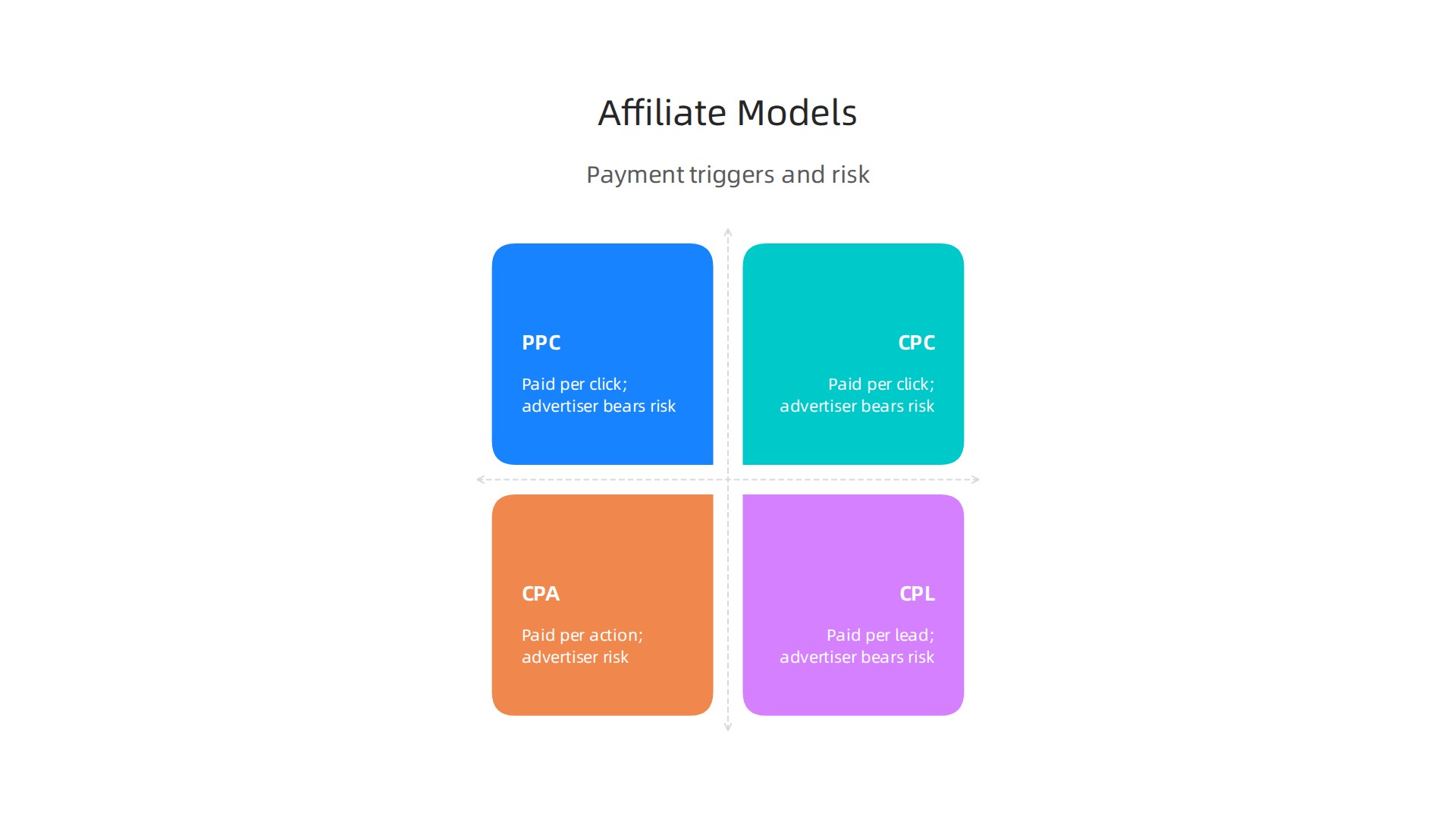
Here is a simple breakdown of the four main models:
| Model | What You Get Paid For | Who Takes the Risk |
|---|---|---|
| PPC (Pay Per Click) | Every click on your affiliate link | Merchant pays for traffic even without a sale |
| CPC (Cost Per Click) | Same as PPC, but from the advertiser’s side | Advertiser pays for each click |
| CPA (Cost Per Acquisition) | Only when a sale happens | Affiliate takes the risk of no conversion |
| CPL (Cost Per Lead) | When someone submits a lead (email, form fill) | Shared risk between affiliate and merchant |
Here is an important thing to notice. PPC and CPC are basically the same mechanism. The difference is just perspective. As an affiliate, you call it pay per click because that is how you earn. Merchants call it cost per click because that is what they pay. So when you hear someone talk about affiliate marketing ads using CPC, they are really talking about PPC from the other side.
When Each Model Works Best
PPC works great when you want fast traffic. You do not need to wait for conversions. This model works well for testing new offers, and many affiliates use it to validate niches before scaling up. The PPC Validation Framework recommends starting with small test budgets before going all in on a campaign.
CPA is better when you want higher payouts per action. The trade off is that you only earn when a sale closes. This model works best for affiliates who already understand how to do affiliate marketing with high converting content and strong landing pages.
CPL sits in the middle. You earn for leads, not sales. This is common in finance, insurance, and education niches where a warm lead is valuable to the merchant.
How Payment Structures Affect Your Behavior
Your chosen model changes your daily focus:
- With PPC, you optimize for click through rates. Every extra click means more money.
- With CPA, you optimize for conversions. You care about the whole funnel, not just the click.
- With CPL, you optimize for form completions. Your landing page and offer matter most.
Merchants also behave differently. A merchant using CPA has less risk because they only pay for results. A merchant using PPC takes more risk but gets more traffic volume. That is why many advanced programs use a mix of models.
If you want to explore which programs fit your preferred model, check out our list of the best high ticket affiliate marketing programs for 2026 that work well with different payment structures.
For affiliates who want structured training on running paid campaigns across all these models, platforms like Le Wagon offer intensive bootcamps that teach digital marketing skills from the ground up.
The bottom line is simple. Pick your model based on your goals. Want fast traffic and quick feedback? Go PPC. Want bigger payouts per action? Go CPA. Want something in between? Go CPL. And remember, you can always mix models as you grow your affiliate business.
Building a Profitable PPC Strategy for Affiliates
So you have decided that affiliate marketing pay per click is your model. Good choice. But PPC only works if you build a smart strategy around it. You cannot just throw money at ads and hope for the best. You need a plan that covers keyword research, bidding, and landing pages.
Keyword Research Tailored for Affiliate Offers
The biggest mistake new affiliates make is targeting the wrong keywords. You want keywords with commercial intent. That means people who are ready to buy, not just browsing.
Look for phrases like "best [product] for [use case]" or "[product] discount code." Avoid generic terms like "what is [product]."
You also want low competition keywords. High competition terms eat up your budget fast. Use tools like Google Keyword Planner or SEMrush to check competition levels. Start with long tail keywords. They have lower search volume but higher conversion rates. The PPC Validation Framework recommends starting with small test budgets to validate your keyword choices before scaling up.
For more ideas on choosing profitable offers, check out our list of the best high ticket affiliate marketing programs for 2026 that work well with PPC.
Bidding Strategies That Save You Money
You have two main options for bidding: manual and automated. Manual bidding gives you full control. You set your maximum cost per click for each keyword. This works well when you are testing new campaigns. Automated bidding lets Google or your ad platform optimize for you. It can work, but you need to watch it closely.
Set a daily budget you are comfortable losing. Start small. Maybe $10 or $20 per day. Then use negative keywords to filter out bad traffic. For example, if you sell premium software, add "free" as a negative keyword. That stops people looking for free versions from clicking your ads.
Platforms like Google Ads and Bing Ads are popular for affiliate marketing ads. You can also try native ad networks like Taboola or Outbrain for content based offers. If you want structured training on running paid campaigns, Le Wagon’s digital marketing bootcamps teach hands on skills from the ground up.
Landing Page Optimization for Higher Conversions
Your ad gets the click. Your landing page makes the sale. That means your page must match what your ad promises. If your ad says "best running shoes under $100," your landing page better show exactly that. No distractions.
Use trackable affiliate links so you know exactly where each click comes from. This helps you optimize over time. Make sure your page loads fast. A one second delay can cut conversions by 7%. Remove clutter. Keep the headline clear. Use bullet points for benefits. And always include a strong call to action.
High-converting landing pages are a key trend in 2026 affiliate marketing. Focus on quality content that builds trust, not just sales pitches.
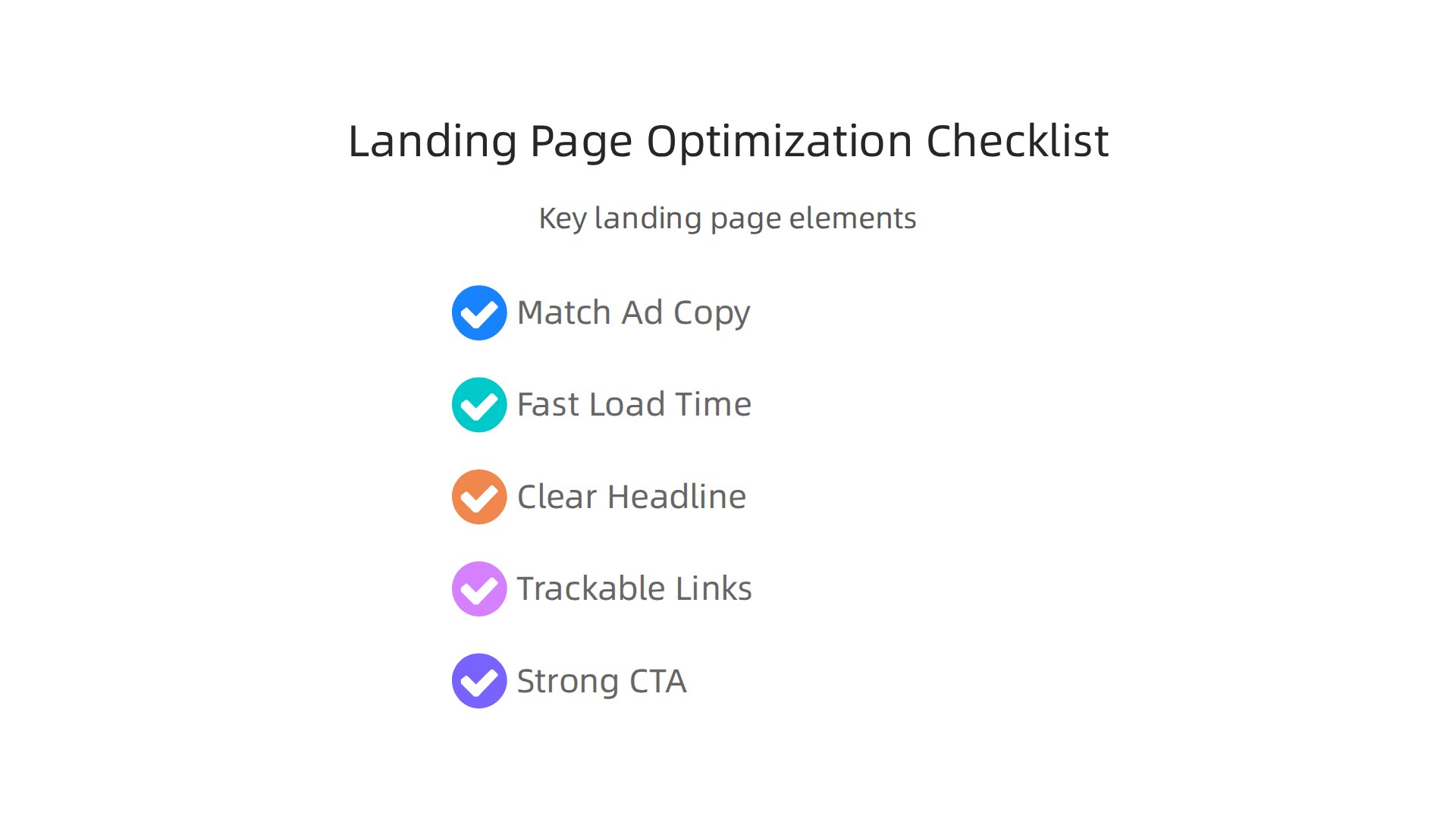
Here is a quick checklist for your landing page:
| Element | Why It Matters |
|---|---|
| Match ad copy | Keeps the user engaged |
| Fast load time | Reduces bounce rate |
| Clear headline | Grabs attention |
| Trackable links | Measures performance |
| Strong CTA | Drives the action |
Start with one campaign. Test your keywords, bidding, and landing page. Then scale what works. That is how you build a profitable PPC strategy that generates consistent affiliate commissions.
For Merchants: Managing PPC Affiliate Campaigns Effectively
So you are a merchant running an affiliate program. You have affiliates who use pay per click ads to promote your products. That is affiliate marketing pay per click in action. But managing those affiliates is different from running your own ads. You need to control quality, track properly, and stay compliant.
Recruiting and Vetting PPC Affiliates
Not every affiliate is a good fit for PPC. Some drive traffic from social media or email. That is fine, but PPC requires a different skill set. When you recruit, look for affiliates who already run paid ads in your niche. Check their traffic sources. Ask about their ad platforms. Also check their compliance history. Have they ever violated rules around disclosures or trademark bidding? A bad affiliate can hurt your brand.
Here is what to look for in a PPC affiliate:
- Relevant traffic sources (Google Ads, Bing, native ads)
- Proven experience with landing pages and conversion tracking
- Clean compliance record
Tracking and Attribution
You need to know exactly which affiliate sent a paying customer. Use your affiliate network’s tracking system or a third party tool like Post Affiliate Pro or HasOffers. Set clear attribution windows. For example, if a customer clicks an affiliate link today but buys next week, who gets credit? Decide that upfront.
Trackable affiliate links are a must. They let you see each click, conversion, and commission. If you want to automate parts of your affiliate management, check out our guide on how to automate affiliate marketing with proven strategies.
Compliance and Brand Safety
This is the biggest risk area. The FTC requires affiliates to clearly disclose their paid relationship with you. In 2026, the rules are stricter than ever. Penalties can reach $51,744 per violation. That is serious money.
Make sure your affiliates follow these rules:
- They must disclose "material connection" to your brand on every ad and landing page.
- They cannot bid on your trademarked terms without your permission.
- They should not make false or exaggerated claims about your products.
You can find the full list of obligations in the FTC Affiliate Disclosure Requirements for 2026.
Also review the Ultimate Guide to Affiliate Compliance 2026 for a complete checklist.
If you need to train your affiliate managers or yourself on running compliant PPC campaigns, Le Wagon’s digital marketing bootcamps offer hands on training that covers compliance and ad platforms.
Keeping your affiliates compliant protects your brand from fines and bad press. Build a system to check their ads regularly. Remove anyone who ignores the rules. That way your affiliate marketing pay per click program stays profitable and safe.
PPC vs. SEO for Affiliate Monetization: Which Should You Prioritize?
So you have decided to make money with affiliate marketing. Now comes the big question. Should you spend your time on pay per click ads or on search engine optimization? Both can work. But they work very differently. Understanding the trade-offs will help you pick the right path for your goals.
Speed vs. Patience
PPC gives you fast results. You set up a campaign, launch it, and you could see traffic within hours. That is great if you need quick commissions or want to test a new offer. SEO takes much longer. It often takes months to rank on Google. But when you do, the traffic keeps coming without you paying for each click.
Here is a quick comparison:
| Factor | PPC | SEO |
|---|---|---|
| Speed of results | Hours to days | Months to years |
| Cost per visitor | Pay per click | Free after initial content cost |
| Control | High (you control ads, budget, targeting) | Low (Google controls rankings) |
| Sustainability | Stops when you stop paying | Can last for years with maintenance |
When PPC Wins
PPC is the better choice when you are starting a brand new site. You have no authority yet. Google will not rank you. But you can still buy traffic through affiliate marketing ads. PPC also shines for seasonal promotions. Think Black Friday or Christmas. You can turn ads on and off quickly. And if you want to test a product or a landing page, PPC lets you see what converts fast without waiting for organic rankings.
When SEO Wins
SEO is best when you want to build long term authority. If you write high quality content that answers people’s questions, that content can bring you passive income for years. High intent content like "best running shoes for flat feet" converts well because the reader is ready to buy. Over time, your affiliate links in those articles earn commissions without you spending a dime on ads. That is the dream of how to do affiliate marketing sustainably.
Compliance Matters Either Way
No matter which method you choose, you must follow FTC rules. In 2026, penalties for not disclosing your affiliate relationship can reach $51,744 per violation. That applies to both paid ads and organic content. Make sure every affiliate marketing pay per click ad and every blog post clearly states your material connection to the brand. The FTC Affiliate Disclosure Requirements for 2026 guide explains exactly what you need to include.
Making Your Choice
Think about your current situation. If you have money but little time, PPC can jumpstart your income. If you have time and patience but little budget, start with SEO. Many successful affiliates do both. They use PPC to fund their early growth while building SEO assets for the long run.
If you are just starting out and want a low risk way to learn the ropes, check out this guide on how to build an affiliate marketing side hustle in 2026 with 8 steps. It covers both strategies in a beginner friendly way.
And if you want professional training on running paid campaigns or SEO, Le Wagon’s digital marketing bootcamps offer hands on courses that cover both PPC and search optimization. That kind of structured learning can save you months of trial and error.
The right choice depends on your goals. But now you know the strengths of each. Start with the one that fits your resources today, and add the other later.
Essential Tools and Technologies for PPC Affiliate Marketing
So you have decided that affiliate marketing pay per click is your path. Nice. Now you need the right tools to make it work. Without them, you will waste money on bad clicks and miss opportunities. Here are the three types of tools you need to set up, run, and scale your affiliate marketing ads.
Keyword Research Tools
You cannot run profitable PPC campaigns without knowing which keywords to target. You want terms that people search for but that do not cost too much per click. Tools like SEMrush help you spy on competitor keywords, find profitable terms, and see what ad copy your rivals use.
That data is gold when you are trying to learn how to do affiliate marketing with paid traffic. The best PPC tools in 2026 all include keyword research features that show you search volume, competition level, and cost per click at a glance.
Ad Management and Optimization
Once your campaigns are running, you need to manage them. Manual bidding is fine when you have five keywords. But if you scale to hundreds, you will want automation. PPC automation tools can handle bid adjustments based on time of day, device, or location. They also run A/B tests on your ad copy and landing pages so you can find what converts best without staring at spreadsheets all day. This is where you turn a small profit into a scalable income. If you want to dive deeper into saving time with automation, check out this guide on how to automate affiliate marketing with proven strategies.
Tracking and Analytics
Here is the part most beginners skip. You cannot improve what you do not measure. You need to know exactly which click came from which ad, which keyword converted, and whether you are getting fake clicks from bots. Affiliate marketing tracking software gives you that data. It shows you attribution paths so you can credit the right channels. And fraud detection flags suspicious clicks before they eat your budget.
Affiliate marketing pay per click is a skill. The tools just help you execute faster. Start with one tool in each category and learn it well before adding more. And if you want structured training on applying these tools correctly, Careerist offers immersive digital marketing training that can help you build real skills fast.
Common PPC Affiliate Mistakes and How to Avoid Them
Even with the best tools, beginners make costly mistakes. If you want your affiliate marketing pay per click campaigns to actually make money, you need to avoid these three common traps. Here is how to spot them and fix them fast.
Mistake 1: Ignoring Negative Keywords
This is the biggest waste of money for new affiliates. You target "buy running shoes" but your ad also shows for "repair running shoes" or "cheap running shoes" from a different brand. Those bad clicks eat your budget. The fix is simple: add negative keywords to your campaigns. These are search terms you do not want your ad to appear for. Use a keyword research tool to find irrelevant terms and block them. Many PPC advertising software tools include negative keyword suggestion features that catch terms you might miss on your own. Check your search terms report weekly and add new negatives.
Mistake 2: Poor Landing Page Alignment
Your ad says "lose weight with plant-based protein." The user clicks and lands on a page about weightlifting supplements. They leave immediately. Google sees this and gives you a low Quality Score. That means you pay more per click. Your landing page must match your ad promise exactly. Use the same headline, offer, and keywords from your ad. Best PPC reporting tools can show you which landing pages convert and which ones drive users away. Test different page versions until you see improvement.
Mistake 3: Neglecting Mobile Optimization and Ad Scheduling
More than half of clicks come from phones. If your landing page loads slowly or looks broken on a mobile screen, you lose conversions.

Also, running ads 24/7 is a mistake. Maybe your audience clicks most between 7 PM and 10 PM. Show ads only during those hours to save money. PPC tools every marketer should use include mobile preview and ad scheduling features. Turn them on. Test your page on a real phone. Adjust your schedule based on data.
If you want to get serious about affiliate marketing and turn it into a real income stream, learning from mistakes is only half the battle. You also need a solid plan. Check out this guide on how to build an affiliate marketing side hustle in 2026 with 8 steps to take action after fixing these issues. And if your landing pages still do not convert, consider improving your design skills. Avocademy offers UX/UI training that can help you build pages that users trust and click.
Future Trends in Affiliate Marketing PPC for 2026 and Beyond
You have fixed your negative keywords and aligned your landing pages. Now it is time to think about where the industry is going. The world of affiliate marketing pay per click is changing fast in 2026. If you want to stay ahead, you need to know what is coming next.
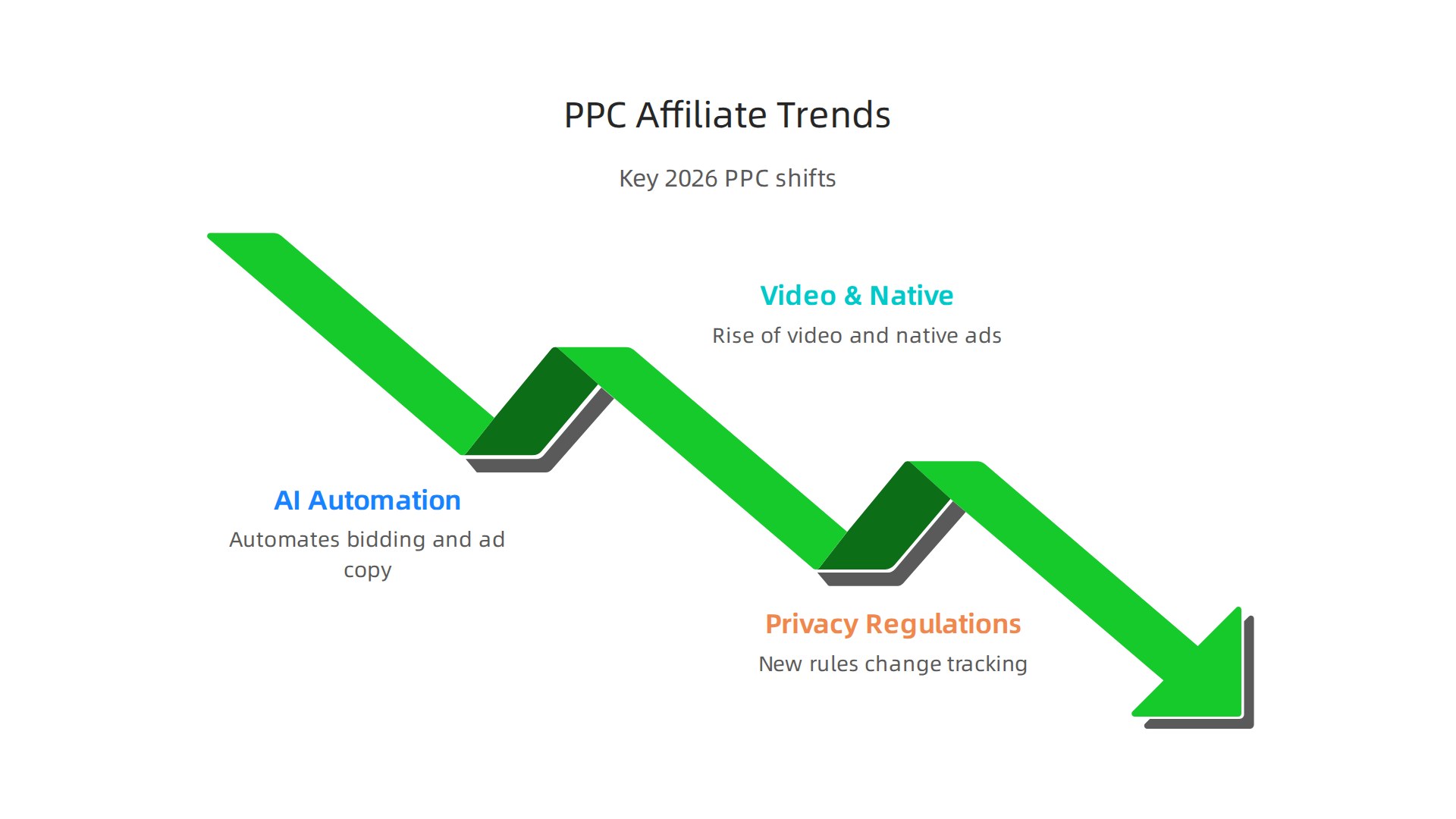
Trend 1: AI Takes Over Bidding and Ad Copy
Artificial intelligence is no longer a fancy extra. It is becoming the engine behind your campaigns. In 2026, AI tools automatically adjust your bids in real time based on user behavior, time of day, and even weather. They also write ad copy that matches what your audience wants to see. According to the experts at Improvado, the biggest PPC trends in 2026 center on AI-driven automation and privacy-first targeting. You do not have to guess anymore. The machine learns what works and does it for you. This saves time and lowers your cost per click.
Trend 2: More Video Ads and Native Advertising
Affiliate marketing ads are moving beyond simple text and image banners. Video ads on platforms like YouTube, TikTok, and Instagram are driving higher conversions. Short clips where you show a product in action can earn more clicks than a standard search ad. Native advertising, which blends into the content people already read, is also growing fast. Affiverse reports that user-generated content creators are taking over from traditional influencers. You can share authentic video reviews and include your affiliate links without feeling pushy.
Trend 3: Privacy Rules Change How You Track
The days of easy third-party cookies are ending. New privacy regulations in 2026 make it harder to track users across the web. This changes how you do affiliate marketing. You need to rely on first-party data, meaning information that users give you directly. You might ask for email addresses in exchange for a free guide. You can also use platform-specific tracking tools inside Google and Facebook. Digistore24 explains that regulations are getting stricter, but smart affiliates are adapting by building their own audiences.
The future belongs to affiliates who learn new skills and use smarter tools. If you want to get better at creating the kind of landing pages that convert with these new ad formats, consider investing in your design skills. Avocademy offers UX/UI training that can help you build high-trust pages that work on any device.
And if you want to automate more of your routine tasks so you can focus on strategy, check out this guide on how to automate affiliate marketing with proven strategies to save time and boost revenue. The trends are clear. The question is: are you ready to ride the wave?
Conclusion: Building Your PPC Affiliate Success in 2026
You now have a clear roadmap for affiliate marketing pay per click in 2026. Let us wrap up with the most important takeaways.
First, always build trust. Disclose your affiliate links honestly and send only quality traffic to your partners. When people trust you, they click and buy more. Use the tools we covered, like negative keywords and AI bidding, to refine your affiliate marketing ads without wasting money.
Second, start small. Pick one or two channels, test your campaigns, and look at the data. Adjust your bids and landing pages based on what actually works. According to FirstPromoter, the affiliate marketing industry is expected to grow by 18.6% every year through 2032. That means there is plenty of room for you if you take consistent action.
Third, keep learning. The rules around privacy and tracking keep shifting. Digistore24 notes that regulations are getting stricter, so stay flexible. Build your own email list and use platform tools to track conversions.
If you are just starting out and want a step by step plan, check out this guide on how to build an affiliate marketing side hustle in 2026 with 8 steps. It walks you through getting your first traffic and commissions.
And if you want to build stronger digital skills, consider training that opens doors to tech roles in this space. Careerist offers immersive training to help you access tech jobs and deepen your marketing expertise.
The key to affiliate marketing pay per click success is simple: test, learn, and repeat. Start today, stay honest, and keep improving. Your next campaign could be your best one yet.
Summary
This guide explains how affiliate marketing pay per click (PPC) works in 2026 and gives a practical roadmap for affiliates and merchants who want fast, measurable traffic. It covers the mechanics of PPC, how it differs from CPA and CPL models, and which situations favor each approach. You’ll get step‑by‑step advice on keyword research, bidding strategies, landing page optimization, and the essential tools for tracking and automation. The article also shows merchants how to recruit, vet and manage PPC affiliates while staying compliant with disclosure and trademark rules. Common beginner mistakes—like ignoring negative keywords, poor landing page alignment, and weak mobile optimization—are highlighted with fixes. Finally, it looks ahead at trends such as AI bidding, video/native ads, and privacy changes so you can adapt your strategy and scale profitable campaigns safely.