Reviews & Guides from Our Experts

Affiliate Marketing Link Tracking That Stops Guessing and Boosts Earnings

Introduction
Picture this: You spend hours writing product reviews, sharing links on social media, and building content for your audience. But at the end of the month, you have no idea which links actually earned money. Sound familiar?
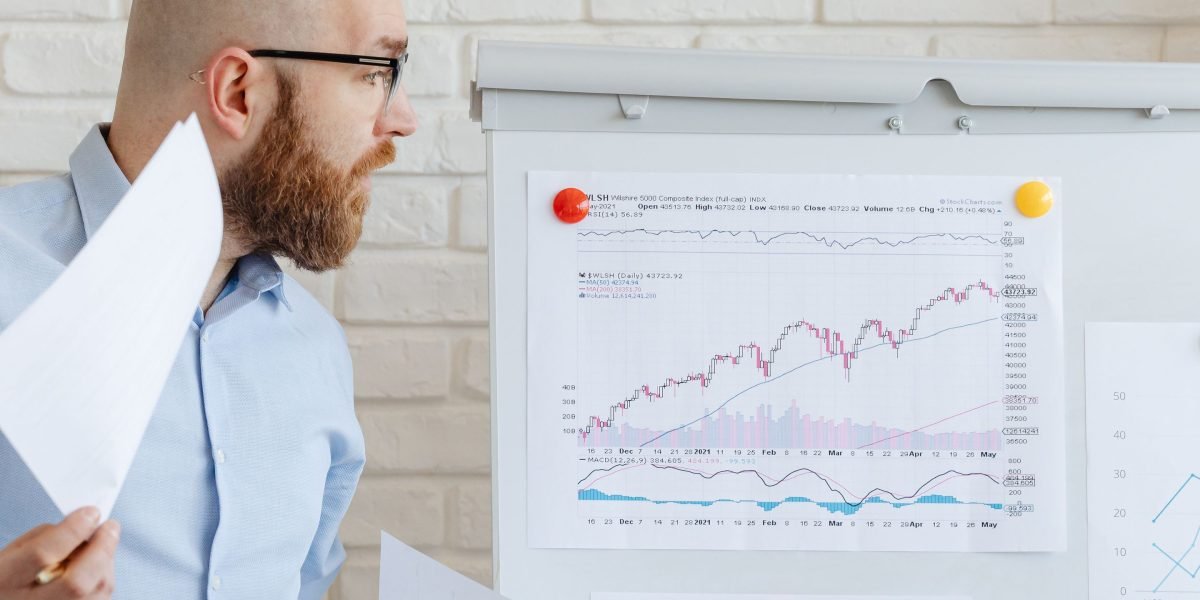
That is the reality for many affiliates who skip proper link tracking. Without it, you are flying blind. You cannot tell which campaigns work, which products convert, or where to focus your time. Your return on investment becomes a guessing game. And in 2026, guessing is expensive.
Affiliate marketing link tracking solves this problem. It is the system that tells you exactly what happens after someone clicks your link. Did they buy? Did they browse and leave? Which traffic source brought the sale? With solid affiliate link tracking, you get clear answers instead of vague hopes.
Here is a number that puts things in perspective: according to recent industry data, 45% of bloggers now use affiliate link management plugins to track performance and streamline earnings. That is nearly half of all content creators. They are not guessing anymore. They are measuring.
The shift makes sense. Tracking gives you control. When you know which links earn, you can do more of what works and cut what does not. You can test different strategies, compare products, and grow your income with confidence. The difference between a successful affiliate and a frustrated one often comes down to one thing: knowing the numbers.
This guide covers everything you need to know about affiliate marketing link tracking in 2026. We will walk through the basics, explore top tools, explain how to read your data, and share advanced techniques used by pros. Whether you are just starting out or looking to improve an existing setup, there is something here for you.
By the end, you will understand how to choose the right affiliate tracking link approach for your goals. You will also learn how a simple affiliate tracking software platform can save you time and help you earn more.
Let us start with the foundation: what affiliate link tracking actually is and why it matters more than ever.
Understanding Affiliate Marketing Link Tracking
So what is affiliate link tracking in simple terms? Think of it as a digital breadcrumb trail. Every time someone clicks your unique link, the system leaves a mark. That mark tells you where the click came from, what the person did next, and whether they made a purchase.
How the mechanics work
Behind the scenes, affiliate marketing link tracking works by embedding a small piece of data into your link. This data is usually called a tracking ID, sub-ID, or parameter. When a visitor clicks your link and lands on the merchant’s site, the merchant’s system reads that ID. It remembers, "This person came from affiliate number 123."
If that person buys something during the tracking window, the sale gets credited to your account. The whole process happens in milliseconds. You never see it. But the data is captured and logged.
This may sound technical. But the key thing to understand is that every click and sale is linked back to you through that unique identifier. Without it, the merchant would have no way to know who sent the customer. That is why choosing the right affiliate tracking link setup matters from day one.
According to the Affiliate Link Tracking Software: 2026 Guide, tracking systems generally use two main methods. Pixel-based tracking relies on cookies placed in the visitor’s browser. Server-to-server tracking passes data directly between systems without depending on browser cookies. Each method has its strengths. Many modern setups combine both for better accuracy.
Understanding these mechanics helps you choose the right setup for your business. When you know how tracking works, you can troubleshoot broken links. You can spot when a tracking window expires before you get credit. You can also tell if an affiliate link tracking method fits your traffic sources.
By getting the foundation right, you set yourself up for reliable data. And reliable data is the only way to grow your affiliate income with confidence.
For a practical walkthrough on building your tracking from the ground up, check out this guide on how to set up affiliate links that actually earn money.
How Link Tracking Works: The Technical Breakdown
Let’s pull back the curtain and look at the actual mechanics. When you click an affiliate link, a chain of events happens in less than a second.
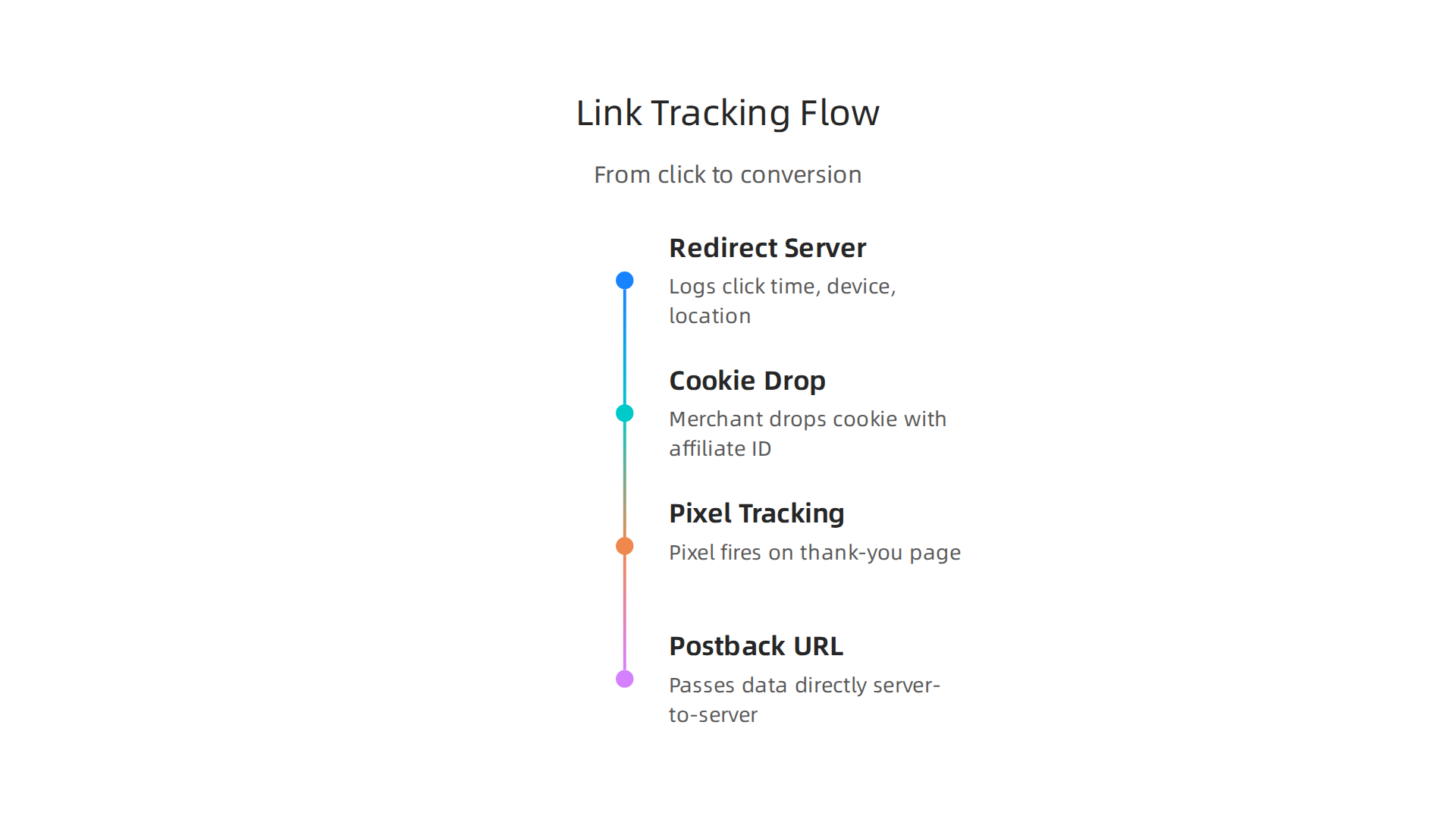
First, the link sends you through a redirect server. This server logs your click data. Things like the time of day, your device type, and your general location. Then it instantly sends you to the merchant’s page. You never notice the redirect. But the tracking system now has a record of that visit.
Next comes the cookie. The merchant’s site drops a small file in your browser. That file holds the affiliate’s unique ID. As the guide on Cookie Tracking in Affiliate Marketing explains, the cookie is what ties the visitor to the affiliate. Most cookies have a time limit. If the visitor buys within that window, the affiliate gets credit. Common windows range from 24 hours to 30 days.
But cookies are not the only method. Pixel tracking and postback URLs offer other ways to log conversions. A tracking pixel is a tiny invisible image on the merchant’s thank-you page. When the page loads, the pixel fires and sends a signal to the affiliate platform. A postback URL works server-to-server. It passes data directly between systems without relying on browser cookies at all. For a deeper comparison, check out this overview of Affiliate Tracking Technologies.
Understanding these three methods helps you pick the right affiliate tracking link setup. You can also see a real example of how a KP affiliate link tracks sales and commissions to watch these mechanics play out in practice.
Why Link Tracking Matters for Affiliates and Merchants
Knowing the mechanics of cookies and pixels is helpful. But understanding why accurate tracking makes or breaks your income is what truly matters. Without it, both affiliates and merchants operate in the dark.
For affiliates, every click represents effort. You built the audience, wrote the content, and placed the link. If your affiliate marketing link tracking is broken, you simply do not get paid. It is called revenue leakage, and it happens more often than people think. According to recent affiliate tracking statistics, dedicated link management tools are now used by nearly half of all serious bloggers. They use these tools specifically to prevent lost commissions.
For merchants, tracking is just as critical. If you cannot see which partners are driving value, you cannot optimize your program. You waste budget on underperformers and miss opportunities to reward your top earners. Solid data helps you double down on what works.
Ultimately, reliable affiliate link tracking builds trust between both sides.

Merchants trust that they are paying for real results. Affiliates trust that they will be fairly compensated. If you are just getting started, learning how to set up a simple affiliate tracking software platform is one of the best early investments you can make.
It clears up the confusion and puts everyone on the same page. For a deeper look at why strong partnerships in this space drive real value, read our guide on why affiliate marketing programs are a goldmine for publishers and merchants in 2026.
Key Metrics to Track for Affiliate Performance
Once you have reliable tracking in place, the next step is knowing which numbers actually matter. You can have the best affiliate marketing link tracking system in the world, but if you are watching the wrong data, you will make bad decisions.
Let us walk through the essential metrics that both affiliates and merchants should monitor closely.
The Core Metrics You Cannot Ignore
These four numbers form the foundation of any performance analysis:
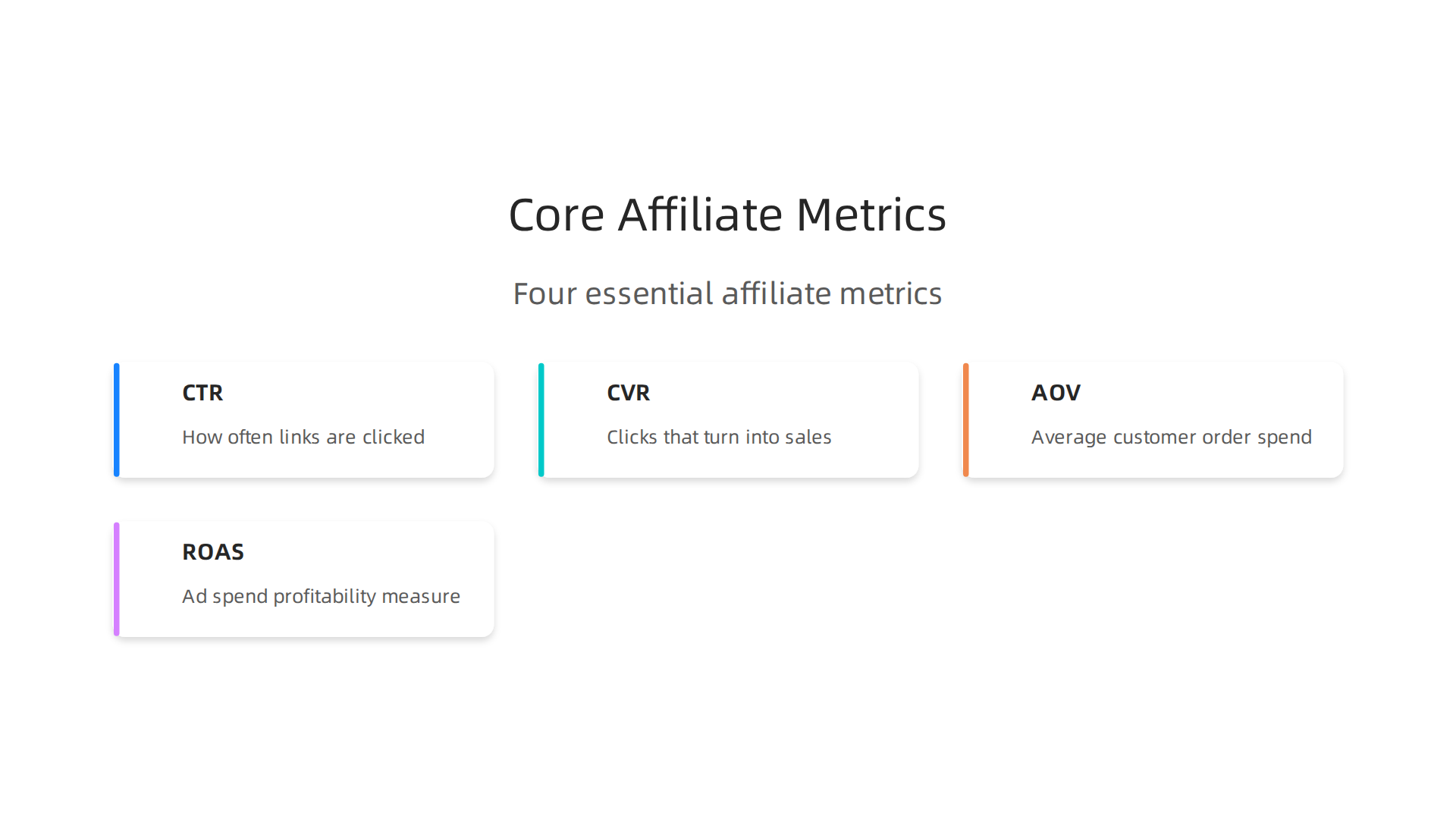
- Click-Through Rate (CTR): This tells you how often people click your affiliate link after seeing it. A low CTR means your audience is not interested in the offer or your call to action needs work.
- Conversion Rate (CVR): This measures how many clicks actually turn into sales or leads. If you get lots of clicks but few conversions, the problem is usually with the landing page or the product itself.
- Average Order Value (AOV): This shows how much each customer spends per transaction. Higher AOV means more commission per sale without extra effort.
- Return on Ad Spend (ROAS): If you are running paid ads, this is your profitability gauge. It compares the revenue you earn to the money you spent on ads.
Tracking these four metrics gives you a clear snapshot of your campaign health. Most simple affiliate tracking software platforms make it easy to see them at a glance. According to a review of the top affiliate tracking platforms in 2026, the best tools automatically calculate these numbers so you can focus on optimization instead of math.
Advanced Metrics for Deeper Insights
If you are serious about scaling your affiliate income, you need to look beyond the basics. Two advanced metrics separate casual affiliates from professionals:
- Customer Lifetime Value (CLV): This tells you how much a single customer is worth over their entire relationship with the merchant. For subscription products or repeat purchases, CLV is far more important than one-time commission.
- Attribution Modeling: This answers the question "which touchpoint really made the sale?" If a customer clicks your link, leaves, comes back later through another source, and then buys, attribution helps you get fair credit. Multi-touch attribution models are becoming standard in 2026 for accurate affiliate link tracking.
Understanding these advanced metrics helps you double down on the strategies that actually drive long-term revenue. If you want to see how real affiliates use tracking data to boost their results, check out this guide on how a KP affiliate link tracks sales and boosts commissions.
Making Data-Driven Decisions
Here is the bottom line: numbers do not lie, but only if you track the right ones. Focus on CTR and CVR first to get your campaign running smoothly. Then layer in AOV and ROAS to optimize profit. Once you are comfortable, move to CLV and attribution to build a sustainable affiliate business.
The goal is simple. Use your affiliate tracking link data to find what works, do more of it, and stop wasting time on what does not. That is how you turn tracking into real earnings.
Best Practices for Affiliate Link Tracking
You have your metrics in place and a tracking system set up. But that is not enough. Without the right habits, even the best affiliate marketing link tracking setup can fail you.
Here are three practices that keep your data clean and your commissions safe.
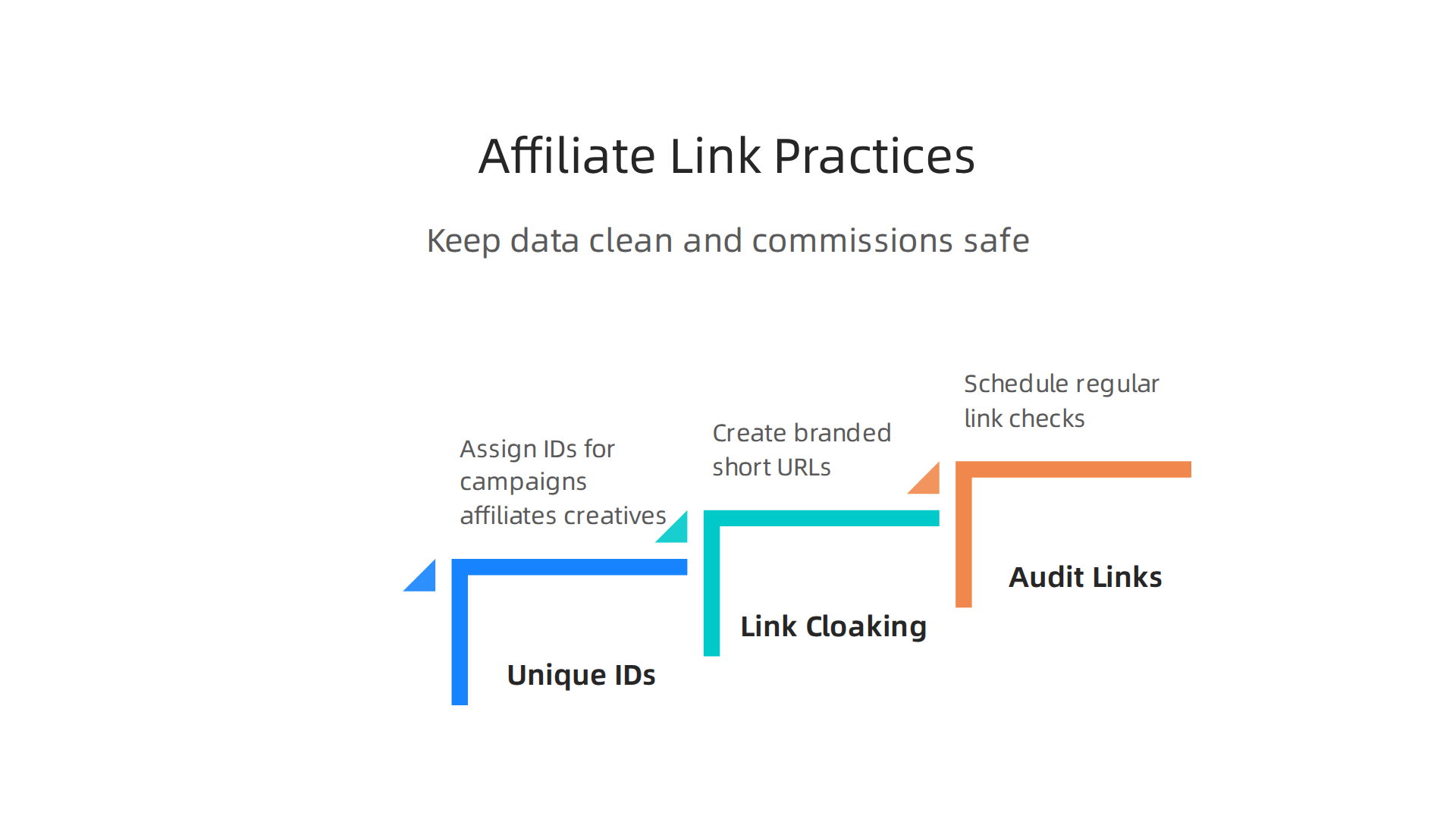
1. Use Unique Tracking IDs for Everything
Every campaign, every affiliate, and every creative should have its own unique ID. This is not overkill. It is how you know exactly which effort drove each sale.
When you assign a separate tracking ID to each link, you can compare performance across email, social media, blog posts, and even different banners. Without unique IDs, you end up guessing which traffic source actually converted.
Most simple affiliate tracking software platforms let you generate custom IDs automatically. Take the time to label them clearly. A naming convention like campaign_affiliate_creative_date saves you headaches later.
2. Implement Link Cloaking the Right Way
Link cloaking turns a long, ugly affiliate URL into a clean, branded link. It looks professional and protects your commission from being stolen by automated tools.
But you need to be transparent about it. If someone right-clicks and sees the final destination, they should understand the relationship. The goal is not to trick anyone. It is to keep your tracking intact.
Cloaking also helps with click fraud prevention because it hides your raw affiliate ID from scrapers. A good affiliate link tracking tool handles this for you. Always test your cloaked links before sharing them.
3. Audit Your Links on a Regular Schedule
Broken links are silent commission killers. If a product page changes or a vendor updates their URL, your old affiliate link sends visitors to a 404 error page. You never know, and you never earn.
Set a monthly calendar reminder to check every active link. Click each one yourself or use a link checker tool. Pay attention to pages that load slowly or redirect incorrectly.
Auditing also catches attribution errors. Sometimes a tracking link stops passing the right parameters after a platform update. Catching these early keeps your analytics honest.
According to this complete guide to affiliate link tracking, regularly reviewing your links is one of the top ways to maintain accurate performance data and avoid lost revenue.
One More Tip for the Technical Side
If you want to take your tracking setup to the next level, learning some technical skills helps. Understanding how tracking parameters work in URLs or how server-to-server tracking functions can give you an edge.
Programs like Le Wagon offer intensive bootcamps in web development and data analytics. Covering skills like these helps you build and manage your own tracking systems with more control. Check out the Le Wagon tech bootcamp if you want to go deeper into the technical side of marketing.
The Bottom Line
Affiliate marketing link tracking only works when you maintain it. Use unique IDs for everything, cloak links honestly, and audit regularly. These three habits protect your data and your income. Start applying them today, and your tracking will never let you down.
Tools for Affiliate Link Tracking
Good habits alone are not enough. You also need the right software to track every click, conversion, and commission. The good news is you have plenty of options in 2026. The hard part is picking the one that fits your business.
Dedicated Affiliate Tracking Platforms
If you are serious about affiliate marketing link tracking, a dedicated platform is your best bet. These tools are built specifically to handle affiliate links, partner management, and commission payouts.
Post Affiliate Pro is one of the most popular choices. It gives you real-time tracking, fraud detection, and detailed reports. You can see exactly which affiliate sent you a sale and how much you owe them. It is a solid option for both merchants and affiliates who want full control over their data.
Refersion is another strong contender, especially if you run an ecommerce store on Shopify. It connects directly to your orders and gives you clear performance dashboards. Many users prefer it for its clean interface and easy setup.
Tapfiliate focuses on simplicity. You do not need a technical background to get started. It supports multiple commission types, including recurring commissions, and integrates with most major platforms.
According to a list of the top 7 affiliate tracking platforms in 2026, tools like these cover everything from data collection to fraud prevention. The key is finding one that matches your scale.
General Analytics Tools as Supplements
Dedicated platforms handle the heavy lifting. But general analytics tools like Google Analytics play a supporting role. By adding UTM parameters to your affiliate links, you can track traffic sources, user behavior, and conversion paths inside your main analytics dashboard.
This combination gives you a fuller picture. Your affiliate platform tells you who converted. Google Analytics tells you how they got there and what they did before buying. Together, they make your affiliate tracking link strategy more powerful.
How to Choose the Right Tool
Your choice depends on three things: budget, scale, and integration needs.

If you are just starting out, a simple affiliate tracking software platform like Tapfiliate or Refersion keeps costs low and setup fast. If you manage hundreds of affiliates, a tool like Post Affiliate Pro or Everflow gives you the advanced features you need. And if you are a developer, platforms with open APIs let you build custom tracking solutions.
A detailed comparison of the 10 best affiliate tracking software reviewed in 2026 breaks down pricing, trial options, and best-use cases for each tool. It is worth reading before you commit.
Also, if you want to learn more about how these platforms work for specific use cases, check out this guide on how to set up affiliate links that actually earn money. It covers the practical steps behind the tools.
The Bottom Line
You do not need ten tools to track affiliate links well. One good dedicated platform plus a general analytics tool is enough for most affiliates. Pick the one that fits your budget and scale, and stick with it.
Common Affiliate Tracking Mistakes and How to Avoid Them
Even with the right tools in place, small mistakes can quietly eat into your commissions. Here are the most common affiliate tracking pitfalls and how to fix them before they cost you money.
Not Using Unique Tracking IDs
Every affiliate campaign needs its own tracking ID. Without one, you cannot tell which post, email, or ad actually drove the sale. It is like running a store with no cash register labels. You know money came in, but you have no idea where it came from.
Use unique parameters on each affiliate link. Most platforms let you add custom tags. This turns your affiliate marketing link tracking from guesswork into a clear report. According to a 2026 guide on affiliate link tracking tips, adding these small identifiers makes a huge difference when you scale.
Ignoring Link Rot
Links break over time. A merchant might remove a product, change their site structure, or end a program. When that happens, your affiliate tracking link sends people to a dead page. You lose the sale, and worse, you annoy your audience.
Check your links regularly. Use a link checker or set calendar reminders to test your most important ones. For more on keeping your links clean and effective, see this guide on affiliate window strategies to boost your income.
Failing to Monitor Attribution Windows
An attribution window is the time between a click and a purchase. If it is 30 days and the buyer comes back on day 31, you get nothing. Many beginners never check this number.
Pick programs with windows that match your audience’s buying speed. If your readers take weeks to decide, a 7-day window will hurt you. And do not assume all your programs use the same window.
Relying on Only One Attribution Model
First-click attribution gives all credit to the first link someone clicks. Last-click gives it to the final click. Both can distort what is really working.
If you only track first-click, you might kill a campaign that builds awareness. If you only track last-click, you might ignore the content that started the journey. Use multi-touch attribution when you can, especially inside a simple affiliate tracking software platform that supports it.
Skipping Compliance with Privacy Laws
Affiliate marketing must follow privacy rules like GDPR and CCPA. Not disclosing affiliate links is not just unethical. It can get you fined.
Always add clear disclaimers. Let readers know you may earn a commission. A complete guide on affiliate conversion tracking for 2026 also covers the importance of clean data and legal compliance.
The Bottom Line
These mistakes are common, but they are easy to fix once you know about them. Use unique tracking IDs, watch your links for rot, understand attribution windows, use multiple attribution models, and stay compliant. Your affiliate marketing link tracking will become sharper, and your commissions will thank you.
Advanced Tracking Techniques for 2026
The tracking methods that worked five years ago are fading fast. By the end of 2026, third-party cookies will be mostly gone from major browsers. That changes everything for your affiliate marketing link tracking. If you want accurate data and steady commissions, you need to level up your approach.

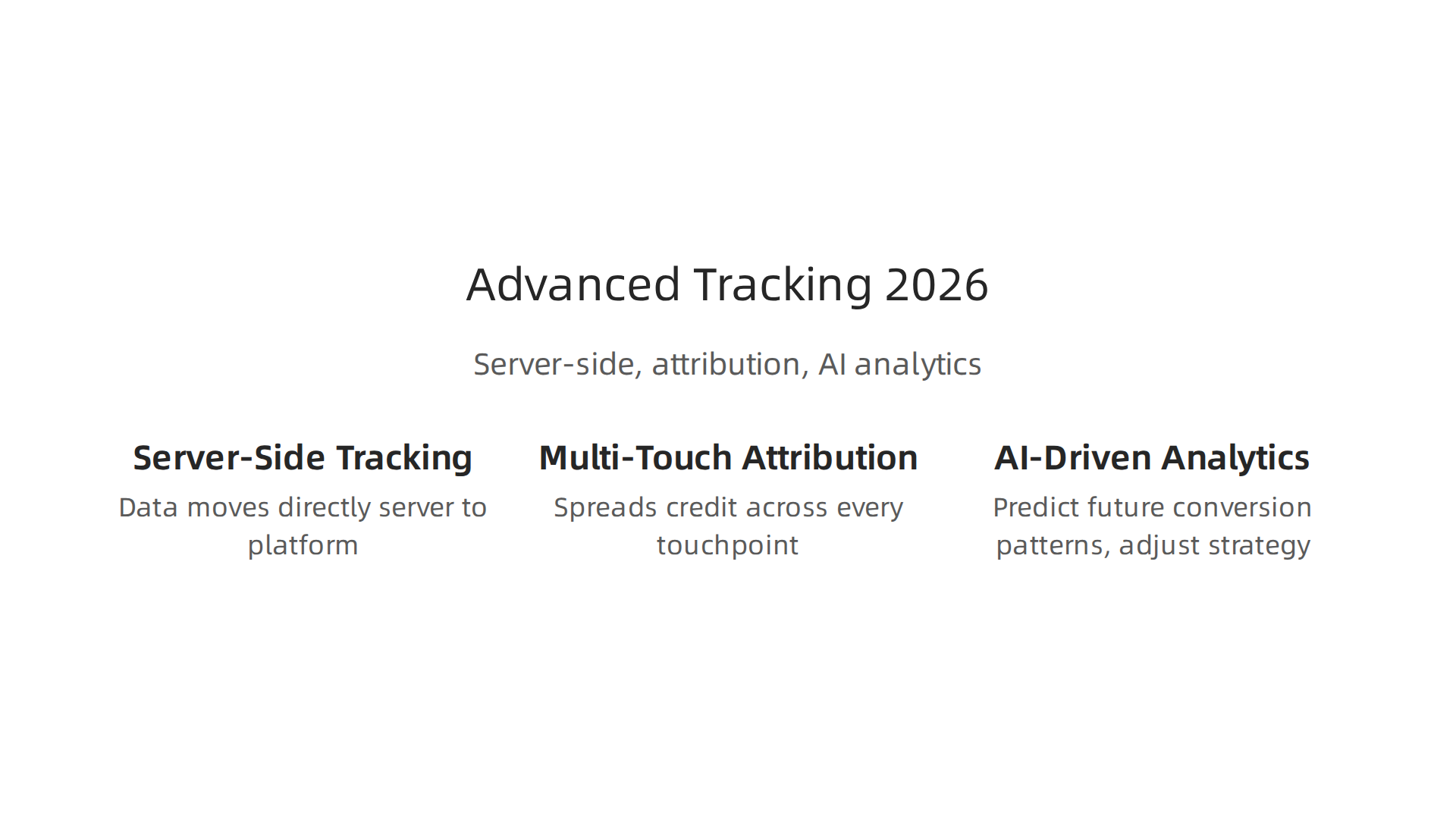
Here are the three advanced techniques that smart affiliates are adopting right now.
Server-Side Tracking: The Privacy-Safe Upgrade
Traditional cookie-based tracking puts a small file on the user’s browser. Ad blockers and privacy settings often delete or block that file before a sale happens. You lose the attribution. Simple as that.
Server-side tracking fixes this. Instead of relying on the user’s browser, the data moves directly from the merchant’s server to your tracking platform. No cookies get blocked. No ad blockers interfere.
The numbers show why this matters. According to the latest 2026 affiliate marketing statistics, server-side and first-party tracking grew from just 5% of programs in 2022 to 21% in 2026. That jump is no accident. As Chrome phases out third-party cookies this year, server-side tracking is becoming essential.
The trade-off? Setup takes more work. You need a solid simple affiliate tracking software platform that supports server-to-server connections. But the payoff is cleaner data and commissions you actually earn.
Multi-Touch Attribution: See the Full Journey
Most beginners only look at one attribution model. Usually last-click. That tells you which link got the final click before a sale. But it ignores everything that happened before.
What if a reader clicked your link, left, came back through a search engine three days later, and then bought? Last-click gives zero credit to your original link. That hurts when you are the one who introduced the product in the first place.
Multi-touch attribution spreads credit across every touchpoint in the customer’s journey. Your original post gets partial credit. The email follow-up gets credit. The final click gets credit too. For more detail on how different attribution models work in practice, check out this guide on how a KP affiliate link tracks sales.
This approach gives you a much fairer view of which content actually drives revenue.
AI-Driven Analytics: Predict Before You Optimize
Here is the most exciting development in 2026. AI tools can now analyze your tracking data and find patterns you would never spot on your own.
An AI system looks at thousands of clicks, conversions, and time delays. It learns which types of links perform best with specific audiences. It can even predict future conversion patterns and adjust your strategy in real time.
Let us say your traffic from a certain source converts best on weekends. AI can automatically boost your affiliate marketing link tracking for those windows. Or it can detect a sudden drop in conversions and alert you before you lose significant commissions.
A recent industry report on the affiliate marketing forecast for 2026 notes that AI-powered predictive analytics can already reach 85% accuracy in forecasting conversions. That is not science fiction. That is available today.
Putting It All Together
You do not need to implement all three techniques at once. Start with server-side tracking if privacy rules affect your traffic most. Add multi-touch attribution when you want to understand your full funnel. Experiment with AI analytics when you are ready to scale.
Each step makes your tracking more accurate and your commissions more reliable. And in a year where cookies are disappearing, accuracy is everything.
Summary
This guide explains affiliate marketing link tracking and shows how to stop guessing which links earn commissions. It covers tracking mechanics (cookies, pixels, postbacks and server-to-server), the core metrics to watch (CTR, CVR, AOV, ROAS) and advanced measures like CLV and multi-touch attribution. You’ll learn practical setup tips—how to pick tools, implement unique tracking IDs, cloak links correctly, and run regular audits—to protect commissions and improve decisions. The article also reviews platform options and common mistakes to avoid, then outlines next-step upgrades such as server-side tracking and AI analytics so you can build a more reliable, future-proof affiliate program.