
Reviews & Guides from Our Experts

Affiliate Links SEO Strategy That Boosts Both Rankings and Revenue

Introduction
Can affiliate links help your SEO or hurt it? That is a question many site owners ask themselves.

The honest answer is: it depends on how you use them.
Affiliate marketing is huge right now. In 2026, the industry is projected to bring in over $17 billion worldwide, according to NewMedia. And Fintel Connect reports that 57% of marketers are increasing their investment in affiliate programs. The potential is clear. Affiliate links can be a great way to earn money from your content.
But here is the catch. Search engine optimization (SEO) is just as important. According to Ahrefs, 68% of online experiences start with a search engine.

If your site does not rank well, nobody will see those affiliate links in the first place. So you need to get both sides right.
The problem is that many webmasters unknowingly break Google’s guidelines when they add affiliate links. They stuff links everywhere, use thin content, or skip disclosures. The result? Their rankings drop, and their traffic dries up. It is a painful lesson.
The good news is that you do not have to choose between affiliate revenue and search rankings. When done right, affiliate links can actually boost your SEO. How? By adding value, building trust, and sending the right signals to Google.
This guide will walk you through the best practices for using affiliate links without hurting your SEO. We will cover everything from link placement and disclosure to technical setup and content strategy. Whether you are new to affiliate marketing or looking to improve an existing site, you will find actionable tips here.
Let us start with the basics: how Google views affiliate links and what it rewards.
Why Affiliate Links and SEO Must Work Together
Here is the thing: you can have the best affiliate links in the world, but if nobody finds your page, they never get clicked. That is why affiliate links and SEO are like peanut butter and jelly. They just work better together.

Search engines like Google view affiliate links with a careful eye. If you sprinkle them everywhere without thought, they can look like spam signals. According to Ahrefs, 68% of all online experiences start with a search engine. So if your site gets flagged for spammy affiliate practices, you lose that massive traffic source. Your affiliate tracking link might track perfectly, but it does not help if your page is hidden on page 10.
The trick is to use proper SEO integration. When you add affiliate links inside helpful, well-written content, you actually improve the user experience. People come to your site looking for answers. If you give them great advice and then recommend a product that truly helps, they trust you. That trust is gold for both your readers and Google.
For example, placing a single relevant affiliate link inside a detailed review is much better than dumping ten links into a few sentences. Using descriptive anchor text and putting links where they naturally fit shows search engines that you are adding value, not just chasing commissions. An AIOSEO study found that SEO drives the majority of organic traffic for most sites. If your affiliate links are part of a solid SEO strategy, you get the best of both worlds.
Affiliates who master this balance see real results. Their click-through rates go up because readers trust their recommendations. Their rankings go up because Google rewards quality content with natural links. It is a win-win.
So stop thinking of affiliate links and SEO as separate things. When you treat them as partners, your site grows faster. If you want to dig deeper into the technical setup, check out our guide on how to set up affiliate links that actually earn money. It will show you the steps to keep your links clean and search-friendly.
How Search Engines Treat Affiliate Links
Now that you know why affiliate links and SEO work best as partners, it is time to zoom in on how Google actually looks at those links. Here is the thing: search engines do not just see all links as the same. They have a smart way of telling the difference between a link that is there to help a reader and a link that is there just to make a commission.
Google wants to give users the most helpful results. If your site links to a product because you genuinely recommend it, that is great. If you add that link just to earn money without adding value, Google can spot that too. The way they tell the difference comes down to one key thing: how you tag your links.
Natural links versus unnatural links
A natural link is one that you add because it helps your reader. You write a review, explain why a product works, and then link to it. That is natural. An unnatural link is one that appears only because you got paid. Think of paid placements, hidden links, or links stuffed into content without real value.
Google’s algorithms are trained to catch unnatural patterns. According to Google Search Central, the official guideline is that all paid links, including affiliate links, should be tagged so search engines understand their purpose. If you fail to do this, you risk a penalty that can drop your rankings.
The three attributes you need to know
To signal the purpose of your affiliate links, you have three main HTML attributes:
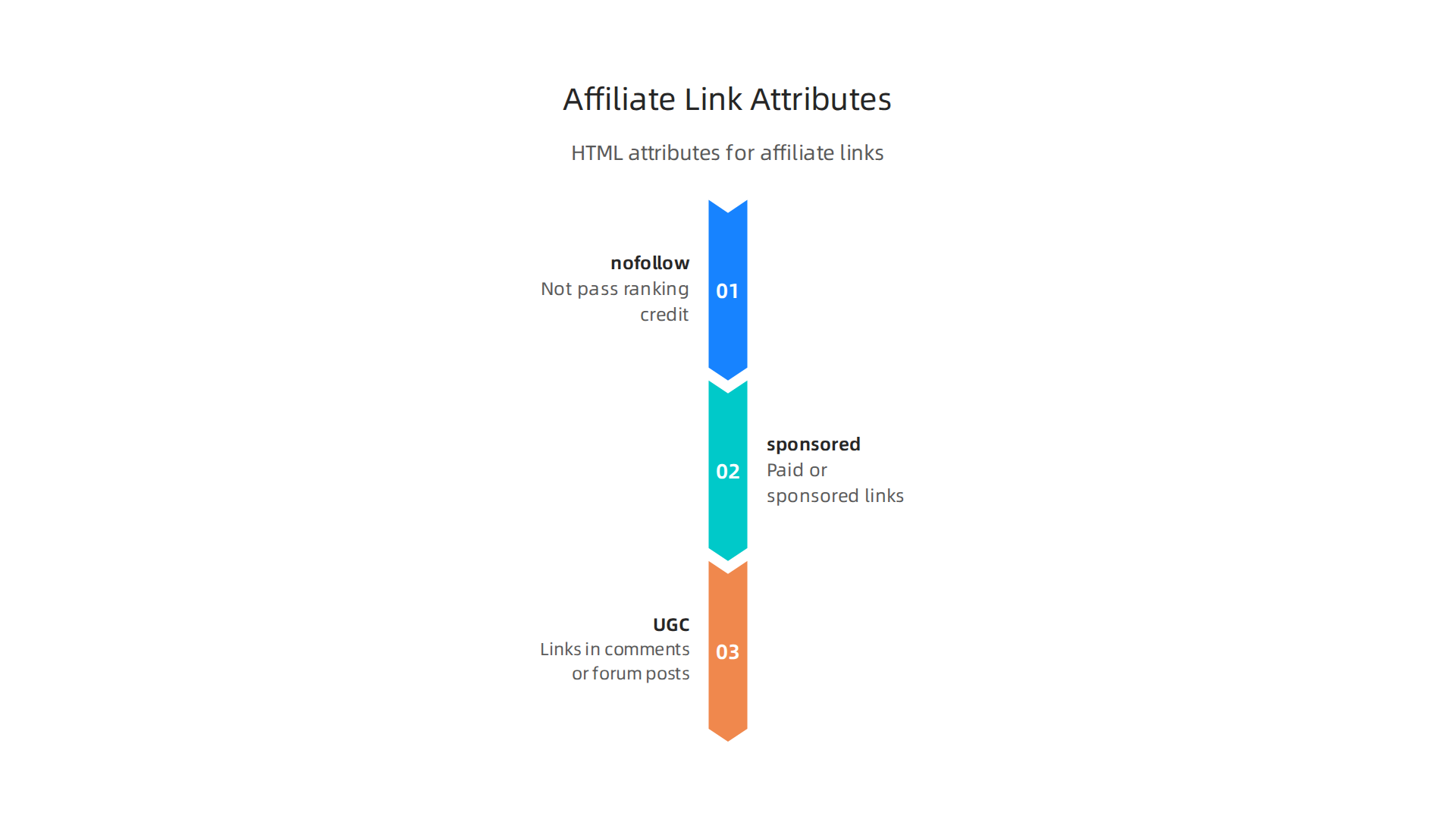
nofollow: Tells Google not to follow the link or pass ranking credit. This is acceptable for affiliate links but not the preferred choice anymore.sponsored: This is the tag Google created specifically for paid or sponsored links, including affiliate links. It is the recommended option.UGC: Short for user generated content. Use this for links in comments or forum posts, not for your own affiliate links.
Research shows that affiliate links must be tagged with rel="sponsored" to stay compliant with Google’s guidelines. The Keyword.com article confirms that Google’s link spam update makes this requirement strict.
What happens if you skip the tags
If you use affiliate links without any tag, Google treats them like regular editorial links. That is a problem because you did not earn that link naturally. Your site then looks like it is trying to game the system. MorningScore explains that failing to tag paid links is a direct violation of Google’s webmaster guidelines. The result? An algorithmic penalty that pushes your pages down in search results.
The good news is that tagging is easy. Just add rel="sponsored" to every affiliate link. That simple step keeps you safe and tells Google you are playing by the rules.
If you want a full walkthrough on how to set this up correctly, check out our guide on how to set up affiliate links that actually earn money. It covers the technical details so you never have to guess again.
Best Practices for Using Affiliate Links Without Hurting SEO
Now that you understand how Google treats affiliate links and why tagging matters, it is time to put that knowledge into action. Using affiliate links and SEO together the right way comes down to a few simple habits. Follow these best practices, and your site can rank well while still earning commissions.
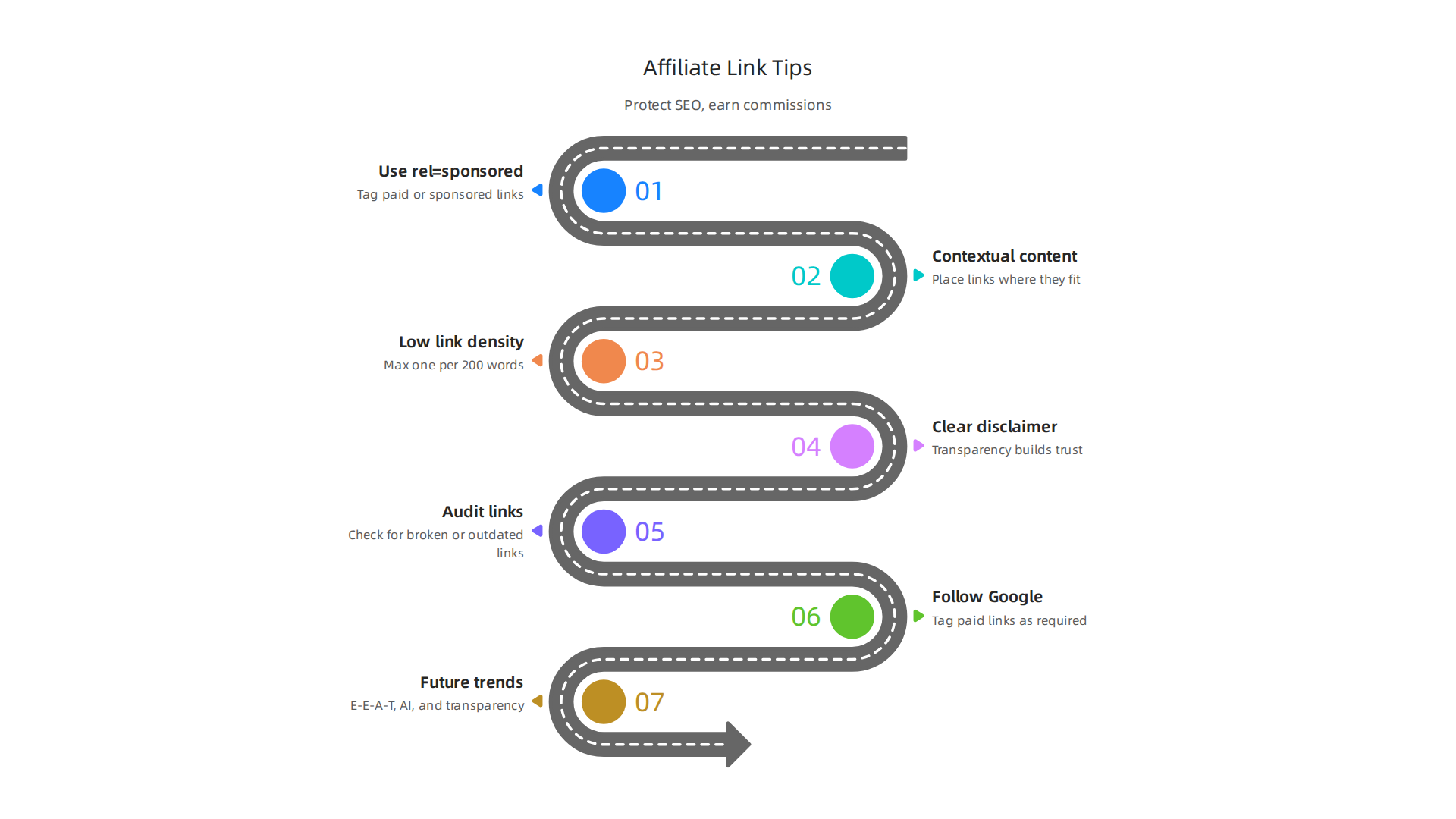
Always use rel="sponsored"
This is the most important rule. Every single affiliate link on your site must include the rel="sponsored" attribute. Google is very clear about this. Their official guide to qualifying outbound links says that sponsored is the preferred way to mark paid links. The AAWP article confirms that using the right tag keeps you compliant. While nofollow is still acceptable, sponsored is the best choice in 2026 because it tells Google exactly what the link is.
If you skip the tag, your site risks a penalty. MorningScore warns that missing tags violate Google’s guidelines. So make it a habit to add rel="sponsored" to every affiliate tracking link you create.
Place links inside helpful, contextual content
Do not just dump a bunch of affiliate links at the bottom of a page. Instead, put each link where it naturally fits inside your writing. When you recommend a product, explain why it solves a problem. Then link to it. This kind of contextual link performs better because it feels helpful, not pushy.
The Keyword.com article points out that Google rewards content that provides real value. A link surrounded by useful information is a signal of quality. So focus on writing for your reader first, and add links as supporting evidence, not as the main event.
Keep your link density low
One quick way to hurt your affiliate links and SEO is to cram too many links into one page. If every other sentence contains an affiliate link, your content looks spammy. Google’s algorithms notice that pattern and may rank your page lower.
A good rule is to have no more than one affiliate link per 200 words or so. But even more important than the number is the purpose. Every link should serve the reader. If a link does not genuinely help, leave it out.
Always add a clear disclaimer
Transparency builds trust. The Federal Trade Commission requires affiliate disclosures, and Google expects them too. A simple note at the top of your article or right before your affiliate links is enough. For a step by step guide, check out our article on how to write a compliant disclaimer for affiliate links. It helps you stay legal and keep your audience’s trust.
Following these best practices is not hard. And the payoff is big. You get to earn commissions while keeping your search rankings strong. If you want to build serious skills in affiliate marketing and tech, you can explore expert training like Careerist to accelerate your learning.

But remember, the foundation is always the same. Tag your links, write great content, and put your reader first.
Technical SEO for Affiliate Sites: Nofollow, Sponsored Tags, and Link Schemes
You already know that tagging your affiliate links is important. But which tag should you use? And what happens if you get it wrong? Let’s clear up the confusion.
The three tags you need to know
Google gives you three options for telling its crawlers what a link is about. They are rel="nofollow", rel="sponsored", and rel="ugc". Here is the quick breakdown:
rel="nofollow": This tells Google not to pass any link authority to the destination. It is fine for affiliate links, but it is a general tag. Google’s official guide for qualifying outbound links sayssponsoredis preferred overnofollowfor paid links.rel="sponsored": This is the tag Google recommends specifically for affiliate links and other paid promotions. It tells Google exactly what the link is. The AAWP article explains that usingsponsoredkeeps you fully compliant with Google’s guidelines.rel="ugc": This stands for user-generated content. Use it for links that come from comments, forum posts, or other user submissions. If a user drops an affiliate link in a comment, tag itugcorsponsored.
The Keyword.com article points out that Google’s link spam update now requires every affiliate link to be tagged sponsored or nofollow. So there is no more skipping this step.
How to implement these tags in WordPress and other CMS
In WordPress, you can add the tag manually when you insert a link. Click the link button, add your URL, then click the gear icon to open advanced options. In the "Link Relationship (rel)" field, type sponsored. If you use a plugin like Post Affiliate Pro, it often adds the tag automatically. You can read our full review of Post Affiliate Pro features and setup to see how it handles tagging.
For other platforms like Shopify, Wix, or Squarespace, the process is similar. Look for the link editor and find a field labeled "rel" or "link relationship". If you do not see one, you may need to edit the HTML directly. Just add rel="sponsored" inside the <a> tag like this:
<a href="your-affiliate-link" rel="sponsored">anchor text</a>
The Post Affiliate Pro FAQ confirms that using nofollow or sponsored is required by Google’s webmaster guidelines. So make sure every link has the right attribute.
Avoiding link schemes that Google’s SpamBrain detects
Google’s SpamBrain is a smart system that catches link schemes. Even if you use the right tags, other practices can get you in trouble. Here is what to avoid:
- Buying or selling links that pass authority, even with
nofollow. Google can still see the pattern. - Excessive link exchanges where you and another site swap affiliate links just to boost rankings.
- Automated link building tools that place your links on random sites.
- Hidden links or links disguised as regular content.
The MorningScore article warns that ignoring these rules can lead to penalties. And the Bluehost blog says using sponsored or nofollow is your first defense against manual actions.
A clean link profile is a safe one. Stay away from anything that looks manipulative, and your site will rank well for the long haul. If you want more guidance on staying compliant, check out our guide on how to write a compliant disclaimer for affiliate links. It covers the legal side and helps you keep your audience’s trust.
Content Strategies That Boost Both Rankings and Affiliate Revenue
You’ve got your affiliate links tagged correctly. Good. But here is the real question: is your content worth reading? Because no amount of technical SEO saves thin, boring content. In 2026, Google rewards pages that actually help people. And when you help people, you earn their trust. Trust leads to clicks on your affiliate links. That is how affiliate links and SEO work together.
The content types that win every time
Some content formats naturally attract backlinks and drive conversions. The Post Affiliate Pro guide to content types lists product reviews, comparisons, how-to articles, and tutorials as top performers. Why? Because readers searching for "best running shoes" or "how to set up a blog" already have buying intent. You are not interrupting them. You are guiding them.
The wecantrack article on affiliate marketing best practices emphasizes that useful content keeps visitors on your page longer. That sends positive signals to Google. Rankings improve. And when you place your affiliate tracking link inside a deep review or a step-by-step tutorial, it feels natural, not pushy.
Make your content original and useful
Google’s algorithm in 2026 is smarter than ever. It can spot rewritten product descriptions from a mile away. The Leadyon affiliate marketing guide says original insights and personal experience are what earn backlinks from other sites. Backlinks are still a major ranking factor. So test the products yourself. Take real photos. Share honest pros and cons. That kind of content converts better and ranks higher.
Place affiliate links where they belong
Here is the golden rule: insert your affiliate links inside valuable advice, not random lists. If you are writing a beginner’s guide to something, add a link to a tool you actually use at the moment it becomes relevant. The Simplified article on top affiliate strategies recommends matching each link to a specific need the reader has right then. That is how you get clicks without hurting trust.
If you want to build a complete content strategy from scratch, our guide on how to build an affiliate marketing blog that earns walks you through every step from niche selection to monetization.
And if you are serious about creating professional content, consider sharpening your technical skills. Bootcamps like Le Wagon teach you how to build and design sites that look polished. That confidence shows in your content and keeps readers coming back.
Measuring the SEO Impact of Your Affiliate Links
You can’t improve what you don’t measure. That is true for your fitness goals, and it is definitely true for your affiliate links and SEO strategy.

So how do you know if all your hard work is paying off? You need to track the right numbers.
Start with the basics. Look at organic traffic to the pages where you place your affiliate links. If no one visits, no one clicks. The affiliate marketing industry is projected to keep growing fast, with revenue expected to exceed $17 billion in 2026 according to New Media. But that growth only helps you if you show up in search results. Ahrefs reports that 68% of online experiences start with a search engine. So driving organic traffic is the foundation.
Next, check your click-through rate (CTR) on those affiliate links. A high CTR means your links are placed well and your anchor text is tempting. A low CTR means you need to move them or change the wording. Also track conversion metrics actual sales or signups. That is the number that puts money in your pocket.
Use Google Search Console Like a Pro
Google Search Console is a free tool that shows you exactly what is happening with your pages. Look for pages that get high impressions but low clicks. That is a signal your title tag or meta description needs work. Also monitor for any link-related issues, like broken affiliate links or pages stuck in a crawl error. Bluehost’s guide to affiliate SEO reminds you that every commercial link should include rel="sponsored" to follow Google’s rules. Search Console can alert you if something goes wrong.
A/B Test Placements and Anchor Text
Don’t guess. Test. Try placing your affiliate tracking link inside the first paragraph versus at the end of a section. Try different anchor text like "best budget laptop" instead of "click here for more info". Run each test for at least two weeks and compare the CTR and conversion data. Post Affiliate Pro’s tips on affiliate link strategies support this approach. The results will tell you what your audience actually wants.
Tracking these metrics turns your affiliate links and SEO work from a guessing game into a science. And if you want to set up your links the right way from the start, check out our step-by-step guide on how to set up affiliate links that actually earn money. It will save you time and help you avoid common mistakes.
Common Affiliate Link Mistakes That Kill Your SEO
You are tracking your numbers and watching your traffic grow. That is great. But even a small mistake in how you place your affiliate links can undo all that hard work. Let me show you the three biggest errors people make with their affiliate links and SEO in 2026.
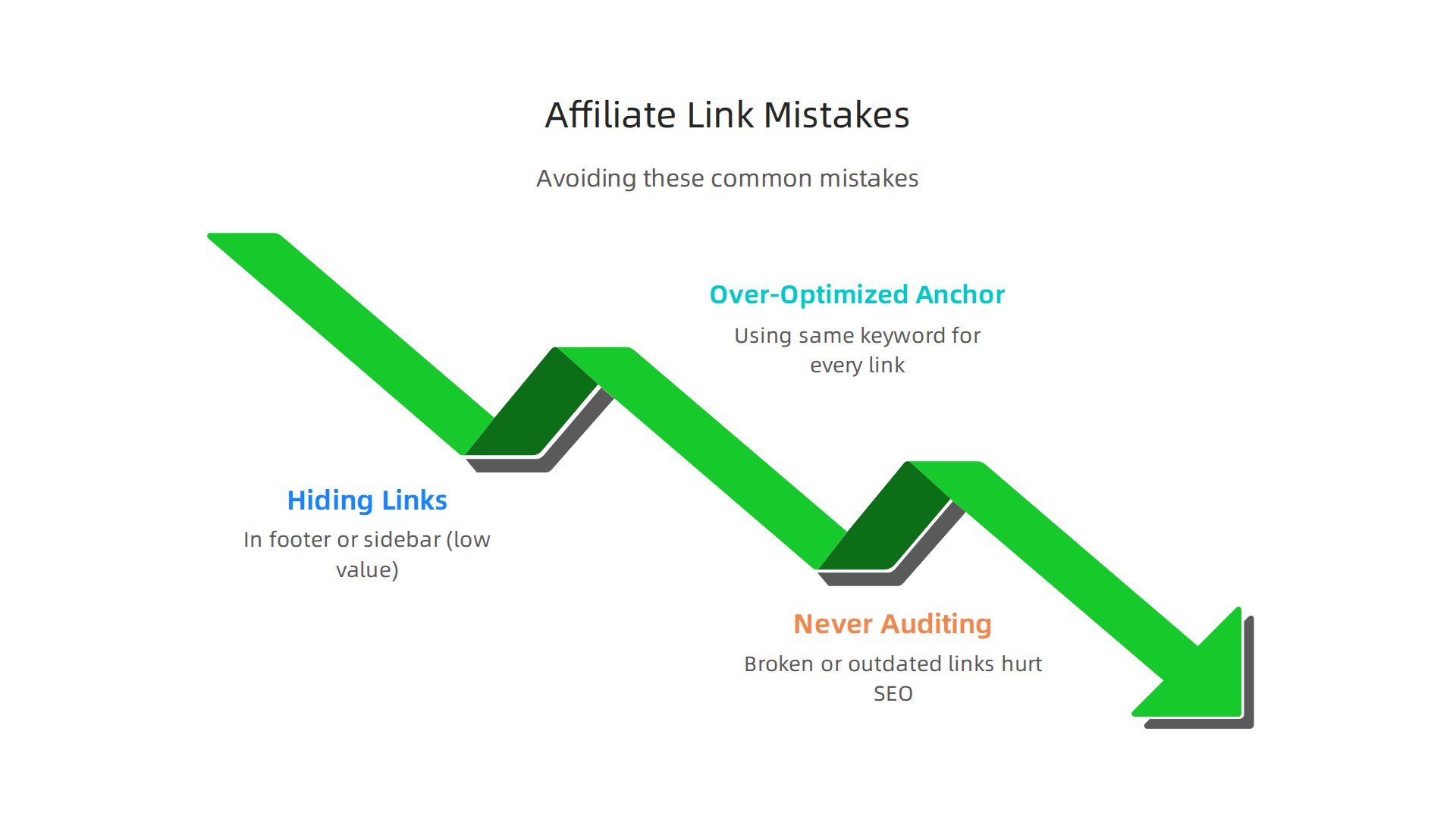
Mistake 1: Hiding Your Affiliate Links in the Footer or Sidebar
It is tempting to throw a bunch of affiliate links into your sidebar widget or your footer. It feels like free real estate. But here is the problem. Google sees those links as low value. They have no context. No one clicks them. And placing links without surrounding content signals that your page is not actually helpful. According to affiliate marketing best practices from wecantrack, links perform best when they are naturally woven into educational content that matches user intent. Drop them in the footer and you are wasting your chance to earn trust and clicks.
Mistake 2: Over-Optimized Anchor Text
You might think using the same exact keyword phrase for every link is smart SEO. It is not. Using "best running shoes" as your anchor text on ten different links looks spammy to Google. It can even trigger a manual action. The better approach is to mix things up. Use phrases like "check out these running shoes", "my top pick for runners", or "the shoes I trust most". This keeps your affiliate links and SEO strategy clean and natural. Simplified’s 2026 affiliate marketing strategies highlight that diverse anchor text builds credibility with both search engines and readers.
Mistake 3: Never Auditing Old Content for Broken or Outdated Links
You wrote a post two years ago linking to a product that no longer exists. That link now goes nowhere. That hurts your user experience and your SEO. Google sees broken affiliate links and thinks your page is neglected. Set a reminder to audit your old content every three months. Remove or update any dead affiliate tracking links. A quick check can save your rankings.
Building a solid affiliate marketing strategy takes consistent effort. If you are just starting out, check out this guide on how to build an affiliate marketing blog that earns in 2026 to avoid these mistakes from day one.
Future Trends: Affiliate Links and SEO in 2026 and Beyond
You have avoided the common mistakes. Now let us look ahead. The world of affiliate links and SEO is changing fast in 2026. Three big trends are reshaping how we think about monetized content.
First, AI-generated content is everywhere. More sites are using AI to churn out product reviews and recommendations. Google knows this. According to Envisionit’s 2026 SEO predictions, search engines are getting better at spotting low-quality AI content. If you rely on AI to write your affiliate posts without real human value, your rankings could drop. The winners will be the people who add personal testing, honest opinions, and unique insights. AI can help you research, but it cannot replace your voice.
Second, E-E-A-T (Experience, Expertise, Authoritativeness, Trustworthiness) is more important than ever for affiliate sites. Google wants to send users to pages written by real experts. A guide on SEO in 2026 from Sitebulb highlights that prioritizing foundational SEO work and E-E-A-T is critical. That means showing your experience with the products you promote. Share photos of you using them. Include your credentials. Build a real online reputation. This is how you earn trust from both Google and your readers.
Third, how search engines treat monetized links is evolving. Sponsored tags and nofollow attributes are standard now. But many affiliate marketers still hide their links. In 2026, transparency is becoming a ranking factor. Google is rewarding sites that clearly label affiliate links and disclose partnerships. The affiliate marketing trends for 2026 from Geniuslink mention that future-proofing your earnings means embracing these changes early.
Staying ahead means adapting your strategy every few months. If you want a deeper look at how to build a site that lasts, check out this guide on AI affiliate marketing in 2026. It will help you blend smart technology with genuine content that ranks.
Summary
Affiliate links can help your site earn money without destroying search rankings — but only when used correctly. This article explains how search engines view affiliate links, why tagging them with rel="sponsored" matters, and how to place links inside useful, contextual content that users value. It covers technical steps for WordPress and other CMS platforms, rules of thumb for link density and anchor text, and the importance of clear disclosures to stay compliant. You’ll also learn how to avoid link schemes, audit old content for broken links, and run A/B tests to improve click-through and conversions. Finally, the guide outlines measurement tactics using Google Search Console and key metrics to track, plus future-facing advice on AI, E-E-A-T, and transparency to keep your affiliate strategy durable.