Reviews & Guides from Our Experts

How to Use Affiliate Links in Instagram the Right Way in 2026

Introduction
You open Instagram, scroll through a few stories, and see a creator you trust showing off a new gadget.
You tap the link in their bio. A few minutes later, you own that gadget. That is the magic of affiliate links in Instagram in action.
Instagram has become a powerhouse for affiliate marketers. Over 200 million users visit business profiles every single day. That is a huge audience ready to discover products you recommend. And the numbers back it up. In 2026, TikTok Shop, YouTube Shopping, and Instagram Shopping affiliate revenue combined hit an estimated $4.8 billion, according to recent industry data. On top of that, 44% of marketers say affiliate marketing is one of the top three most cost-effective ways to gain new customers.
Here is the thing. Adding affiliate links for Instagram the right way takes more than just dropping a link in your bio. Instagram keeps updating its rules, and you need to follow them carefully. If you do not, you risk your account or worse, losing your audience’s trust. But when you do it strategically, those links can drive serious traffic and sales.
This guide covers everything you need to know. We will walk through where to place links, how to track performance, and what has changed in 2026. You will learn how to use influencer affiliate program opportunities and make your affiliate marketing influencer efforts pay off. Whether you are just starting or looking to improve your results, this is your starting point.
If you are new to the whole concept, you might want to first check out our guide on what affiliate marketing really means and how it works. It will help you understand the basics before we dive into Instagram specifically.
Understanding Instagram’s Link Policies for Affiliates
So you want to start using affiliate links in Instagram the right way. Great. But Instagram has specific rules about where you can share those links. Knowing these rules keeps your account safe and helps your clicks grow.
Where you can place affiliate links in 2026
Instagram now supports affiliate links for Instagram in four main places.
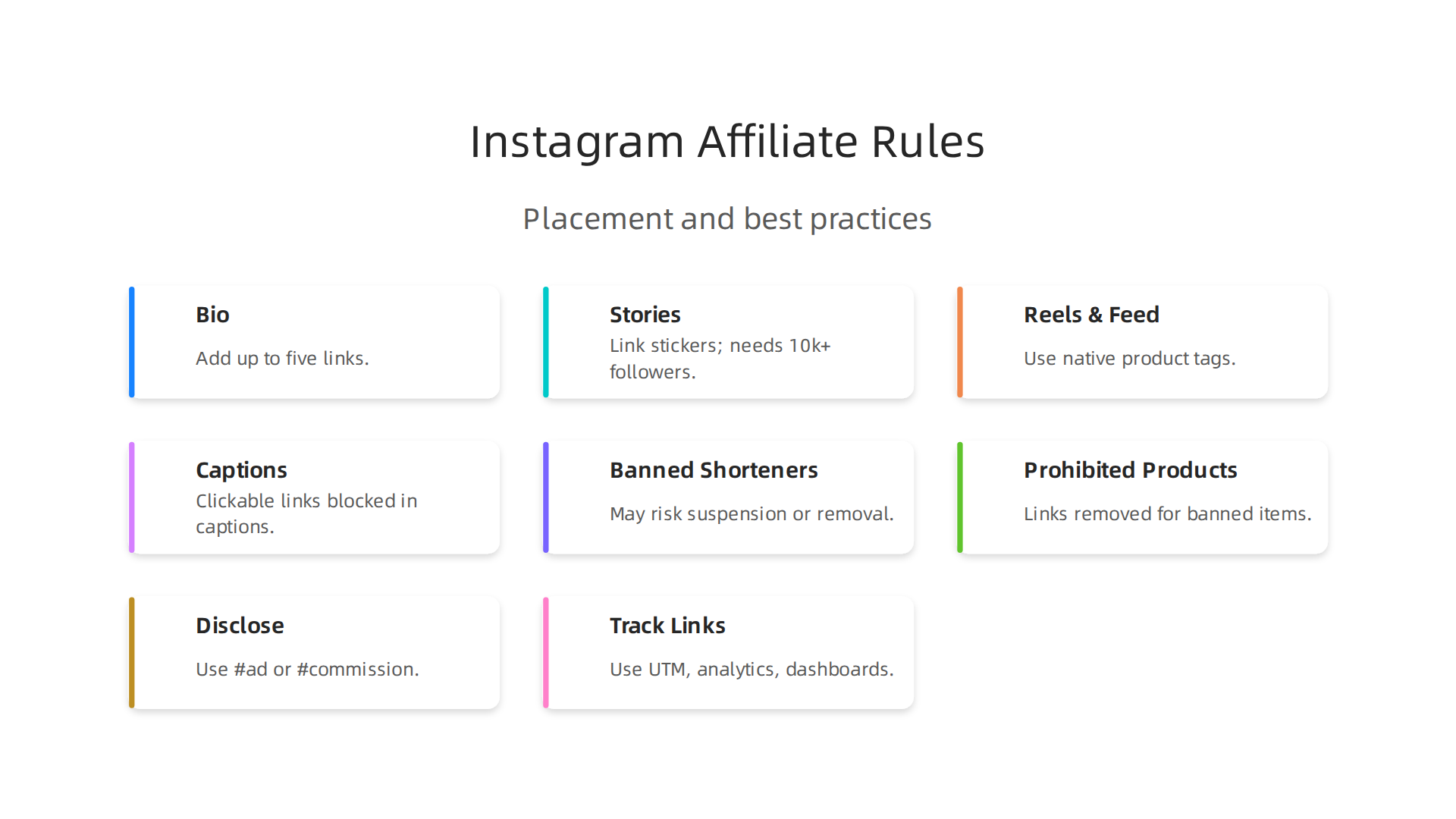
First, your bio. You can add up to five direct clickable links right there. Many creators use tools like LTK to manage even more, but Instagram now lets you skip the middleman if you want. According to a report by Marketing Brew, link-in-bio companies rely heavily on these Instagram policies.
Second, there are Stories. If your account has at least 10,000 followers or is verified, you can use link stickers. The old swipe-up feature disappeared in 2022 and link stickers replaced it. Just tap the sticker icon and paste your affiliate link. Voluum confirms this is one of the most effective methods for affiliate marketing influencer strategies.
Third, you can use native product tags in Reels and feed posts. This is a big change in 2026. Retail Dive reports that Meta wants to move past the old link-in-bio era. Now you can tag products directly in your Reels. This is perfect for an influencer affiliate program because it links straight to a business catalog or your unique affiliate link.
What you cannot do
Here is a common mistake. You cannot add clickable affiliate links in your regular feed post captions. Instagram blocks them. Instead, you need to use the methods above. A guide from Shopify explains that affiliates must use link-in-bio tools, Story link stickers, and product tagging instead.
Follow the rules or risk your account
Using banned link shorteners or promoting prohibited products can get your link removed. Worse, Instagram might suspend your entire account. That means losing all your hard work.
Being transparent with your audience keeps you safe and builds trust. Make sure you always disclose your affiliate partnerships. If you are not sure how to do that properly, read our guide on how to write a compliant disclaimer for affiliate links to build trust and avoid penalties.
How to Add Affiliate Links to Your Instagram Profile and Stories
Okay, you know the rules. Now let me show you exactly how to add your affiliate links in Instagram so people can actually click them.
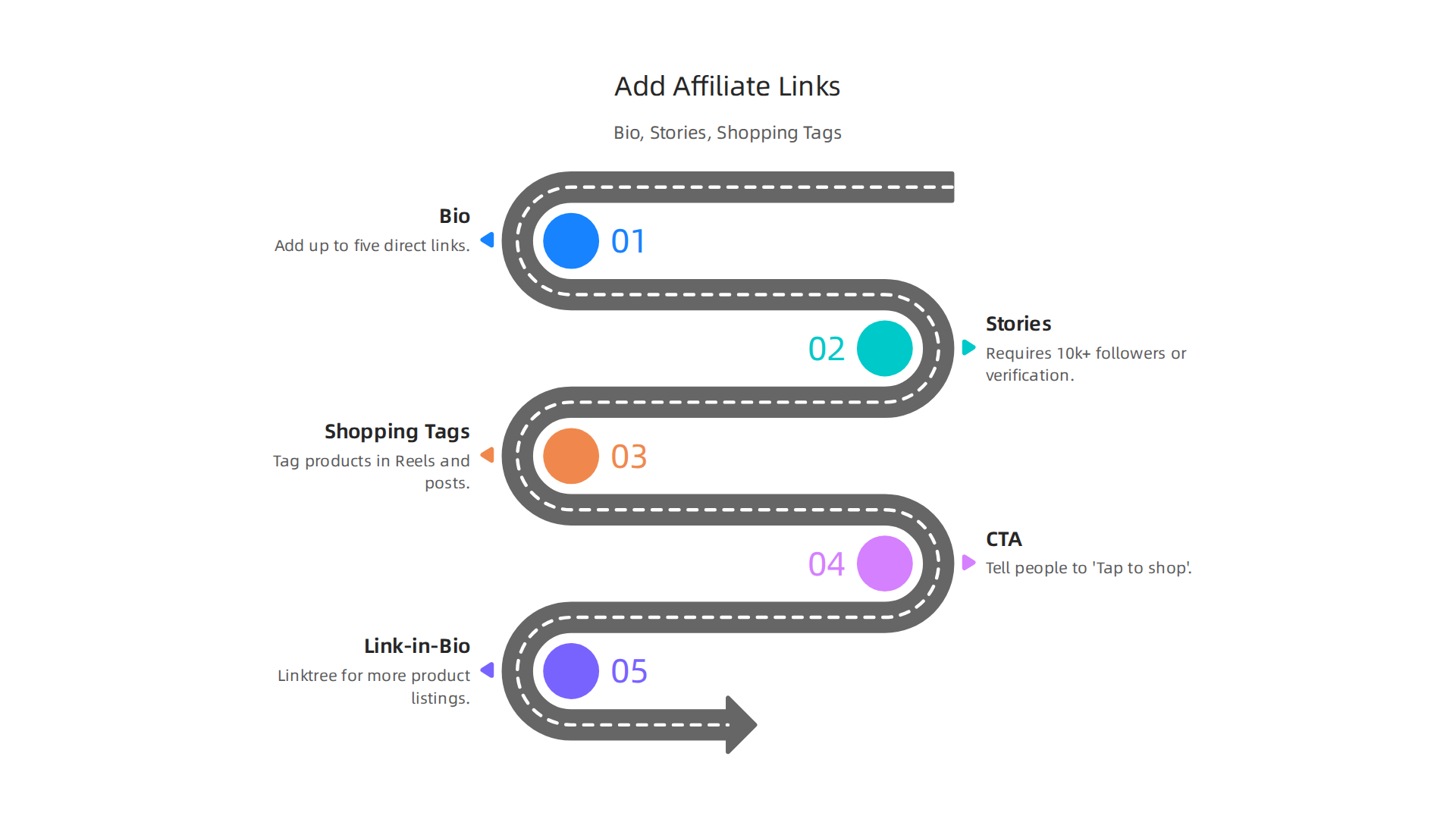
Here are the three best ways to do it in 2026.
Start with your bio (the workhorse)
Your Instagram bio is the most reliable place for affiliate links for Instagram. Every single person who visits your profile sees it. Instagram now lets you add up to five direct links right there. But if you want to share more products, tools like Linktree or Bio.fm organize everything into one page. According to Shopify, since Instagram does not support clickable links in regular captions, your bio is your main traffic driver.
If you really want to turn this into a full income stream, you need the right skills. Building a brand around your Instagram content takes strategy. A program like the Le Wagon Global Tech Bootcamp teaches you the advanced digital skills to build a sustainable online business.
Use Stories link stickers (the high impact tool)
Once you have 10,000 followers or a verified account, the Stories link sticker unlocks. This is a goldmine for affiliate marketing influencer strategies. Just create your Story, tap the sticker icon, choose the link sticker, and paste your affiliate link. Voluum confirms this is one of the top methods for driving clicks.
Here is a quick tip. Always add a call to action on the Story itself. Write something like "Tap the link to shop" or "Get the deal here." It makes a huge difference in how many people actually click.
Set up Instagram Shopping tags (the merchant way)
If you have your own online store or represent a specific brand, native product tags are the way to go. You need a product catalog uploaded through Shopify or BigCommerce. Once it is set up, you can tag products directly in your Reels and feed posts. Retail Dive reports that Meta is pushing this feature hard in 2026 to move past the old link-in-bio era.
Which one should you pick?
Start with your bio. It works for everyone. Add Stories link stickers once you hit the follower count. And if you run your own store, setup Instagram Shopping right away.
Once your links are live, the next step is learning how to promote them the right way. Check out our guide on how to set up affiliate links that actually earn money to take your strategy further.
Best Practices for Creating High-Converting Instagram Affiliate Content
You have your links set up. Now the real question is how to get people to actually click them. The difference between crickets and commissions often comes down to one thing. Your content strategy.
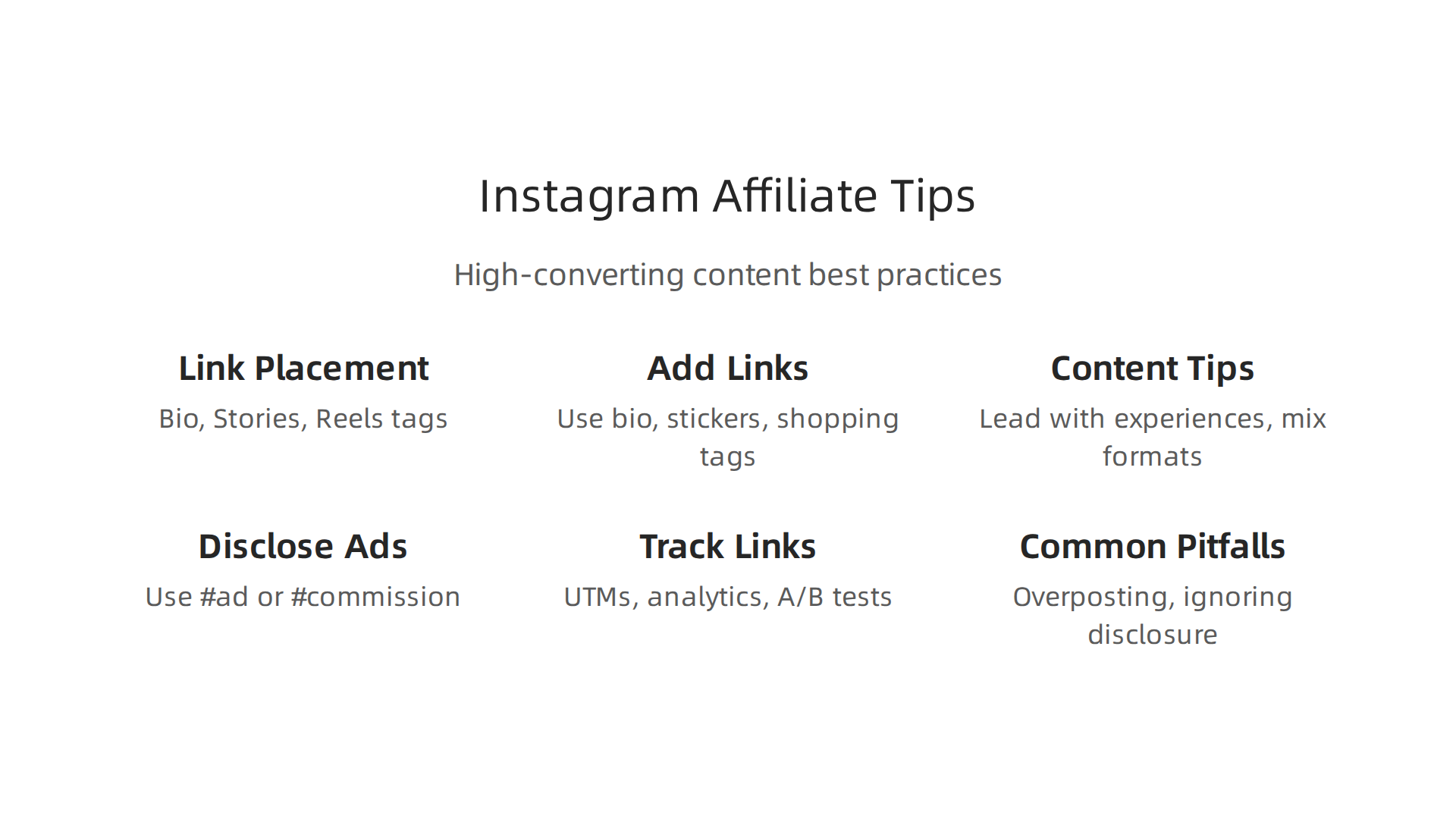
Here is what works best in 2026 based on what top affiliate marketing influencer creators are doing.
Lead with real experiences, not sales pitches
Think about the last time you bought something based on a recommendation. Chances are you trusted someone who actually used the product.

The same logic applies to your Instagram content.
Authentic product reviews and unboxing videos outperform standard promotional posts by a wide margin. When you show yourself opening a package, testing a tool, or sharing honest pros and cons, your audience pays attention. According to InfluenceFlow’s 2026 guide, the creators who earn the most treat their influencer affiliate program partnerships as genuine endorsements, not paid ads.
People can smell fake enthusiasm from a mile away. So be real. If a product has a flaw, mention it. That honesty builds trust, and trust drives sales.
Mix up your formats and always include a CTA
Instagram gives you several ways to share content. You should use all of them. Stories, Reels, and carousel posts each serve a different purpose.
Reels are great for quick demos or before-and-after results. Carousels let you dive deeper into a product review across multiple slides. Stories create urgency with limited-time offers. And every single one needs a clear call to action.
Do not just assume people know what to do. Tell them. Write things like "Swipe to see my full review" or "Tap the link in my bio to grab the deal." The 12AM Agency blueprint for 2026 confirms that posts with direct CTAs see significantly higher click-through rates.
If you want to take your content skills to the next level, structured training can help. Programs like Avocademy teach you how to design visually compelling content that converts. That kind of skill set makes a huge difference when you are competing for attention in a crowded feed.
Always disclose your affiliate relationships
Here is the part some people skip, but you really should not. The Federal Trade Commission requires you to clearly disclose when you earn a commission from a link. It is not just a legal thing either. It is a trust thing.
Add a simple disclosure like "#ad" or "#commission" in the caption or on the image itself. Do not bury it in a sea of hashtags. Make it visible. When your audience knows you are transparent about your income, they actually trust your recommendations more. For more on how to do this the right way without sounding awkward, check out our guide on how to write a compliant disclaimer for affiliate links.
Putting it all together
Focus on real content, use multiple formats with clear CTAs, and always disclose. That is the formula that turns your affiliate links for Instagram into a reliable income stream. Start applying these best practices today and watch your engagement grow.
Instagram Shopping and Native Affiliate Tools
Now that you know the best practices for creating content, let’s talk about the tools Instagram gives you to make selling easier. In 2026, the platform offers several built-in options that can save you time and help you track your earnings.
The key feature is Instagram Shopping. It lets merchants tag products directly in posts, Reels, and Stories. As an affiliate, you can use this to point your audience straight to the product page. Instead of sending people to a link in your bio and hoping they buy, you can tag the exact item they see. That shortens the journey from "like" to "purchase" and usually boosts your conversion rate.
Even better, Instagram brought back its native Affiliate for Creators program in late March 2026, after shutting it down a few years earlier. This program allows creators to use affiliate links to tag products in Reels and earn commissions on resulting sales, according to eMarketer. The program simplifies commission tracking and link management because everything lives inside the Instagram app. You don’t need to juggle multiple tools or manual spreadsheets. The Affiverse Media report notes that the relaunch shows Instagram is serious about helping creators monetize.
If you don’t have access to the native program yet, don’t worry. Many affiliate links for Instagram still work through third-party networks like Amazon Influencer and ShareASale. These programs integrate with Instagram using link-in-bio tools, Story stickers, or unique promo codes. For example, you can create a custom discount code for your audience and share it in a Story. The Voluum guide lists these methods as some of the most effective for driving sales in 2026.
How to set up Instagram Shopping for affiliate marketing
First, you need to connect your Instagram account to a product catalog. If you’re promoting products from a brand you partner with, they may grant you access to their catalog. Alternatively, you can use a platform like Shopify or WooCommerce to create your own catalog for affiliate products. Once your catalog is approved, you can tag products in your posts. For a step-by-step walkthrough, watch this 2026 tutorial on how to set up Instagram Shop.
The native tools also make it easier to use affiliate links in instagram without breaking the user experience. Instead of pasting a long link, you can simply tag a product and let people tap to learn more. That feels natural and doesn’t interrupt the scroll.
Pro tip: Combine Instagram Shopping with the native affiliate program if it’s available in your region. This gives you access to real-time performance data inside Instagram’s dashboard. You’ll see exactly which Reels earn the most, so you can double down on what works. For more on building a solid foundation, check out our guide on how to set up affiliate links that actually earn money.
The bottom line: Instagram’s native tools remove friction for both you and your audience. They make it easier to tag products, track commissions, and keep everything in one place. If you haven’t explored Instagram Shopping or the creator affiliate program yet, now is the time.
Tracking and Optimizing Your Instagram Affiliate Links
You’re posting great content, tagging products, and using the native affiliate tools. But here’s the real question: how do you know what’s actually working? Without tracking, you’re just guessing.
In 2026, the most successful affiliate marketing influencers treat their Instagram strategy like a science, not a guessing game.
They test, measure, and tweak everything. You can do the same with a few simple techniques.
Use UTM Parameters and Link Shorteners
Every affiliate link for Instagram you share should have tracking built in. UTM parameters are small tags you add to the end of a URL. They tell Google Analytics exactly where your traffic came from. For example, you can tag a link with ?utm_source=instagram&utm_medium=story&utm_campaign=summer_sale. Then you’ll know which Stories drove sales.
Link shorteners like Bitly and Rebrandly make this even easier. They not only clean up long URLs but also give you click data. You can see how many people tapped, when they tapped, and even which devices they used. The Voluum guide on Instagram affiliate marketing recommends using these tools as part of a solid tracking setup.
Pick the Right Analytics Tools
You don’t need to buy expensive software right away. Start with the free tools you already have.
- Instagram Insights shows you engagement data for each post, Story, and Reel. You can see saves, shares, and link taps. This helps you understand which content your audience interacts with most.
- Google Analytics gives you deeper data once people click through to your site. You can track time on page, conversion rates, and even revenue from specific affiliate links.
- Affiliate dashboards from networks like Amazon Associates or ShareASale show you exactly how much you earned from each click.
For those who want more detail, there are powerful tracking platforms designed for affiliate marketing. The Jotform Blog article on top affiliate tracking platforms lists tools like Everflow and AnyTrack that handle advanced tracking and fraud detection. If you’re scaling your efforts, a tool like Post Affiliate Pro can centralize everything. Check out our in-depth Post Affiliate Pro review 2026 to see if it fits your workflow.
Finally Social’s guide on Instagram analytics tools also mentions Keyhole for real-time monitoring, which is great for tracking campaign performance as it happens.
A/B Test Your Link Placement and CTAs
Here’s where the real optimization happens. Instead of always putting your link in the bio, try different spots.
- Test link in bio versus Story link stickers. Stories usually get higher tap-through rates because they create urgency.
- Test different CTA wording. For example, try "Shop now" versus "Get yours today" versus "See why I love this". A small change in words can double your click-through rate.
- Test Reel captions with the link early versus late. Some audiences respond better when the CTA comes right in the first sentence.
The Impact article on affiliate tracking methods explains that accurate tracking is key to knowing which tests actually work. Without it, you’re just making random changes.
Make Data-Driven Decisions
After a few weeks of tracking, look at your numbers. Which posts earned the most clicks? Which CTA got the highest conversion rate?

Double down on what works and drop what doesn’t.
Remember, the goal is not to track everything simply for the sake of tracking. The goal is to learn what your audience responds to so you can earn more from your efforts. With simple UTM parameters, a free analytics tool, and a habit of testing, you can turn your Instagram profile into a steady income stream.
For a complete walkthrough on building your affiliate business from scratch, read our guide on how to start affiliate marketing in 2026 and build a profitable business.
Common Pitfalls and How to Avoid Them
You’ve got your tracking setup and your links are ready. But even experienced affiliate marketing influencers run into problems that cost them money and trust. Here are three big mistakes people make with affiliate links in Instagram, and how you can avoid them.
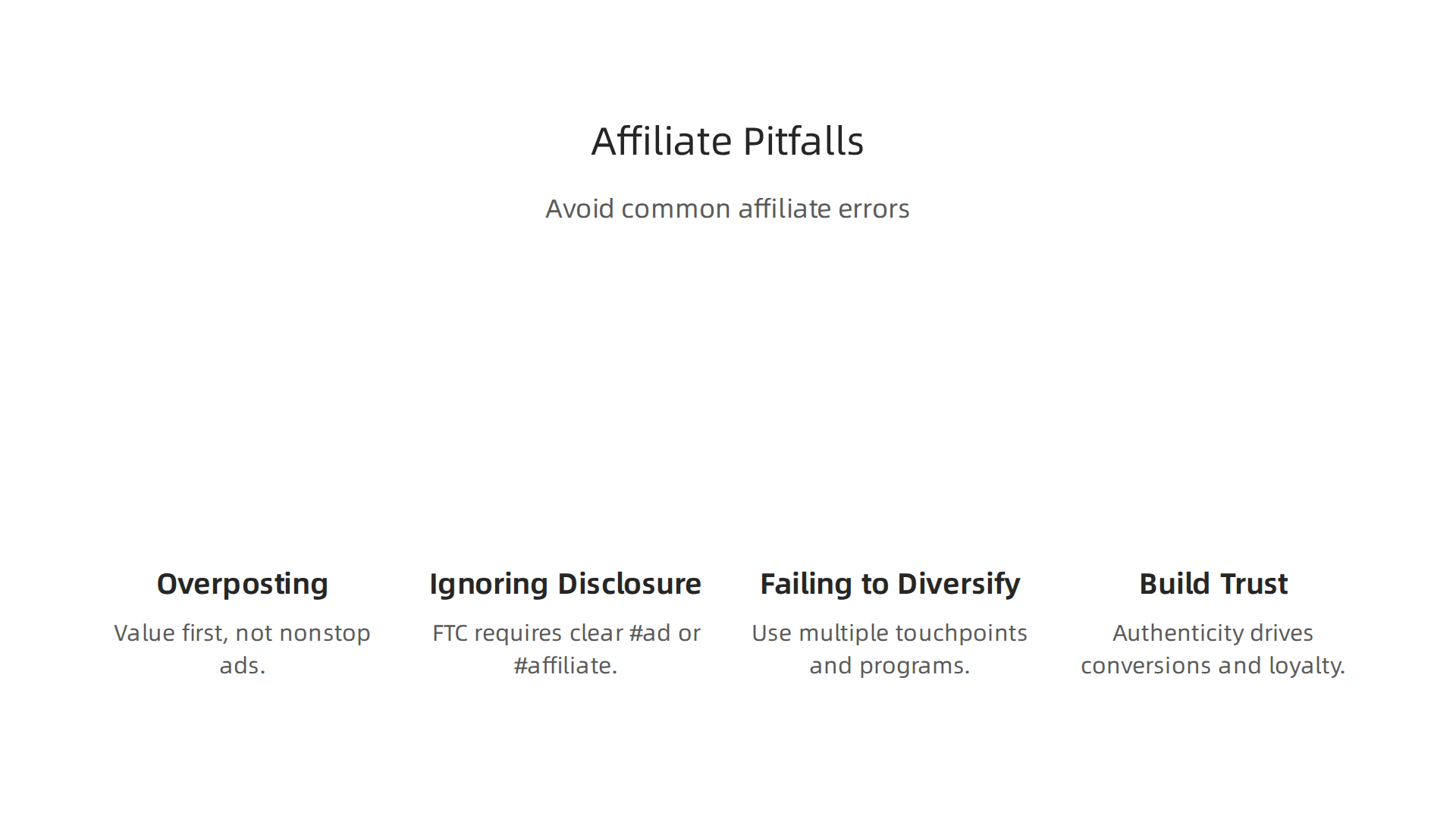
Pitfall 1: Overposting Without Value
Turning your profile into a nonstop ad is the quickest way to lose followers. When every post pushes a product, your audience stops listening. They came to you for helpful content, not a sales pitch.
Instead, focus on value first. Share a personal story about why you use a product. Show a result. Teach something useful. The Instagram Affiliate Marketing 2026 Blueprint reminds us that authenticity drives conversions, not volume. Keep a healthy balance. One affiliate post for every four regular posts works well.
Pitfall 2: Ignoring Disclosure Rules
This is a big one. The FTC requires you to clearly tell your audience when you earn a commission from a link. If you skip this step, you risk fines and even account suspension.
A simple #ad or #affiliate in your caption is usually enough. Make sure it appears before the reader has to click the link. The InfluenceFlow guide on influencer affiliate programs explains that transparent selling actually builds stronger trust with your followers. For a full breakdown on the exact language you need, read our guide on writing a compliant disclaimer for affiliate links.
Pitfall 3: Failing to Diversify Link Sources
Many new affiliates put only one link in their bio and call it done. That limits your earning potential. If Instagram changes its algorithm or that one link stops working, your income takes a hit.
Use multiple touchpoints. Story stickers, Reel captions, and carousel posts all work well for affiliate links for Instagram. Also join more than one influencer affiliate program. That way you can test which products your audience prefers and always have a backup. For more strategies, check out our tips on how to set up affiliate links that actually earn money.
The Simple Truth
Post with value. Always disclose. Spread your links. Follow these three rules and your affiliate marketing on Instagram will grow steadily over time.
Advanced Strategies: Leveraging Reels, Lives, and Collabs
Once you have the basics down and you are earning a few commissions, it is time to level up. The most successful affiliate marketing influencers in 2026 do not just post static photos. They use Instagram’s most powerful features to get their affiliate links in front of more people. Here are three advanced strategies that can multiply your earnings.
Strategy 1: Use Instagram Reels to Drive Massive Traffic
Right now, Reels get the highest organic reach on Instagram. That means more people see your content without you paying for ads. The trick is to create short, helpful, or entertaining videos that naturally lead to your affiliate links.
For example, if you are part of a tech affiliate program, make a quick Reel showing how a tool solves a common problem. Use a caption like “Link in bio for the exact steps” or “Drop a comment and I will DM you the link.” After a Reel goes viral, you can also share the link in your Stories and watch the clicks roll in. According to the Instagram marketing guide for 2026, consistent Reel posting is one of the fastest ways to grow your audience and your commissions.
Strategy 2: Go Live and Use Live Shopping
Live video creates real‑time trust. When you go live, you can show a product, answer questions, and share your affiliate link right in the chat or in a follow‑up Story. Instagram’s live shopping feature makes it even easier. You can tag products directly, and viewers can buy without leaving the app.
Think about what your audience struggles with. If you are promoting online courses, go live and give a mini lesson. Then recommend a training program like Avocademy’s UX/UI course or a Le Wagon tech bootcamp as a next step. Your viewers already trust you from the live session, so they are more likely to click your affiliate links.
Strategy 3: Collaborate with Other Creators and Brands
You do not have to do it all alone. When you partner with another creator, you get access to their audience. That means more people see your affiliate links for Instagram.
Here is a simple way to start: find a creator in a related niche. Plan a joint Reel or a takeover where you both promote a product you genuinely use. Split the commission or take turns linking. You can also reach out to brands directly and ask to be part of their ambassador program. Many brands love cross‑promotion because it feels more authentic.
For more tips on building these partnerships, check out our guide on how to set up affiliate links that actually earn money. It covers how to track which partnerships drive the most sales.
Quick Recap
- Post Reels often and put your affiliate links in the caption or a follow‑up Story.
- Use live video to demo products and share links in real time.
- Team up with other creators and brands to double your reach.
These advanced strategies do not require a big budget. They just take a little planning and a lot of genuine helpfulness. Start with one strategy this week, test it, and watch your affiliate marketing on Instagram grow.
Summary
This article is a practical guide to using affiliate links on Instagram in 2026, explaining where and how to share links without breaking platform rules. It covers the allowed placements—bio links, Stories link stickers, native product tags in Reels and feed—and the revived native creator affiliate program that simplifies tracking. You’ll learn step-by-step how to add links, set up Instagram Shopping, and connect product catalogs through platforms like Shopify. The guide also details content best practices: authentic reviews, varied formats, clear CTAs, and mandatory disclosure to build trust. It shows how to track performance with UTM parameters, link shorteners, Instagram Insights and affiliate dashboards, and how to A/B test placements and CTAs. Finally, it warns against common pitfalls (overposting, poor disclosure, lack of diversification) and recommends advanced strategies like Reels, live shopping, and creator collaborations to scale earnings.