
Reviews & Guides from Our Experts

Affiliate Tracking Link: Master Its Mechanics for Reliable Earnings

Why Affiliate Tracking Links Matter
Have you ever wondered how online businesses know exactly who sent a customer their way? Or how content creators get paid for promoting products they love? Without a special tool, it can feel like a guessing game. Imagine putting in lots of effort to share a product, only for the sale to happen and no one knows you helped. That’s a common problem in the world of online sales and promotions.
Many businesses and content creators face a big challenge: they lose out on sales because they can’t tell where a customer really came from. Was it from a social media post? An email? A blog review? This confusion means money left on the table. For example, if a customer sees your recommendation, then clicks on someone else’s link later, you might not get credit. This leads to lost commissions for those promoting products and unclear results for businesses. This messy situation highlights why having a reliable way to connect sales to the right person is super important for everyone involved.
This is where the affiliate tracking link steps in. Think of an affiliate tracking link as a special tag added to a regular website link. When someone clicks this unique link, it tells the merchant’s system exactly who sent them. This smart system uses what’s called a "Click ID" to follow the customer’s journey. When the customer makes a purchase, the system matches that Click ID back to the person or company that shared the link, making sure they get their well-deserved payment for bringing in the sale. This process is often powered by a simple affiliate tracking software platform that handles all the details behind the scenes, often using server-to-server (S2S) communication to make sure sales are counted even if cookies are blocked ². Many tracking systems also use a "cookie window" or "attribution window," which is a set time period during which an affiliate still gets credit if a customer buys after clicking their link ¹. These windows can be 30 days or even longer, depending on the program ³.
So, how do these special links work their magic? In this guide, we will break down everything about affiliate links and how affiliate link tracking makes sure everyone gets fair credit. We will explain how tracking links work, what legal rules you need to know, what tools can help, and how both content creators and businesses can use them best in 2026. Get ready to learn how to stop guessing and start earning reliably.

If you’re new to this whole topic, you might want to learn more about What is affiliate marketing how it works real examples types explained 2026 to get started.
What is an affiliate tracking link? Anatomy and core mechanics
Now that we know why affiliate tracking links are so important, let’s look closer at what they are and how they work. An affiliate tracking link is more than just a regular link to a website. It’s a special URL that has extra pieces of information added to it. These extra pieces tell the merchant’s system exactly who sent the customer their way.
Think of an affiliate tracking link like a special ID badge for every customer. When you click it, that badge is created and follows you.
Parts of an Affiliate Tracking Link
A typical affiliate tracking link has a few key parts:
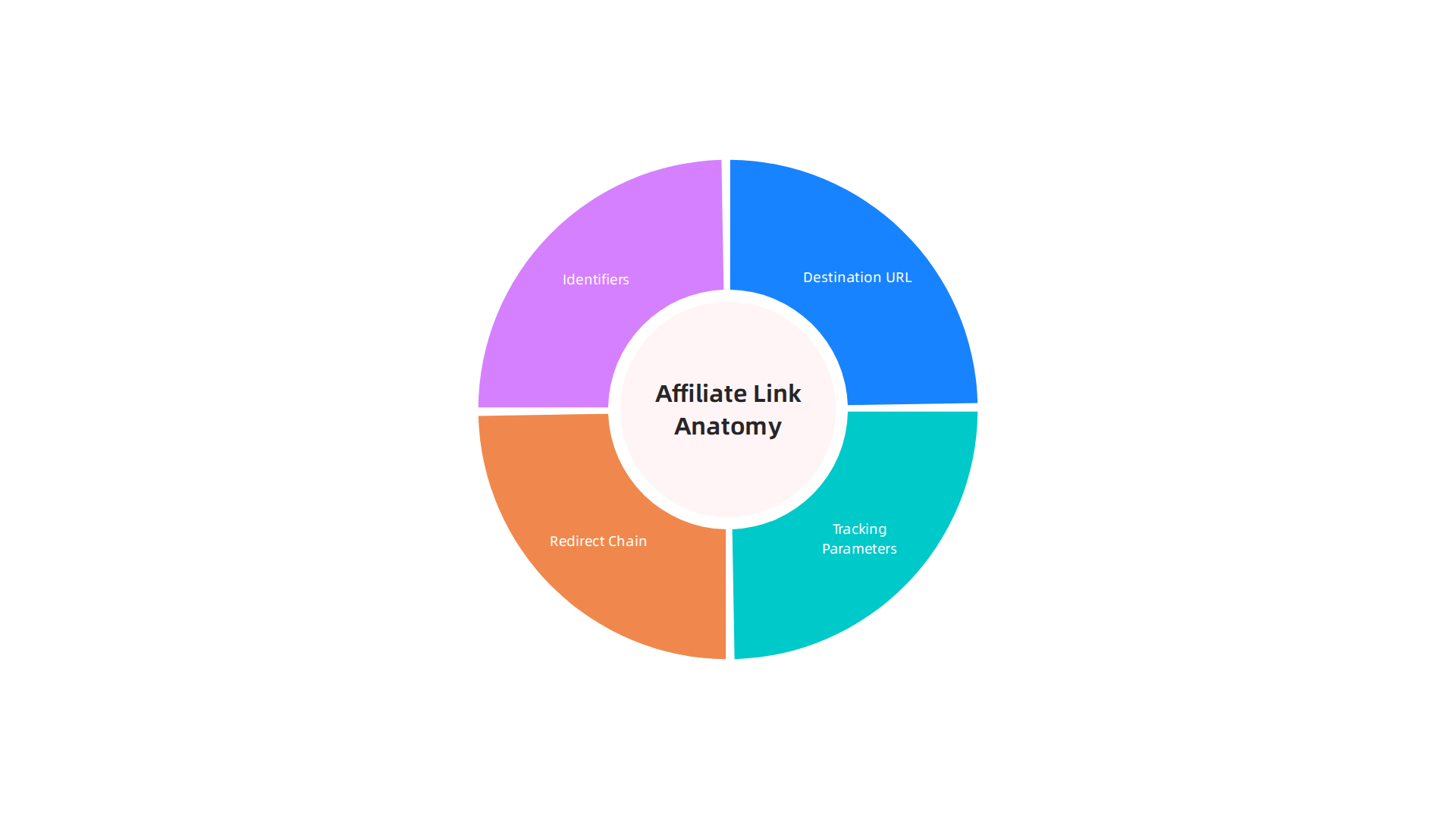
- Destination URL: This is the actual website page you want people to visit, like the product page on a store.
- Tracking Parameters: These are the special codes added to the end of the destination URL. They often start with a question mark (?) or an ampersand (&) and look like
?affid=123or&clickid=xyz. These parameters carry important tracking details. - Redirect Chain: When you click an affiliate tracking link, you don’t always go straight to the product page. Sometimes, you first go through the affiliate’s tracking system, then through the affiliate network’s system, and then to the merchant’s site. This quick trip is called a redirect chain, and it’s how all the tracking info gets passed along.
- Identifiers (Click ID and SubID):
- Click ID: This is a unique code made each time someone clicks an affiliate link. It’s like a serial number for that specific click. This Click ID is super important because it helps match a sale back to the right affiliate later on ¹.
- SubID: This is an extra tag you can add to your link. It helps you track even more details, like which specific blog post or ad creative led to the click. For example, you might add
&subid=blogpost-review-1.
How Affiliate Link Tracking Works Its Magic
When a person clicks an affiliate tracking link, a few things happen very quickly:
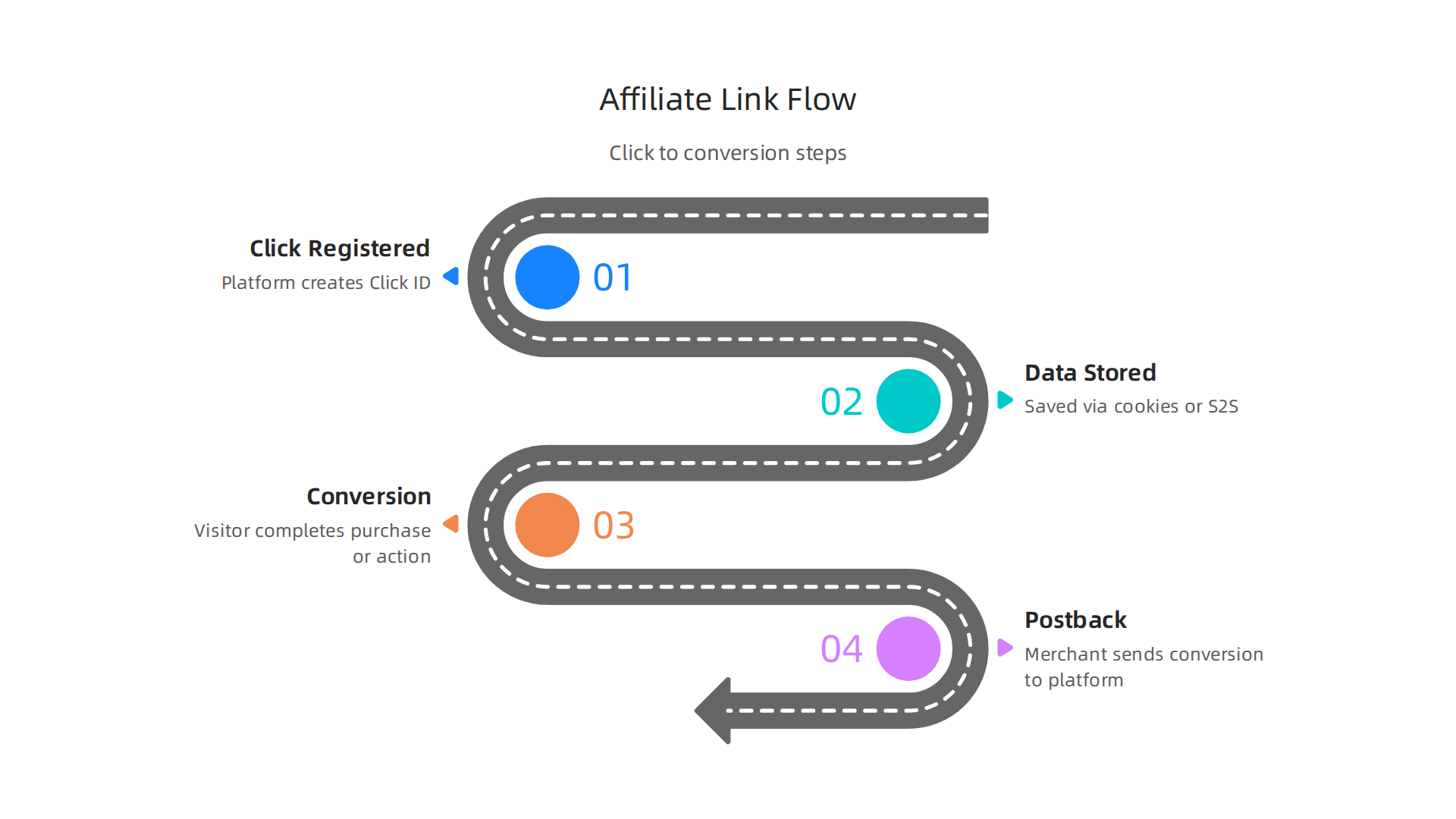
- Click is Registered: The moment someone clicks, the affiliate’s tracking platform notes it down. It makes a new, unique Click ID for that visit. This Click ID is then sent along with the customer to the merchant’s website ².
- Tracking Data Stored: The merchant’s website needs to remember this Click ID. It can do this in a few ways:
- Cookies: A small file (called a cookie) is placed on the visitor’s web browser. This cookie holds the Click ID and tells the merchant’s system who referred the customer if they buy something later.
- Local Storage: Similar to cookies, this is another way to store information right inside the visitor’s web browser.
- Server-Side: Some advanced systems store the Click ID on the merchant’s own server, linking it to the visitor’s session. This is part of what’s known as server-to-server (S2S) tracking, which is very reliable and works even if cookies are blocked ³.
- Conversion Happens: If the visitor then makes a purchase, signs up for something, or completes another desired action, this is called a conversion.
- Postback or Pixel Fire: Once the conversion happens, the merchant’s system sends a message back to the affiliate tracking software platform.
- Postback: This is a direct message sent from the merchant’s server to the affiliate’s tracking server. It carries the Click ID to say, "Hey, the person with this Click ID just bought something!" This is often seen as the most reliable way to track sales because it doesn’t rely on the user’s browser ⁴.
- Pixel Fire: This is a small piece of code (often called a tracking pixel) on the merchant’s "thank you" or "order confirmed" page. When that page loads, the pixel "fires" and sends a signal back to the tracking system, along with the Click ID.
Common Formats
Affiliate links come in different forms, but they all serve the same purpose: to carry tracking information. Most commonly, they use query parameters like www.store.com/product?affiliateid=123&clickid=ABC. Other times, the tracking information might be part of the link path itself, such as www.trackinglink.com/go/affiliateX/productY. Regardless of the exact look, the goal of this affiliate link tracking is to make sure every click and sale is properly matched, leading to fair payments for content creators and clear data for businesses. Learning more about how affiliate marketing link tracking that stops guessing and boosts earnings can really help improve your campaigns.
If you are a content creator looking to earn more from your recommendations or a business wanting to set up a smooth affiliate program, having a good grasp of these core mechanics is key.
Understanding the basic parts of an affiliate tracking link is a great start. Now, let’s dive into how these links actually help track a customer’s journey from click to sale. This process is called attribution, and it tells us who gets credit for a successful action.
How attribution works: cookies, pixels, server-side tracking, and attribution windows
When we talk about how an affiliate gets credit for a sale, we’re talking about attribution. This part of affiliate marketing uses different tools to connect a purchase back to the right affiliate.
Cookie-Based Tracking and Attribution Windows
One common way to track affiliate links uses small files called cookies. When a person clicks an affiliate tracking link, a cookie is placed on their web browser. This cookie holds the unique Click ID that links the visitor to the affiliate who sent them. If the visitor later buys something on the merchant’s site, the cookie helps the system know which affiliate should get credit for the sale ¹.
These cookies don’t last forever. They have a set lifespan called an attribution window (also known as a cookie duration or tracking window). This window is a specific period, like 30, 60, or even 90 days. If the customer buys within this time, the affiliate gets paid. If they buy after the window closes, the credit might be lost ². A common default window is 30 days, but it can be longer for products that take more time to decide on, like big purchases ³.
Attribution also looks at "first-touch" or "last-touch" models:
- First-touch: The first affiliate link a customer clicked gets all the credit.
- Last-touch: The last affiliate link clicked before the sale gets all the credit.
Most affiliate programs use a last-touch model, but understanding both helps explain how different marketing efforts get recognized.
Server-Side Tracking for Better Accuracy
While cookies are very useful, they have some limits. Modern internet browsers and privacy settings can sometimes block or delete cookies. This can lead to lost sales tracking, meaning an affiliate doesn’t get credit for a sale they earned.
This is where server-side tracking comes in. Instead of just relying on a cookie in the user’s browser, the Click ID is sent directly between servers. When a customer clicks an affiliate tracking link, the unique Click ID travels as a parameter, and when a sale happens, the merchant’s server sends a direct message (called a postback) back to the affiliate’s tracking server. This message carries the Click ID to confirm the sale ⁴.
Server-side tracking is much more reliable than client-side (cookie-based) methods because it doesn’t depend on the user’s browser settings. It helps reduce lost conversions and ensures affiliates get fair credit for their efforts ⁵.
Modern Challenges: Cookies and Privacy
In 2026, tracking technologies are always changing. New privacy laws, like updated CCPA regulations effective January 1, 2026, mean websites need to be more careful about collecting user information ⁶.
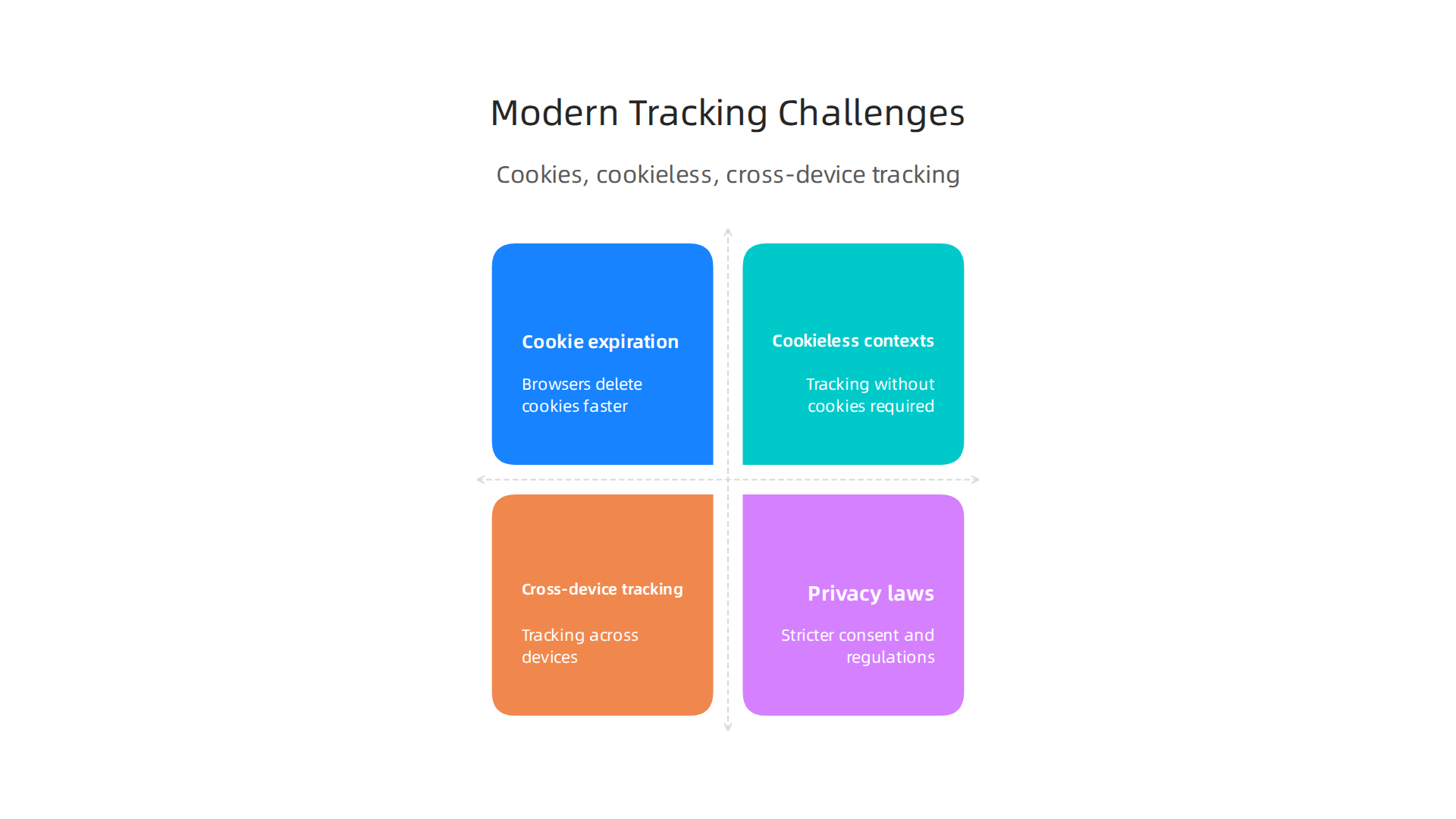
These rules often require users to give clear permission before their data is collected or used. This has led to challenges like:
- Cookie expiration: Many browsers are now set to delete cookies faster or block third-party cookies by default.
- Cookieless contexts: More and more, tracking needs to work without cookies. This means finding new ways to connect clicks and sales, often relying more heavily on server-side tracking and advanced identification methods ⁷.
- Cross-device tracking: People use many different devices throughout the day. Tracking a single customer’s journey from their phone to their laptop to their tablet is still a big puzzle.
These changes make it even more important for affiliate tracking software to be smart and adaptable.

Using a reliable simple affiliate tracking software platform helps overcome these challenges, making sure that every effort by an affiliate is properly counted. This focus on strong tracking helps both content creators earn more and businesses grow.
In 2026, understanding how privacy laws affect affiliate tracking links is super important. We just talked about how things like cookies and server-side tracking work. But actually, these tools must follow strict rules to protect people’s private information. Laws like GDPR (General Data Protection Regulation) and CCPA (California Consumer Privacy Act) are all about making sure businesses get clear permission from users before collecting their data.
Why Consent Matters for Affiliate Tracking
Think about it: when someone clicks an affiliate tracking link, you’re starting to gather information about them. It might be simple things like their browser type or a unique ID. But laws like GDPR and CCPA give people more control over their personal data. For example, under GDPR, online services need to get a user’s permission before they can use their data. The CCPA also gives users the right to say no to their data being sold or shared. These laws make sure that asking for permission must be a clear and positive action from the user, not something hidden or pre-checked ¹.
Actually, businesses need to get clear consent from people before they collect or use personal information for reasons that are not directly related to what was first intended ². This means if an affiliate tracking link collects data, the user needs to agree to it.
What Affiliates and Merchants Must Disclose
To follow these rules, both affiliates and merchants need to be open and honest. This means doing a few key things:
- Privacy Notices: Every website that uses affiliate links should have a clear privacy policy. This policy tells visitors exactly what kind of information is collected, how it’s used, and who it’s shared with. This policy should be easy to find, often linked from the website’s main page or footer ³.
- Cookie Banners: Since many affiliate links use cookies to track sales, websites must show a "cookie banner" or pop-up. This banner asks users if they agree to cookies being placed on their device. It should let people easily choose what data they share.
- "Do Not Sell" Links: Under CCPA regulations, many websites must provide a special link that says "Do Not Sell or Share My Personal Information" or "Your Privacy Choices" ⁴. This lets users quickly tell the business not to share their data.
Without these clear disclosures, using an affiliate tracking link might not be allowed. If a business allows others (like affiliates) to collect personal information through its website, it must also have a contract in place requiring those third parties to follow privacy rules ⁵.
How to Stay Compliant: Practical Steps
It’s clear that privacy laws are always changing and getting stronger. In 2026, companies need smart ways to keep their affiliate link tracking legal and ethical. Here are some practical steps:
- Consent Gating: This means that certain tracking, like putting a cookie on a user’s browser, only happens after the user gives clear consent through a cookie banner. If they say no, then less personal tracking methods must be used.
- Data Anonymization: When possible, remove details that could identify a person from the data collected by an affiliate tracking link. This makes the data less risky from a privacy point of view.
- Server-Side Tracking: As mentioned before, server-side tracking can be more private because it sends data between servers instead of relying on the user’s browser. This can help reduce the amount of personal data stored on the user’s device. For example, the Online Privacy Act proposed in Congress requires clear, affirmative consent before personal information is even collected or processed ⁶. This makes server-side methods that respect privacy even more valuable.
- Regular Audits: Businesses should regularly check their affiliate links and tracking methods to make sure they still meet current privacy laws.
Using a good affiliate agreement can help both affiliates and merchants understand their responsibilities and make sure they are following all legal rules. Also, having a clear compliant disclaimer for affiliate links helps build trust with your audience.
Staying on top of these rules is not just about avoiding fines; it’s about building trust with your audience. When people feel their privacy is respected, they are more likely to engage with your content and use your affiliate links. This also helps ensure that a simple affiliate tracking software platform continues to work effectively while respecting user rights.
After making sure our affiliate tracking methods respect user privacy, the next step is to put reliable tracking systems in place.

This means picking the right tools, setting up your links correctly, and using modern tracking methods. In 2026, many different tools help manage the journey of an affiliate tracking link.
Common Affiliate Tracking Tools
There are different types of tools you can use to track your affiliate links:
- Affiliate Networks: These are big platforms that connect businesses (merchants) with people who promote them (affiliates). They often have their own built-in tracking systems. For example, some networks use a method called "postback integrations" or "postback-based conversion tracking" to give credit to the right affiliate ¹. Rakuten Advertising is an example of a network that uses this for many affiliate programs ².
- Link Management Platforms: These are special software tools designed just for tracking and managing affiliate links. They help you create, organize, and monitor all your links in one place. Platforms like Post Affiliate Pro offer real-time postback tracking for server-to-server conversions ³. Choosing the best simple affiliate tracking software vs management depends on your needs.
- Analytics Tools: These are broader tools like Google Analytics that can help you see how people interact with your website and affiliate links. While useful, they might not offer the deep, specific tracking for affiliate sales that dedicated platforms do.
- Server-Side Tracking Providers: These are becoming very important. Unlike older methods that rely on cookies in a user’s browser, server-side tracking sends data directly between servers. This makes tracking more accurate because it’s less affected by ad blockers and privacy settings that block cookies ⁴. Many modern platforms, like Track360, combine server-side tracking with other methods ⁵. This is seen as a key feature for reliable affiliate tracking in 2026 ⁶. You can also learn more about affiliate marketing link tracking for better results.
Actually, server-side tracking is much more accurate than old pixel-based methods, especially since it can bypass common browser limits and ad blockers. It can lead to much less data loss ⁷. This method ensures that when a click happens, a special transaction ID is made and passed through the link, and then when a sale occurs, the merchant’s server tells the affiliate platform’s server directly ⁸.
Checklist for Implementing Tracking Links
To make sure your affiliate link tracking works well and gives you good information, follow these steps:
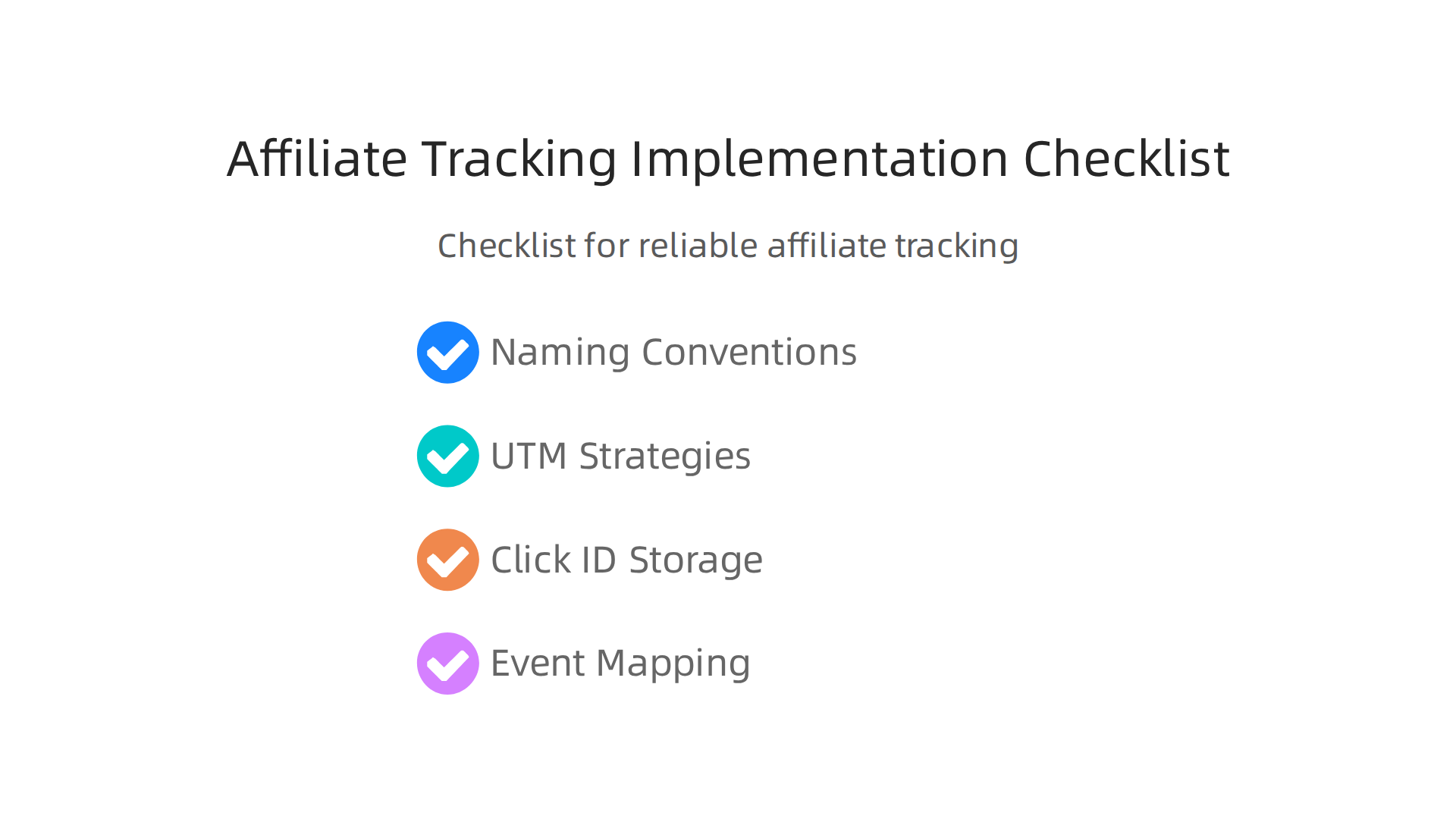
- Naming Conventions: Give your affiliate links clear, easy-to-understand names. This helps you quickly see which link is for which product, campaign, or marketing channel.
- UTM Strategies: Use UTM parameters in your links. These are small bits of text added to the end of a URL that help you track where clicks come from (e.g., which social media post, email, or ad). Standardizing your UTM structure is an important step for good attribution ⁹.
- Click ID Storage: With server-side tracking, it’s very important to save a unique "click ID" when someone first clicks your affiliate tracking link. This ID must stay with the customer’s journey until they complete a purchase. This way, when the sale happens, the systems can match the sale back to the original click, even if no cookies were used ¹⁰.
- Event Mapping: Make sure your tracking system knows exactly what a "conversion" or "sale" looks like. You need to tell it which actions on a website count as a successful event (like a purchase, sign-up, or download) so it can report these back correctly.
Link Shorteners and Cloakers: Good or Bad?
Many people like to use link shorteners (like Bitly) or cloakers (tools that hide the real affiliate link) because they make links look cleaner and shorter. This can be handy for sharing on social media or in emails.
However, there are some things to think about:
- Convenience: Short and clean links are easier to share and might look nicer.
- Transparency: Hiding the real link can sometimes make people distrust it. Many platforms also prefer full transparency.
- Debuggability: If something goes wrong with a cloaked link, it can be much harder to figure out why. When you’re trying to fix a tracking issue or reconcile sales, seeing the full, original affiliate tracking link is very helpful. For the most reliable tracking, especially with server-side methods, keeping links transparent and having clear information is usually best.
By using these tools and careful steps, you can set up a strong affiliate tracking link system that gives you accurate data and helps you earn more. This also helps you how to set up affiliate links effectively.
Even with the best tools and setup, affiliate tracking links can sometimes hit bumps. It is important to know how to fix these problems, spot bad actions like fraud, and make sure all your reports add up. This way, you can trust your numbers and keep earning well.

Fixing Common Tracking Problems
When your affiliate tracking link system isn’t giving you perfect results, it helps to know what to look for. Here are some common issues:
- Redirect Loops: This happens when a click on an
affiliate linkgets stuck. Instead of going to the product page, it bounces back and forth between different pages forever. This stops the customer from reaching the goal and means no sale for you. You can use online tools to check the path your link takes to find where the loop is. - Missing Postbacks: Postbacks are like messages from the merchant’s website to your
simple affiliate tracking software platformthat say "a sale just happened!" If these messages are not sent correctly, your sales won’t be recorded, even if a customer bought something. This is often an issue with the server-to-server connection. - Attribution Mismatches: Sometimes, your sales report from the affiliate network might show different numbers than the merchant’s own sales system. This means the credit for a sale is not matching up. It could be due to different tracking rules or delays in reporting.
- Timezone Issues: Imagine a sale happens at 11 PM on Monday in one country, but because of time differences, it shows up as 3 AM on Tuesday in another report. These small differences in time zones can make it hard to compare daily or weekly reports accurately. Make sure all systems use the same time.
Spotting Affiliate Fraud
Sadly, some people try to trick the system. Affiliate fraud means getting fake clicks or sales that don’t come from real customers. This costs you money and wastes your effort. In 2026, spotting fraud means looking at many different clues at the same time, not just one thing. This includes watching live signals and reviewing past data Track360.io’s Guide to Affiliate Fraud Detection.
Here are key signs to watch for:
- Too Quick to Convert: If someone clicks your
affiliate tracking linkand buys something in just a few seconds, it can be suspicious. Real buyers usually take time to think and browse Affiliate Marketing Fraud Types. - High Clicks, Low Sales: A lot of clicks on an
affiliate linkwith almost no actual sales can mean bots are at work. Bots click but never buy Affiliate Fraud: Types, Warning Sign and how to Stop It. - Sudden Performance Jumps: If a new affiliate partner suddenly brings in a huge number of sales, much more than your best older partners, it’s a big warning sign. Real growth usually happens slowly Affiliate Fraud: Detection, Prevention, and Tools to Stay Safe.
- Fake Leads: Some fraud involves creating fake sign-ups or very low-quality leads that never turn into paying customers Scaleo’s 2026 Affiliate Fraud Report.
To catch these issues, always compare current numbers to what’s normal for your program. Look for big, quick changes rather than just high numbers Affiliate Fraud Detection & Prevention Strategies. For more information on how to find fake sales, you can read about How to Detect Affiliate Fraud on Shopify. For a deeper dive into smart tracking, consider how a simple affiliate tracking software platform can help.
Making Reports Match: Reconciliation
Reconciliation is the process of comparing your affiliate link tracking reports with the merchant’s own sales records. This helps you find any missing sales or other errors, and makes sure you get paid for every real conversion. Many finance teams use special Affiliate Dashboard for Tracking Metrics with AI to do this monthly.
Here’s how to do it step-by-step:
- Get Reports: Collect detailed sales reports from both your affiliate network (or
simple affiliate tracking software platform) and the merchant. Make sure both reports cover the exact same dates. - Compare Details: Don’t just look at the total numbers. Go through each sale one by one. Check the order ID, the affiliate ID, the click ID, the date, and the amount of money for each transaction How to Catch Affiliate Fraud Before It Costs You.
- Find Differences: Look for any sales that show up in one report but are missing from the other. Also, note any sales where the details don’t match exactly, like a different sale amount or date.
- Fix Problems: If you find issues, work with the merchant or affiliate network to correct them. This might mean adding missing sales, fixing incorrect amounts, or investigating potential fraud.
- Do It Regularly: It’s best to do this check often, even daily or weekly for busy programs. Your goal should be to have very small differences, ideally less than 0.5% between reports Affiliate Fraud Audit Framework for 2026. Picking the best simple affiliate tracking software can make this much easier. This regular check ensures your
affiliate linksare working as they should and protects your earnings.
Once you’re sure your individual affiliate links are working well and you’re catching any fraud, the next step is to manage everything smoothly when you have many programs. Dealing with just one program is one thing, but running several at once needs a smart plan. This is where good workflows, templates, and growth ideas come in handy.
Managing Multiple Affiliate Programs: Workflows, Templates, and Growth Strategies for Affiliates
When you work with lots of affiliate programs, keeping things tidy is super important. It helps you save time and earn more. Here are some key ways to manage multiple programs:
- Link Mapping: Think of this like a detailed map for all your affiliate tracking link connections. You need to know exactly which link goes to which product or service, for each program you are part of. This helps you track correctly and avoids mixing things up. A good
simple affiliate tracking software platformis key here, acting as your central hub to keep track of all your diverse links and their destinations. Many top platforms in 2026 use server-to-server tracking for better accuracy and to bypass common browser issues Affiliate Tracking Software: How It Works & Best Tools In 2026. - Central Spot for Creatives: As an affiliate, you probably use many different banners, images, and pieces of text for your promotions across various programs. Having one main, organized place where you store all these "creatives" saves you a lot of time and prevents errors. This way, you always grab the correct and most recent versions for any
affiliate tracking linkyou are promoting. - Regular Audits: Just like you check your sales reports, it’s good to regularly audit your overall
affiliate link trackingsetup. This process helps you find old links that might need updating, correct broken ones, and make sure everything is still running smoothly across all your programs.
Templates for Consistent Tracking
To make your affiliate link tracking easy and reliable, using clear templates for how you name and tag things is a must. This consistency helps you understand your data better, especially when comparing different campaigns or networks.
- Link Naming Conventions: Give each
affiliate tracking linka clear, simple, and consistent name. This name should quickly tell you what campaign it’s for, where it’s placed (like on a specific blog post or social media platform), and which product it promotes. For example, "blog-review-productX-jan2026". - SubID Usage: These are like little extra tags you add to your
affiliate linksthat give you more detailed information. They help you know things like which exact button on your page got a click, which email in a sequence sent a sale, or even which specific ad variation performed best. Using SubIDs consistently helps you see what’s really working and refine your strategy Attribution Reporting Affiliate Marketing Guide 2026. - UTM Parameters: These are similar to SubIDs and are often used with tools like Google Analytics to track traffic sources. Setting up standard UTM tag conventions for all your campaigns, even across different affiliate networks, helps you get a unified view of how well each marketing effort is doing. To really learn how to set up
affiliate linksthat generate income, it’s helpful to explore how to set up affiliate links that actually earn money.
Growth Strategies for Affiliates
Once you have your operational systems in place, the next step is to focus on smart strategies to grow your affiliate earnings. Managing multiple programs effectively means always looking for ways to improve.
- Test Different Offers: Don’t just stick with promoting one product or service within a program. Try promoting a few different things to see what truly resonates with your audience and generates the most interest and sales. This constant testing helps you find new, profitable avenues.
- Prioritize High-Converting Partners: Within your collection of
affiliate programs, some partners or campaigns will naturally do much better than others. Find those that consistently bring in the most sales and give them more attention and promotion. This might mean dedicating more prime space on your website, featuring them more often in your content, or even exploring advanced tracking methods. Using a smart attribution model can help you understand which partners truly bring value throughout the customer journey, not just the last click before a sale Choosing the right affiliate attribution model. For a deeper understanding of how these networks work, consider reading about affiliate network explained roles tracking and choosing the right one. - Learn and Grow: The world of affiliate marketing is always changing in 2026. Keep learning new skills, like how to write even better product reviews, create more engaging video content, or master new traffic sources. This commitment to continuous learning helps you adapt, stay ahead of trends, and grow your earnings consistently over time.
Summary
This article explains what affiliate tracking links are, how they work, and why they matter for both publishers and merchants. It breaks down the anatomy of a tracking link — destination URL, tracking parameters, click IDs and SubIDs — and walks through the click-to-conversion flow including cookies, pixels, and server-to-server postbacks. You’ll learn the strengths and limits of cookie-based attribution, why server-side tracking is more reliable today, and how attribution windows and touch models decide who earns commissions. The guide also covers legal requirements like GDPR and CCPA, practical compliance steps (consent gating, privacy notices), and a checklist for implementing reliable links. It recommends tools and workflows — from affiliate networks to link managers and server-side providers — and shows how to fix common problems like missing postbacks, redirect loops, and reconciliation mismatches. Finally, the article offers fraud signals to watch for and tips for scaling multiple programs with consistent naming, SubIDs, and reporting templates so you can protect earnings and improve accuracy.