
Reviews & Guides from Our Experts

Top Affiliate Marketing Platforms for Beginners in 2026

Have you ever wondered how people earn money online while they sleep? Affiliate marketing is one of the most popular ways to make passive income.

But if you are just starting out, the sheer number of choices can feel confusing. You want to join a platform, but you are not sure which one actually works.
Here is some good news. Affiliate marketing is a proven business model. According to recent 2026 affiliate marketing data, global spend in this industry keeps climbing year after year. That means real people are earning real commissions every single day.
Still, beginners often get stuck before they even begin. They see dozens of affiliate marketing platforms and do not know where to go first. Some platforms look great but have high payout thresholds or confusing rules. Others have low commissions that barely pay for your time.
That is exactly why this guide exists. We will walk you through the top affiliate marketing platforms for beginners so you can pick the right one from day one. You will learn what makes a platform beginner friendly. We will cover how to set up your account. We will also show you which options offer the best affiliate marketing platforms for 2026.
This is not just a list of names. You will get real criteria to judge each platform yourself. You will understand things like cookie duration, commission rates, and payment methods. By the end of this article, you will feel confident enough to sign up and start promoting.
If you are brand new, you might want to read our complete guide to starting affiliate marketing in 2026 first. It will give you a solid foundation before you pick a platform.
Let us begin with the basics. What exactly is an affiliate marketing platform, and why does the right choice matter so much?
What Are Affiliate Marketing Platforms and Why Do Beginners Need Them?
So what exactly is an affiliate marketing platform? Think of it as a digital meeting place where merchants (the people selling products) and affiliates (people like you who promote those products) come together. These platforms are also called affiliate networks. Well known ones include ShareASale, CJ Affiliate, and Amazon Associates.
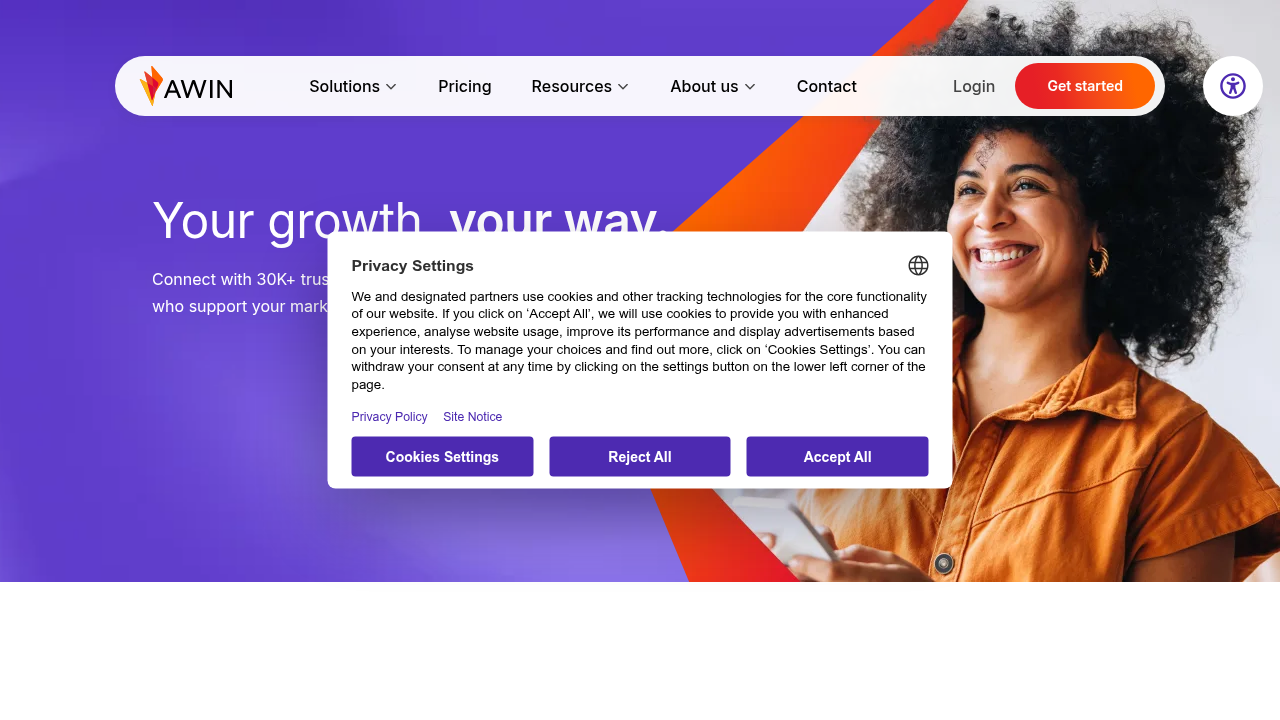
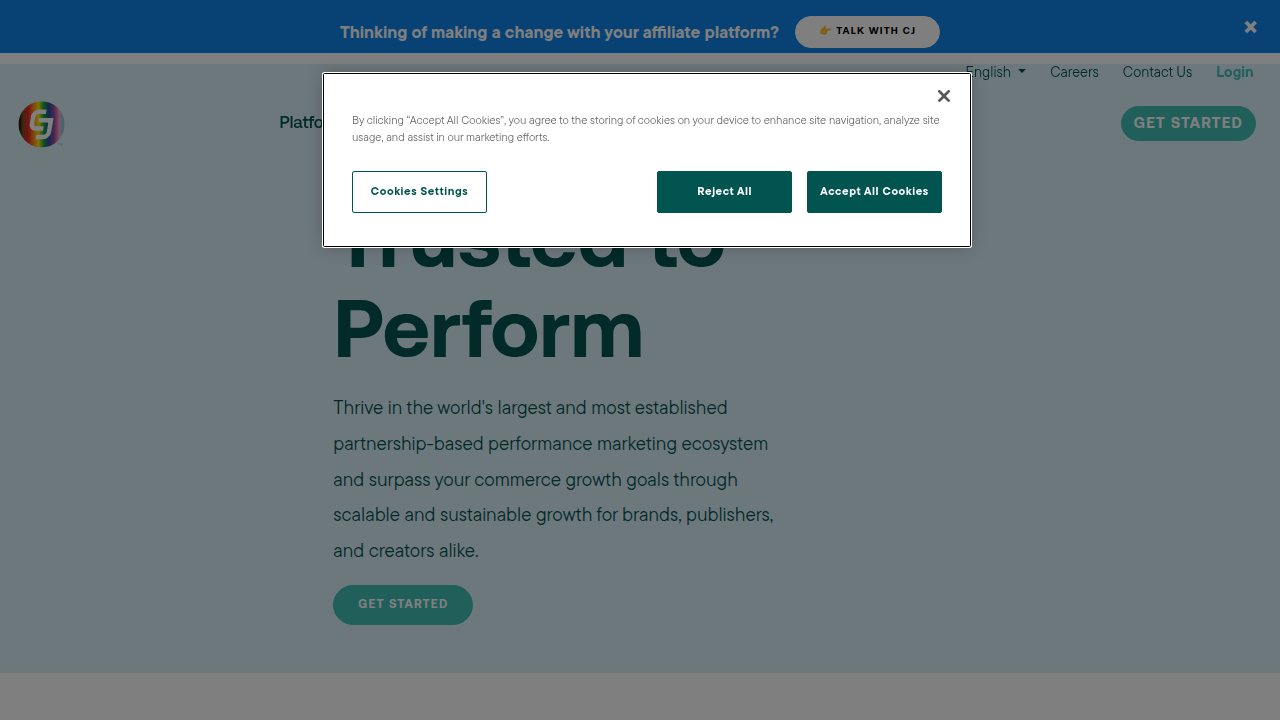
But the idea is the same for all of them.
Here is how it works. A merchant lists their affiliate program on the platform. They set the commission rate, cookie duration, and rules. Then you, as an affiliate, browse these programs and apply to join the ones that fit your niche. Once approved, you get a unique affiliate link. When someone clicks your link and buys, the platform tracks the sale and credits your account.
That sounds simple, right? But why do beginners specifically need a platform instead of going direct? There are a few big reasons.
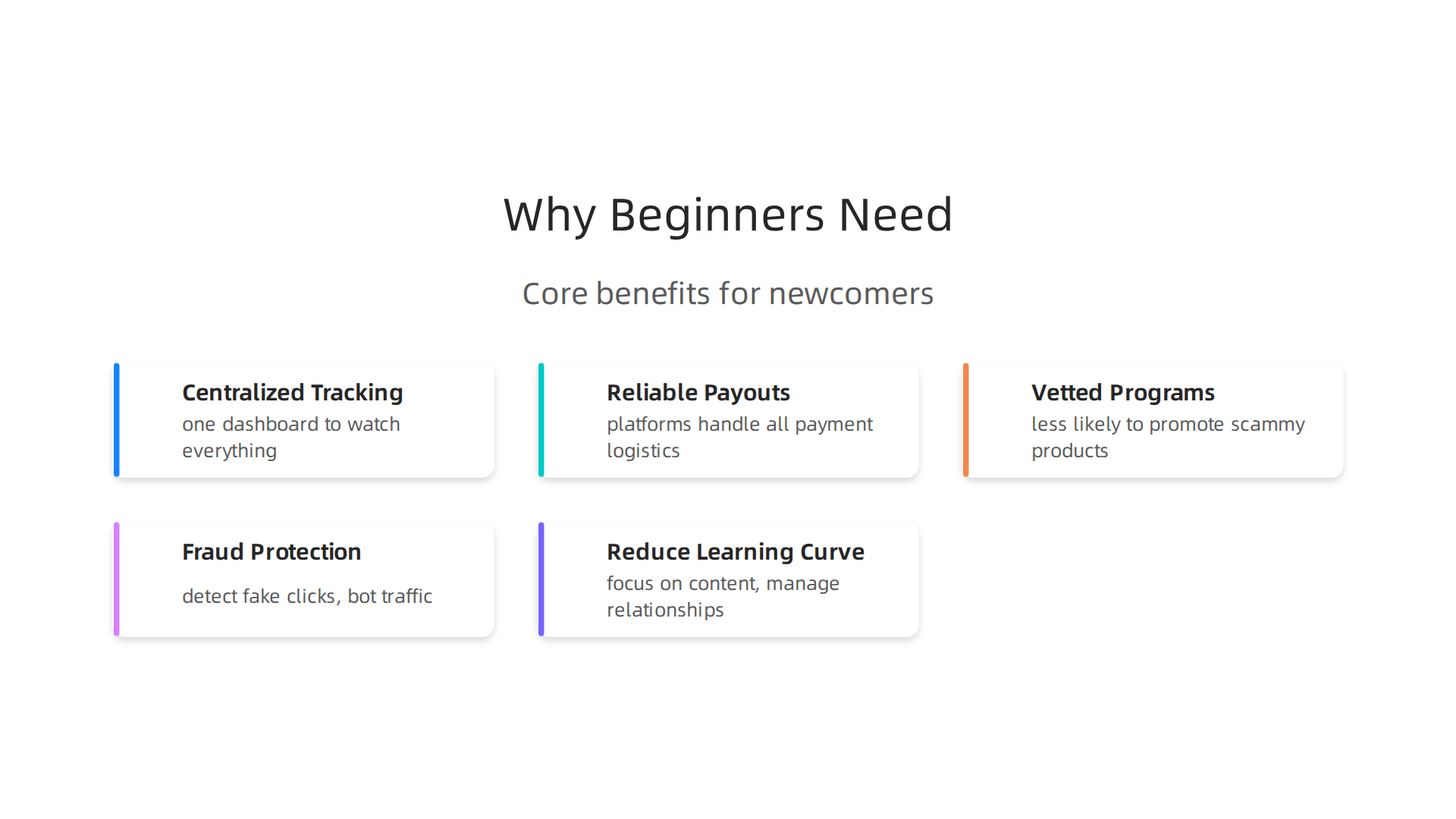
First, centralized tracking. When you work with multiple merchants directly, you have to log into each merchant’s separate dashboard to see your clicks and sales. That gets messy fast. A platform gives you one dashboard to watch everything. You can see which programs are earning and which are not.
Second, reliable payouts. Platforms handle all the payment logistics. They collect commissions from merchants and pay you on a set schedule. You do not have to chase down payments or worry about a merchant disappearing. That safety net matters a lot when you are just starting out.
Third, access to vetted programs. Platforms screen merchants before letting them list programs. That means you are less likely to promote a scammy or low quality product. Building trust with your audience starts with promoting products you can stand behind. According to a Forbes article on building trust in affiliate marketing, transparency and ethical practices are key to long term success. Platforms help you start on the right foot by filtering out bad actors.
Fourth, fraud protection. Platforms use software to detect fake clicks, bot traffic, and other shady activity. If a merchant tries to cheat you out of commissions, the platform can step in. You have someone on your side.
Finally, platforms reduce the learning curve. Instead of negotiating terms with each merchant, you simply browse and apply. The platform provides standard terms, support resources, and sometimes even training. You can focus on creating content and driving traffic instead of managing dozens of relationships.
If you want to see some of the top names in this space, check out our list of top affiliate marketing companies for 2026. It covers the biggest networks and what makes each one special.
For beginners, an affiliate marketing platform is not just helpful. It is almost essential. Without one, you are left to figure out everything alone. With one, you get a safety net, a tracking system, and a huge library of programs all in one place. That is why every smart beginner starts here.
Key Features to Look for in a Beginner-Friendly Platform
Now that you know why platforms matter, let’s talk about what to look for when you pick one. Not every platform is built the same, and choosing the wrong one can slow you down. Here are the features that matter most for beginners in 2026.

Simple User Interface and Onboarding
You want a dashboard that is easy to understand on day one. If you log in and feel lost, that platform is not for you. Look for clean layouts, clear menus, and a setup wizard that walks you through your first steps. Some platforms even offer instant approval with no website required. According to a guide on best affiliate marketing platforms for 2026, beginner-friendly networks like Amazon and ShareASale focus on low entry barriers and recognizable brands. That means less time learning the tool and more time earning.
When you can find programs and generate your first link in under five minutes, you are on the right track.
Quality Educational Resources
The best platforms do not just hand you links and hope you succeed. They help you learn.

Look for platforms that provide guides, video tutorials, webinars, and even full training centers. ClickBank, for example, offers an education hub called Spark that teaches you how to make your first sale. That kind of support is gold for a beginner.
You want a platform that invests in your growth. If a platform has a blog, a knowledge base, or a community forum, that is a strong sign they care about your success. You can also check out our guide on how to evaluate and join a high-paying affiliate program in 2026 for more tips on picking the right fit.
Smart Pricing Models
Many beginner-friendly platforms are free to join. You do not pay a monthly fee. Instead, the platform takes a small cut of your commission or charges the merchant. That is ideal when you are just starting and have no budget.
But watch out for hidden catches. Some free platforms have high minimum payout thresholds, meaning you need to earn $50 or $100 before you can cash out. Others pay only once a month. For beginners, lower minimums and faster payouts help you stay motivated. Platforms like ExtraPe offer a minimum payout as low as Rs. 100, which is great for testing the waters.
Also pay attention to commission structures. Some programs pay a flat percentage per sale. Others give you credit for the entire shopping cart even if the buyer only clicked one of your links. That "basket rule" can double or triple your earnings without extra work.
Final Check
Before you sign up, ask yourself: Is the dashboard easy to use? Does the platform teach me as I go? And will I get paid without jumping through hoops? Answer yes to those three questions, and you have found a platform worth your time.
Top 5 Affiliate Marketing Platforms for Beginners in 2026
Ready to pick your first platform? Here are the five best options for affiliate marketing platforms for beginners in 2026. Each one has its strengths and weaknesses. We will look at what makes them different so you can choose the right fit for your goals.
1. Amazon Associates
Amazon Associates is the biggest name in the game. It is often the first stop for many new affiliates. Why? Because it is incredibly easy to join. You can sign up with just a website or even a social media profile. There is no approval process to stress about. You get access to millions of products in every niche you can imagine. That means you can promote anything from books to electronics to home goods.
Pros:
- Super easy to get approved. Most people get in right away.
- Huge product catalog. You can find something for any audience.
- Everyone knows and trusts Amazon, so conversions are higher.
Cons:
- Commission rates are low. You earn only 1% to 10% depending on the category.
- Cookie window is only 24 hours. If someone clicks your link but buys a day later, you get nothing.
- Payout minimum is $10, which is reasonable, but it can take time to reach if you are just starting.
Amazon is a great starting block. But many beginners move to other platforms for better pay.
2. ShareASale (Now Awin)
ShareASale is one of the oldest and most trusted affiliate networks. It recently merged with Awin, but the platform still works the same way. You apply once and get access to thousands of merchants in categories like fashion, home, finance, and more.
Pros:
- Tons of merchants to choose from. You can promote big brands and small shops alike.
- User-friendly dashboard. It is easy to find programs, generate links, and track earnings.
- Reliable payments. ShareASale pays on time and has good support.
Cons:
- Approval can take a few days for some merchants. Not all programs approve instantly.
- Minimum payout is $50. That is higher than most other platforms, so you need to earn more before cashing out.
- Some merchants have strict rules about how you can promote them.
ShareASale is a solid choice if you want variety and quality. Many experienced affiliates stick with it for years.
3. CJ Affiliate (Commission Junction)
CJ Affiliate is another big network. It works with many well-known brands like GoDaddy, Walmart, and FTD. The platform is more professional than beginner-friendly networks, but it is still worth joining.
Pros:
- High-quality brands. You can promote trusted names that your audience already likes.
- Good commission rates. Many programs offer 5% to 15% or more.
- Real-time reporting. You can see exactly how your links are performing.
Cons:
- Approval can be harder. Some merchants ask for a website with decent traffic.
- Dashboard can feel overwhelming for new users. It has a lot of features.
- Minimum payout is $50 for direct deposit, but you can choose other options.
CJ is best for beginners who already have a small blog or social following. It is not ideal for complete newbies with zero audience.
4. ClickBank
ClickBank is different from the others. It focuses on digital products like courses, e-books, software, and membership sites.

That means commission rates are much higher, often 50% to 75%. Some products pay $100 or more per sale.
Pros:
- Extremely high commissions. You can earn a lot per sale.
- No approval process. You sign up and start promoting in minutes.
- Great training resources. ClickBank Spark offers free courses to help you learn.
Cons:
- Product quality varies. Some digital products are low-quality and can hurt your reputation.
- Refund rates can be high. If a customer asks for a refund, you lose your commission.
- Many products are in the health and wealth niches, which can be competitive.
ClickBank is a great option if you want to make real money early on. Just be careful about which products you choose. Check reviews and refund rates first. For more tips, read our guide on how to succeed with ClickBank affiliate marketing in 2026.
5. Rakuten Advertising
Rakuten is a premium network that works with big brands like Nike, Macy’s, and Expedia. It is not as easy to join as Amazon, but it offers better opportunities for serious affiliates.
Pros:
- High-quality, famous brands. Great for building trust with your audience.
- Good commissions. Many programs pay 5% to 20%.
- Excellent support. Rakuten has helpful affiliate managers.
Cons:
- Harder to get approved. You usually need an existing website with traffic.
- Minimum payout is $50, and it can take a while to reach it.
- Limited product selection compared to Amazon or ShareASale.
Rakuten is perfect if you have a small but growing audience. Focus on brands that match your niche. For example, if you run a fashion blog, Rakuten has tons of clothing brands.
Which One Should You Start With?
If you have zero experience and no audience, start with Amazon Associates or ClickBank. Both are free and easy to join. Once you build some traffic, add ShareASale or CJ. And if you land a few high-quality partners, Rakuten can be your next step.
Remember, the best affiliate marketing platforms for beginners are the ones that fit your niche and your goals.

Do not try to join all five at once. Pick one, learn it well, and grow from there.
Want to take your skills further? Consider upskilling with a structured bootcamp like a coding or UX design program. Learning how to build better content and landing pages can boost your conversions a lot. Check out what a UX/UI training course can do for your affiliate setup.
How to Choose the Right Platform for Your Niche
You have five great options in front of you. But which one is actually right for your audience? Here is a simple way to think about it.
Start by matching platform product categories to your audience’s interests. If your readers love everyday things like books, electronics, and home goods, Amazon Associates is a natural fit. The catalog is huge. If you write about digital products like online courses or software, ClickBank makes more sense. It specializes in exactly that. For fashion and lifestyle content, ShareASale or Rakuten have the brands your audience already knows. The key is to pick a platform that already sells what your audience wants. That way you earn affiliate marketing commissions without forcing square pegs into round holes.
Next, look at commission structures carefully. Some platforms pay a flat fee per sale. Others pay a percentage. For low-cost items, a percentage might give you pennies. For high-ticket items, it can give you dollars. Cookie duration matters too. Amazon only gives you 24 hours. That is short. ClickBank gives you 60 days. That gives you more time to earn from a single click. The best affiliate marketing platforms for beginners often have longer cookie windows because they give you more chances to convert.
Finally, read the fine print. Payment thresholds vary a lot. ShareASale requires $50 before you can cash out. Amazon and ClickBank only need $10. Approval requirements also differ. Some platforms like Amazon approve almost anyone instantly. Others like Rakuten want to see a real website with traffic first. The best affiliate marketing platforms for beginners are the ones that match your current stage. If you are starting from zero, pick the easy ones first.
One smart move is to promote tools you already use. If you are building a tech or career development blog, for example, promoting a training platform like Careerist fits naturally. You already know the value of upskilling. That honesty builds trust with your readers.
For more guidance on narrowing your niche, check out this list of top affiliate marketing niches for 2026. It will help you align your audience with the right products and platforms from day one.
Setting Up Your First Affiliate Campaign: A Step-by-Step Guide
You have chosen your platform and niche. Now it is time to launch your first campaign. The process is simpler than you think if you follow three clear steps.
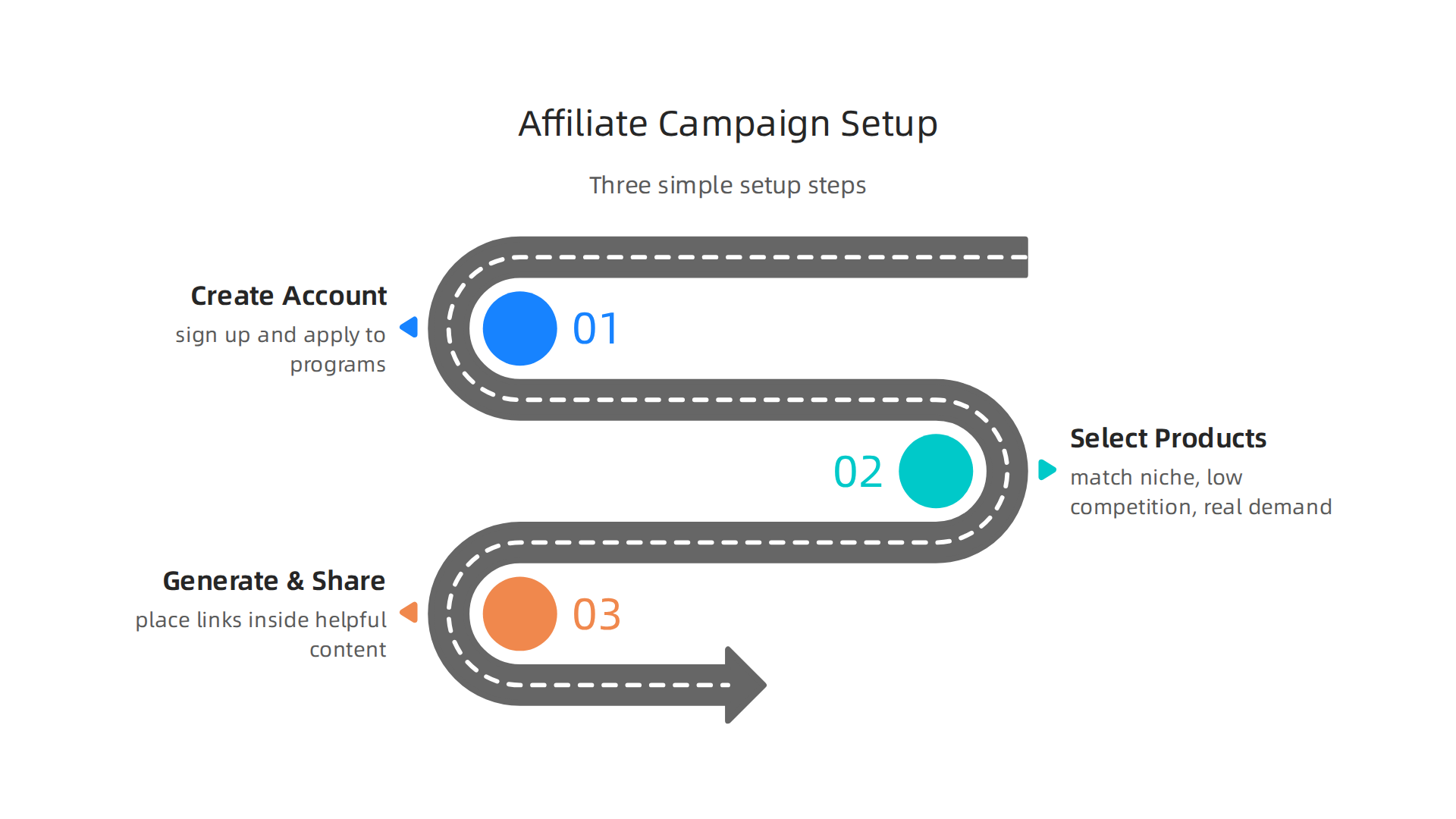
Step 1: Create an Account and Get Approved
Every platform asks you to sign up and apply to specific programs. Do not rush this part. Your approval rate goes up when you look serious.
Most networks want to see a real website with decent content before they approve you. If you are using Amazon Associates, approval is easier. But for many others, you need a live site with at least a few useful posts. Use a professional email address (yourname@yourdomain.com works better than a Gmail one). Also, be honest about how you plan to promote their products. Explain your traffic sources and content strategy clearly. This advice comes from the Affiliate Marketing for Beginners: Step-By-Step Guide which walks through each requirement in detail.
Step 2: Select Your First Products to Promote
Pick products that match your niche and have real demand. Start with items that are low competition but searched for frequently. Avoid oversaturated categories until you have traffic.
A smart beginner strategy is to promote products you already own and love. If you write about tech careers or coding skills, for example, you can recommend a training program like Le Wagon. It is a high-ticket coding and data bootcamp that pays solid commissions. Your personal experience with their courses makes your recommendation feel genuine. That kind of trust leads to more sales.
Step 3: Generate and Share Your Affiliate Links
Once you get approved for a program, the platform gives you a unique affiliate link. Do not just drop that link anywhere. Place it inside helpful content where the reader is already looking for a solution.
Write a blog post comparing your chosen product to alternatives. Create a short social media post explaining one benefit, then link to your full review. Send a quick email to your list if you have one. The key is to add value before the link.
For more tips on placing links effectively, check out this guide on how to set up affiliate links that actually earn money. It covers formatting, placement, and disclosure rules.
Start with one product and one traffic channel. See what works. Then scale up from there.
Common Mistakes to Avoid as a Beginner Affiliate Marketer
You have your first campaign live. That is exciting. But many beginners trip up on the same three mistakes.
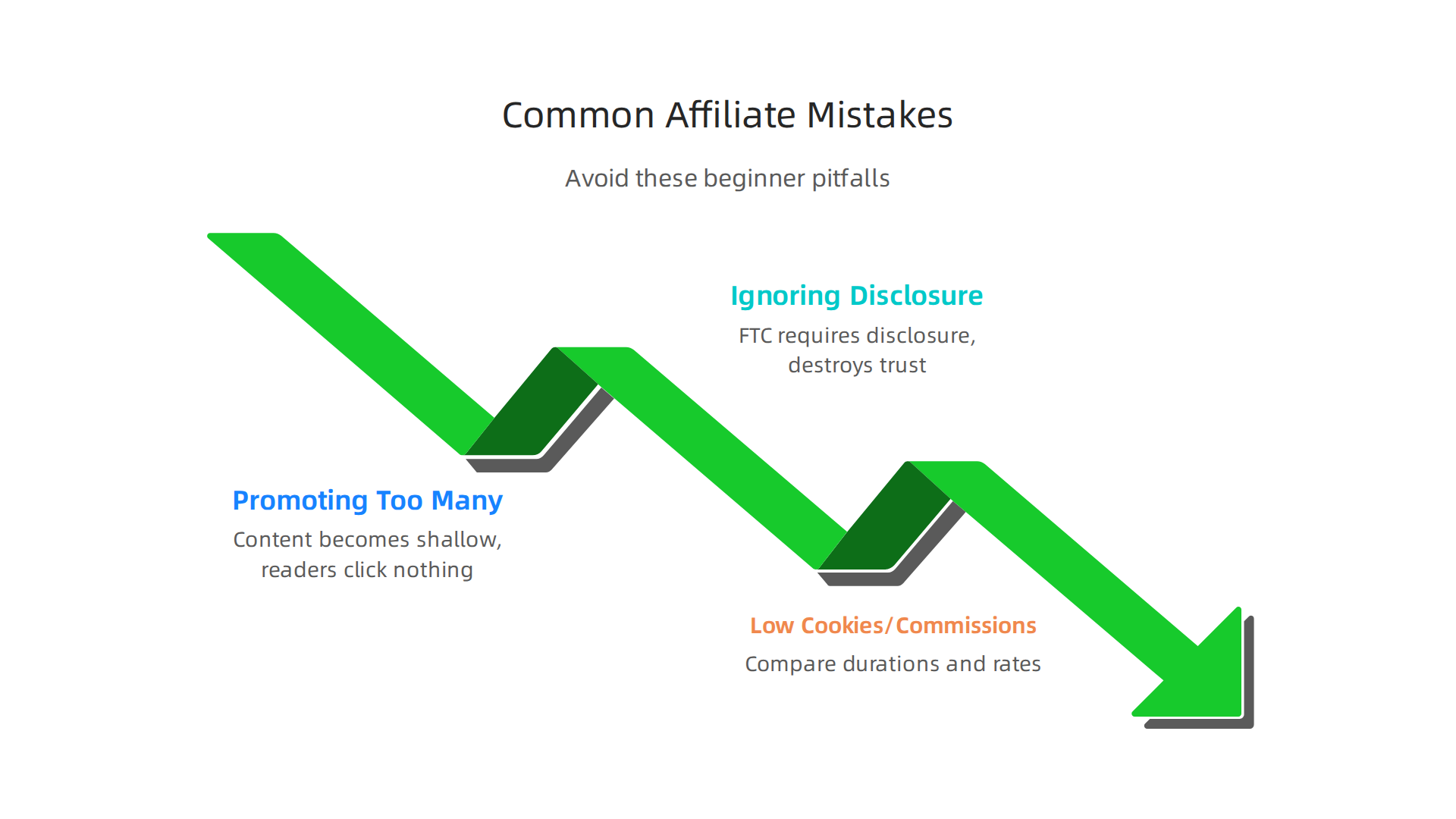
Knowing them now will save you time, money, and frustration.
Mistake 1: Promoting Too Many Products Without Focus
It feels smart to join every program you find. More products should mean more money, right? Actually, the opposite happens.
When you promote too many things at once, your content becomes shallow. Readers notice. They cannot tell what you truly recommend. So they click nothing.
The better approach is to start with one or two products you already know well. The Affiliate Marketing Guide from Venture Harbour explains that you should choose a specific niche and promote products you have genuinely tested. If you are unsure which programs deserve your time, learn how to evaluate and join a high-paying affiliate program so you pick winners from the start.
Mistake 2: Ignoring Disclosure Requirements
This one gets beginners in real trouble. Many think they can hide affiliate links in their content. That is against the rules.
The Federal Trade Commission (FTC) requires you to tell readers when a link earns you money. A simple sentence works fine. Something like "This post contains affiliate links" placed near the top of your content.
The Shopify affiliate marketing guide for beginners lists following FTC disclosure regulations as a core step for every new marketer. Skipping this step can get your accounts banned. Worse, it destroys the trust you are trying to build.
If you want to get this right from day one, you can write a compliant disclaimer for affiliate links. Your readers will appreciate the honesty.
Mistake 3: Choosing Platforms with Low Cookie Durations or Small Commissions
Not all affiliate marketing platforms for beginners are created equal. Some only pay 1% commission. Others give you a 24-hour cookie window. That means if someone clicks your link and buys a day later, you earn nothing.
Do not rush into the first program you find. Compare cookie durations. Look for 30-day windows or longer. Compare commission rates. A 10% commission on a $50 product pays better than 2% on a $100 product when you factor in conversion rates.
The best affiliate marketing platforms for beginners offer fair terms and reliable tracking. Focus on quality over quantity. One strong program that pays consistently beats ten weak ones that barely cover your costs.
Avoid these three mistakes and your affiliate journey will be much smoother. Keep your focus narrow, stay honest with disclosures, and choose your platforms wisely. That is the real shortcut to long-term success.
Essential Tools and Skills to Boost Your Affiliate Success
Now that you know what to avoid, let’s talk about the tools and skills that will actually help you earn. The best affiliate marketing platforms for beginners give you a solid foundation, but you still need the right supporting tools to find winning products, create great content, and track your results.
Start With Free Keyword Research Tools
Before you write anything, you need to know what people are searching for. Free tools like Google Trends and Ubersuggest are perfect for this. They show you search volume and competition levels without costing a dime.
A review of the best free keyword research tools for affiliate marketing confirms that Google Keyword Planner and Ubersuggest are plenty for beginners. You can validate 20 to 50 keywords and map out your content plan without spending money. Start free, publish your first posts, and only upgrade to paid tools once you see your first commissions.
Create Content That Stands Out
Your content is your main sales tool. You do not need to be a professional designer, but knowing the basics helps. Canva lets you create eye-catching images, infographics, and social media graphics for free. Learning basic HTML and CSS also gives you more control over how your posts look.
If you are ready to build a real site, learn how to build an affiliate marketing blog that earns in 2026. A well-structured blog with clear calls to action converts better than any template you patch together.
Improving your design skills can also boost conversions. Training like Avocademy focuses on UX and UI design. Learning to create more persuasive landing pages and visuals directly increases how many readers click your affiliate links. That is one skill that pays for itself quickly.
Track Everything With Analytics
You cannot improve what you do not measure. Google Analytics is free and shows you where your traffic comes from, which pages perform best, and how long people stay. Most affiliate marketing platforms for beginners also include built-in dashboards. Check them weekly to see which links are earning and which topics need a refresh.
With these tools and skills in your toolkit, you are ready to move from beginner to consistent earner. Pick one tool to learn this week and take that first step.
Summary
This guide walks beginners through choosing and using affiliate marketing platforms in 2026, explaining why a network matters and how the right choice speeds your success. It defines affiliate platforms, shows how they simplify tracking, payouts, and fraud protection, and lists the key features beginners should prioritize like simple UI, education, fair pricing, cookie duration, and payout thresholds. The article reviews five top platforms—Amazon Associates, ShareASale (Awin), CJ Affiliate, ClickBank, and Rakuten—stating pros, cons, and ideal user types for each. You also get a clear three-step campaign launch checklist (account setup, product selection, link placement), common mistakes to avoid, and the essential tools and analytics to track performance. By reading this piece you’ll know which platform fits your audience, how to set up your first campaign, and what to measure so you can start earning with confidence.